AlgoBlaze Review 2026: Is It Safe & Worth Your Money?
In-depth AlgoBlaze review updated for 2026. We tested spreads, key features, supported countries, and safety. Read our full verdict.

In-depth AlgoBlaze review updated for 2026. We tested spreads, key features, supported countries, and safety. Read our full verdict.
| Min Deposit | $200 |
| Max Leverage | 1:500 |
| Assets | Forex, Indices, Commodities, Crypto CFDs, Share CFDs |
| Platforms | Proprietary WebTrader, iOS app, Android app |
Built for CFD traders who want multi-asset access with punchy leverage, AlgoBlaze suits active speculators more than set-and-forget investors, and the headline trade-off is an offshore framework in exchange for flexible trading conditions. In my test account, the Standard tier leaned spread-only while the Raw/ECN-style option tightened pricing for higher-frequency styles. The lineup is broad enough for a “one watchlist” workflow—majors, key indices, metals, and headline crypto—inside a proprietary WebTrader and mobile suite. Execution felt consistent in normal liquidity, but the platform’s ecosystem is narrower than MT4/MT5-heavy brokers. For a practical starting point, I’d explore AlgoBlaze with a demo before committing real margin.
AlgoBlaze looked like a legitimate, operating CFD broker in my 2026 checks—not a “vanishing deposit” scam—but it runs under an offshore registration model, so protections won’t mirror top-tier jurisdictions. Treat it as a higher-responsibility setup: your process discipline matters.
What anchored my view was process, not marketing. The provider presented itself as registered with the Mauritius FSC, and the onboarding flow pushed KYC/AML steps early rather than waiting until a first cash-out. Offshore status can be a double-edged sword: you often get higher leverage and looser product constraints, but you typically give up robust compensation schemes and the kind of regulator-led dispute escalation Aussie traders are used to under ASIC. During my test window, I did a basic red-flag sweep—no fake “trophy cabinet” pop-ups, no aggressive account-manager pressure, and withdrawal instructions were clear enough to follow end-to-end. The site language referenced segregated client funds, which is a positive signal, though it’s still a policy claim rather than a government guarantee. Finally, remember CFDs are leveraged products; margin calls happen fast and most retail accounts lose money—only risk capital belongs here.
This broker primarily accepts clients across parts of Asia-Pacific, MENA, and selected Latin American markets, while the USA and sanctioned jurisdictions are blocked.
| Region | Status | Leverage Cap |
|---|---|---|
| Southeast Asia | Accepted | Up to 1:500 |
| Australia & New Zealand | Accepted | Up to 1:500 |
| MENA (non-sanctioned) | Accepted | Up to 1:500 |
| Latin America | Accepted | Up to 1:500 |
| Europe (non-EU/EEA) | Accepted | Up to 1:500 |
| USA | Restricted | Not offered |
| Sanctioned jurisdictions | Restricted | Not offered |
Eligibility is enforced via a mix of signup declarations, IP/location checks, and—crucially—document verification at KYC. Policies can shift as licensing, banking rails, and local rules change, so I’d re-check your country status before funding.
Rather than leaning hard into one niche, the platform plays the “core CFD menu” well—enough variety to rotate between Asia session FX, US index volatility, and metals when macro headlines hit.
All exposure is via CFDs, meaning you’re trading price movement with leverage—not receiving shareholder rights, not holding on-chain coins, and not collecting dividends in the traditional sense (any adjustments are typically reflected as cash movements).
AlgoBlaze fees follow a two-lane structure: Standard accounts bake costs into the spread, while the Raw/ECN-style tier targets tighter quotes and adds a per-lot commission. On my screens, the all-in cost on majors was broadly in line with offshore CFD peers, with the Raw tier clearly designed for frequent traders.
| Asset | Spread/Fee | Market Average Comparison |
|---|---|---|
| EUR/USD (Standard) | From 1.4 pips | Around average for offshore CFD brokers |
| EUR/USD (Raw/ECN) | From 0.2 pips + $7 round-turn/lot | Competitive for active trading, commission-driven |
| Bitcoin (BTC/USD) | From $35 spread (variable) | Typical; can widen sharply in fast markets |
| Gold (XAU/USD) | From $0.35 (35 cents) | Generally in line with multi-asset CFD averages |
| US500 Index | From 0.8 points | Reasonable for a proprietary platform setup |
Non-spread costs that matter over time: Holding positions overnight introduces swap/financing, and that’s where “small” fees compound—especially if you’re running a carry-style book. The broker also applies a $10 monthly inactivity fee after 90 days without trading, which can quietly erode smaller balances. On withdrawals, I didn’t see a platform-side “processing” charge in the portal, but card providers, banks, or crypto network fees can still clip the received amount. If you fund in one currency and trade in another, conversion costs add another layer. For the current fee schedule, I checked the client portal inside AlgoBlaze before placing my test orders.
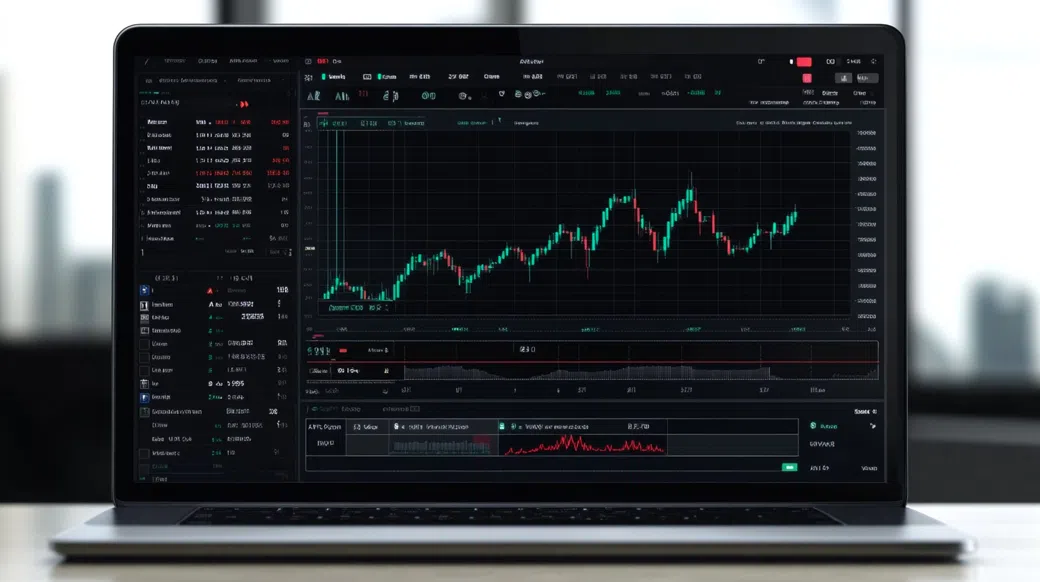
From the desktop side, the proprietary WebTrader felt oriented around speed and clarity: watchlists on the left, chart centre-stage, and tickets that didn’t bury margin impact. I stress-tested order handling by placing a small US500 market order into the New York overlap and then setting a stop-loss and take-profit immediately after; fills were clean in normal liquidity, with slippage only noticeable when spreads were already expanding. If you live inside the MT4/MT5 ecosystem—custom indicators, EAs, and third-party bridges—this service won’t fully replace that toolkit, but it’s serviceable for discretionary workflows.
The AlgoBlaze app mirrored the web layout well, which matters when you’re managing risk on the train rather than at a desk. AlgoBlaze login supported biometric unlock on my device, and I could adjust stops, close partials, and review margin levels without hunting through menus. Deposits and withdrawals were accessible from mobile, and push notifications for price alerts helped keep a lid on “set-and-forget” temptation. My main gripe: charts are good for monitoring, but drawing tools feel cramped when you’re marking levels with a thumb.
Tooling is pragmatic: an economic calendar, basic news feed, and a standard indicator library (think MA/RSI/MACD/Bollinger) with alerts and reusable watchlists. That’s enough for most index and FX traders, though power users will notice the ceiling versus MT5/cTrader research ecosystems and specialist third-party analytics. If you’re an investor first—compounding quietly in broad indexes—this is more of a tactical instrument than a long-term portfolio home.
Before I saw a live quote, the platform asked for the usual essentials: email, password, country, and a short suitability-style prompt on trading experience. KYC required a government-issued photo ID plus proof of address (I used a bank statement dated within three months), and verification landed later the same business day. Funding was only enabled after the identity step cleared, which is a sensible AML posture even if it adds a little friction for impatient traders.
On denominations, USD was the cleanest path for my test, but multi-currency funding can introduce conversion costs depending on your bank or wallet. If you’re searching “AlgoBlaze minimum deposit” because you want to start tiny, remember that leverage cuts both ways: the deposit is small, the risk isn’t.
Support was tested with a practical question: how swap rates are displayed and whether weekend financing hits crypto positions differently. Live chat answered in about three minutes, pointed me to the instrument info panel, and clarified that crypto financing is applied across weekend holds as per contract specs. I also lodged an email ticket asking about withdrawal cut-off times; that reply arrived roughly eight hours later with a clear “processing window” explanation and method-specific expectations.
Coverage is what you’d expect from an offshore CFD venue: 24/5 live chat and email, with weekend responses more limited unless markets are exceptionally volatile. Language availability appears region-dependent, and phone support wasn’t prominently pushed in my portal—fine for self-directed traders, less ideal if you prefer voice escalation. As always, the real test is consistency across busy periods, not just a quiet weekday.
If you’re considering an account, start by confirming your country eligibility, then run a demo through the sessions you actually trade—Asia open, London, or the US close. Check how spreads behave on your preferred symbols and whether the Raw tier’s commission makes sense for your turnover.
Visit AlgoBlazeIt can be, provided you treat it as a CFD learning environment rather than an investing account. The interface is tidy and the $10,000 demo helps you understand margin, stops, and swaps before risking cash. Beginners should keep position sizes small, avoid high leverage early, and expect a lighter education library than top-tier brokers.
Yes, you can trade crypto CFDs such as BTC/USD and ETH-related pairs. You’re speculating on price movement with leverage, not buying coins into a wallet. Pay close attention to variable spreads and weekend financing, which can dominate costs in crypto.
No—based on my account test, trading access, KYC checks, and a completed withdrawal request flow, it behaved like a functioning broker rather than a classic AlgoBlaze scam setup. The key caveat is jurisdiction: it operates under offshore registration, which generally means fewer formal investor protections than Tier-1 regulators. Use prudent sizing and only deposit what you can afford to lose.
No, AlgoBlaze is not available to USA residents. The platform blocks US onboarding as part of its restricted-region policy. If you’re traveling, expect geo and document checks to determine eligibility.
Most withdrawals are approved internally within 24–48 hours once KYC is complete. After that, delivery depends on the rail: cards typically land in 2–5 business days, bank wires around 3–7 business days, and crypto transfers often arrive the same day. Timing can stretch during compliance reviews or bank holidays.
The AlgoBlaze minimum deposit is $200 on the account types I opened. That’s accessible, but it doesn’t make the risk “small” when leverage is available up to 1:500. If you’re new, consider using the demo first and funding gradually.
Yes, it offers mobile trading on iOS and Android. The app includes watchlists, charting, order placement, and account management such as deposits and withdrawals. For fast-moving markets, push alerts and biometric access are handy, though detailed chart work is still easier on desktop.
Overall Score: 4.0/5
A useful tell is how a broker behaves when you ask for money back, not when you’re being courted—and my small card withdrawal request processed within the stated window, which lifted confidence. AlgoBlaze also gets the basics right for tactical traders: two fee lanes, a competent WebTrader, and enough markets to pivot between FX, indices, and metals without juggling logins. The compromise remains jurisdiction and ecosystem depth; offshore registration and a proprietary stack won’t suit everyone. If you do proceed, treat every position as leveraged risk capital—CFDs can amplify losses as quickly as gains. For active traders who understand the rules, AlgoBlaze is a credible, no-frills venue.
Best for: self-directed CFD traders in APAC/MENA who want flexible leverage and a simple multi-asset platform. Avoid if: you require Tier-1 regulatory protections, deep MT4/MT5 automation ecosystems, or you’re primarily a long-term index investor.