Anker Pandòr Trading Platform Alternatives 2026
Compare Anker Pandòr alternatives for 2026: regulated brokers for FX, CFDs, stocks/ETFs, fees, platforms, and a safety-first migration checklist.

Compare Anker Pandòr alternatives for 2026: regulated brokers for FX, CFDs, stocks/ETFs, fees, platforms, and a safety-first migration checklist.
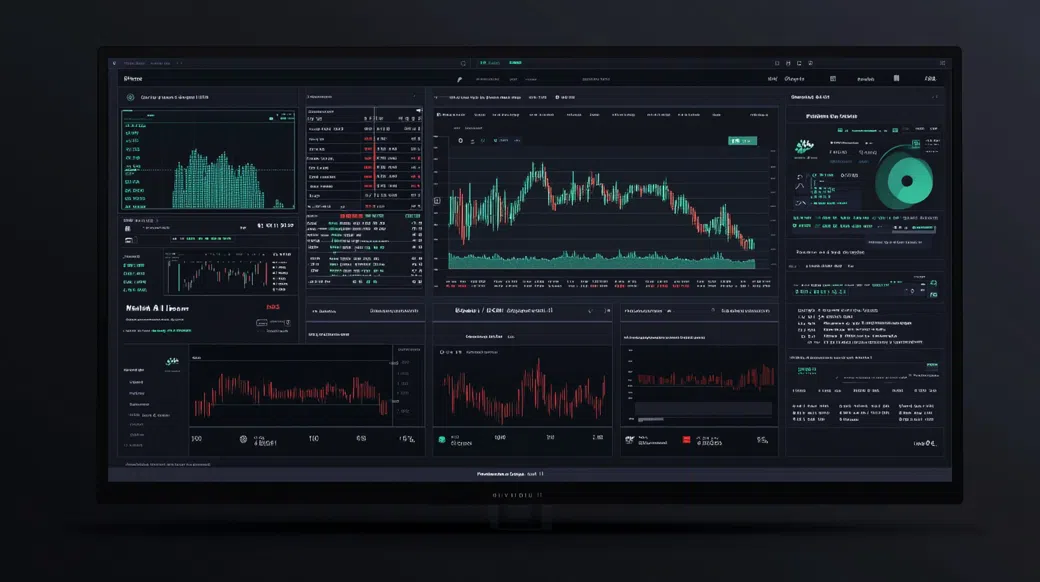
There’s a particular “gravity” that pulls retail traders toward offshore CFD platforms: higher headline leverage, fast onboarding, and a simple WebTrader that gets you from sign-up to chart in minutes. That’s broadly the lane Anker Pandòr appears to sit in—primarily forex and CFDs (often including crypto CFDs), delivered through a proprietary browser platform and mobile app. The trade-off is rarely visible on day one. It shows up later, in the fine print: how withdrawals are handled, what protections apply when something goes wrong, and whether the broker sits under a regulator with real enforcement power.
This matters even more for US and EU readers in 2026 because the “plumbing” behind your account—segregated client funds, negative balance protection, complaints pathways, and compensation schemes—varies sharply between onshore regulated firms and offshore setups. Based on what is commonly observed in this category of provider, Anker Pandòr is typically framed as offshore (Seychelles FSA), with conditions that can look attractive on paper: minimum deposits around $250, maximum leverage near 1:500, and a standard EUR/USD spread often quoted around 2.0 pips. Those inputs may work for short-term speculation, but they can be expensive for high-frequency styles and awkward for investors who want to own underlying assets rather than trade CFDs.
Below, I’ll map out practical Anker Pandòr alternatives—regulated options vs Anker Pandòr—with an index-investing lens: how to reduce friction, control costs, and keep compounding working for you instead of against you.
Disclaimer: This article is for informational purposes only and does not constitute investment advice. CFDs and other leveraged products carry a high risk of loss and are not suitable for all investors.
For traders who mainly operate in FX and CFD markets, Anker Pandòr presents as a CFD-first broker rather than a full multi-asset venue. The typical product set in this segment focuses on a few dozen forex pairs (often ~30–50), a modest menu of indices and commodities, and crypto CFDs for directional exposure. US residents are generally restricted, and other sanctioned jurisdictions are commonly excluded as part of AML compliance controls. In practice, the platform experience tends to prioritise speed of access over institutional-grade depth—fine for discretionary chart trading, less ideal for systematic execution, deep reporting, or long-horizon investing where you care about ownership rights and custody arrangements.
The core stack is usually a proprietary WebTrader with a companion iOS/Android app. Expect competent basics: multi-timeframe charts, a standard indicator library, drawing tools (trendlines, fibs), and one-click trading from the chart. Order handling is typically centred on market and limit orders, with stop-loss and take-profit attached; advanced conditional order logic is less common than on MT4/MT5 or institutional DMA platforms. Mobile parity tends to be reasonable for monitoring and simple entries, while the account dashboard commonly covers margin usage, open P/L, deposit/withdrawal menus, and a position list. Execution speed can feel “snappy” in calm markets, yet fast moves are where slippage and requotes—depending on execution model—become the real test.
Costs are usually packaged as spread-first pricing on a Standard-style account, with EUR/USD often around 2.0 pips in typical conditions. Some competitors to Anker Pandòr advertise a Raw/ECN-style tier: spreads closer to 0.0–0.4 pips plus a round-turn commission (often in the US$5–$8 range), though the true “all-in” cost still depends on fill quality. Beyond spreads, watch for overnight swap/financing (material for multi-day holds), plus potential withdrawal or inactivity charges that can quietly erode smaller accounts. Minimum deposits in this category often land around $250, and leverage can run as high as 1:500—powerful, but unforgiving when volatility spikes.
Cost is often the first itch. A 2.0-pip EUR/USD spread doesn’t sound dramatic until you translate it into round-turn drag across dozens of trades—especially if your strategy targets small moves where a pip here or there is the difference between compounding and treading water. That’s one reason Anker Pandòr alternatives show up on traders’ shortlists: they want tighter pricing, clearer execution statistics, and a regulatory framework that makes the rules harder to bend when markets get messy. Another common driver is product fit—many traders outgrow CFD-only menus and start wanting real ETFs, options, or futures access for hedging and portfolio construction.
I approach broker selection the same way I’d approach portfolio design: start with risk budget, then match the plumbing to the job. The best substitutes for Anker Pandòr aren’t “best” in the abstract—they’re best for your instrument needs, your holding period, and your tolerance for operational risk. Use the checklist below to separate slick front-ends from robust back-ends.
Regulation is the line between a trading app and a supervised financial intermediary. FCA, ASIC, CySEC, and NFA/CFTC frameworks require controls around marketing, complaints, and client money handling—often including segregated client funds. In the UK, eligible FCA-regulated firms can fall under FSCS protection (up to £85,000), while CySEC-linked setups may connect to the ICF (up to €20,000). None of these schemes eliminate trading losses, but they matter if the dispute is about broker conduct or insolvency rather than your P/L.
Ask a blunt question: do you need exposure or ownership? FX and index CFDs can be fine for tactical views, yet long-term investors often prefer real stocks and ETFs (with corporate actions and voting rights) rather than CFD wrappers. If your plan includes index investing—buying broad-market ETFs and letting time do the heavy lifting—look for a multi-asset broker with cash equities and tight FX conversion. If you’re purely short-term, then deep FX/CFD liquidity and consistent fills matter more than a giant product shelf.
Don’t compare “from 0.0 pips” headlines; compare the round-turn cost you’ll actually pay. That means spread + commission (if any) plus the impact of slippage in fast markets. Then layer in non-trading fees: overnight swap/financing for holds, inactivity fees if you trade in bursts, and withdrawal costs if you move capital frequently. For high-turnover strategies, shaving even 0.5 pip can change the expected value of the system over a year.
Platform choice is really a decision about tooling and execution model. MT4/MT5 and cTrader support automation, custom indicators, and broker-agnostic workflows; proprietary platforms can be clean, but they’re often “walled gardens.” Execution quality hinges on whether the broker runs a market-maker model or routes via STP/ECN/DMA, and how it handles volatile prints—slippage, partial fills, and stop execution. If you’re coming from Anker Pandòr, test your new venue with small size during news hours before you scale.
Support isn’t about friendly chat—it’s about outcomes. Check whether help is available when your market trades (think US session for EUR/USD volatility), what languages are covered, and whether you can reach a person for funding and margin queries. Education matters most for newer traders, but even experienced hands benefit from clear margin calculators, contract specs, and platform documentation. Finally, insist on mobile parity: the ability to manage risk from your phone is not a luxury when positions are leveraged.
On paper, Anker Pandòr’s appeal is straightforward: forex pairs, index CFDs, and the kind of leverage (often up to 1:500) that makes small moves feel meaningful. The issue is that leverage amplifies both mistakes and friction. If EUR/USD trades around a 2.0-pip spread on a standard setup, the hurdle rate for breakeven rises quickly for active traders—especially once you add slippage on stops and the occasional widened spread around data releases. FX/CFD specialists such as Pepperstone and IC Markets are often chosen as platforms like Anker Pandòr but under stronger regulatory umbrellas, with raw-spread accounts that can materially reduce round-turn costs for scalpers and systematic traders. For discretionary traders, execution consistency (how stops behave in fast markets) can matter more than the last decimal of spread.
This is where many offshore CFD-first brokers stop being “good enough.” If Anker Pandòr offers equity exposure, it’s typically via stock CFDs—useful for short-term positioning, but not the same as holding the underlying shares or ETFs in a brokerage account. Stock CFDs generally don’t grant shareholder rights, and financing costs can accumulate if you hold for months. By contrast, Interactive Brokers (IBKR) and Saxo Bank are built for multi-asset allocation: real stocks and ETFs, options and futures for hedging, and robust reporting that makes tax time less chaotic. For EU/UK investors aiming to build a core index ETF portfolio and tactically layer FX/CFDs around it, these brokers can align better with a compounding mindset: lower drag, clearer custody, and more instrument choice when markets rotate.
Crypto on offshore CFD platforms is usually “exposure without ownership”—you’re trading a derivative price feed rather than holding coins on-chain. That can be perfectly acceptable for short-duration trades or hedges, but it’s a different risk profile: counterparty risk sits with the broker, and you can’t withdraw crypto to a wallet because you don’t own the underlying asset. Regulated alternatives vary by region. IG and Plus500, for example, are commonly used for crypto CFDs in jurisdictions where those products are permitted, with clearer risk disclosures and supervisory oversight than many offshore venues. The practical choice comes down to intent: if you want tactical crypto price exposure alongside indices and FX, crypto CFDs may fit; if you want long-term coin custody, you’ll likely need a dedicated crypto exchange rather than competitors to Anker Pandòr in the CFD space.
Regulation: SEC/FINRA (US), FCA (UK), IIROC (Canada) (entity depends on residency)
Markets: Stocks, ETFs, options, futures, bonds, FX (spot), funds (availability varies by region)
Fees: FX pricing typically low with commission-based schedules; equities pricing depends on venue and plan (tiered/fixed)
Platform: Trader Workstation (TWS), Client Portal (web), mobile app, APIs
Best For: Long-term investors who want real ETF/stock access plus professional-grade tooling
Regulation: FCA (UK), ASIC (Australia), CySEC (EU), DFSA (UAE)
Markets: FX and CFDs (indices, commodities, some shares as CFDs; product list varies by entity)
Fees: EUR/USD often ~0.0–0.3 pips on Razor/Raw-style pricing + commission; Standard accounts typically higher all-in spread
Platform: MT4, MT5, cTrader, TradingView integration (where available)
Best For: Cost-focused FX traders running EAs or cTrader systems
Regulation: FCA (UK), MAS (Singapore), DFSA (UAE) (entity depends on residency)
Markets: Stocks, ETFs, bonds, mutual funds, options, futures, FX, CFDs
Fees: Pricing varies by tier; spreads/commissions are typically transparent with schedule-based brokerage fees on exchange-traded products
Platform: SaxoTraderGO, SaxoTraderPRO
Best For: Multi-asset allocators who want research, reporting, and broad market access
Regulation: ASIC (Australia), CySEC (EU), FSA Seychelles (group-level, entity depends on residency)
Markets: FX and CFDs (indices, commodities, crypto CFDs; offering varies by entity)
Fees: Raw spreads often ~0.0–0.3 pips on EUR/USD + commission (account-type dependent); Standard accounts typically wider
Platform: MT4, MT5, cTrader
Best For: High-frequency traders who care about spreads and execution consistency
Regulation: FCA (UK), ASIC (Australia), BaFin (Germany)
Markets: CFDs across FX, indices, commodities, treasuries, and shares (CFD availability varies by region)
Fees: FX spreads are commonly competitive on major pairs; total costs depend on product and whether commissions apply on share CFDs
Platform: Next Generation (web), mobile app; MT4 (availability varies by region)
Best For: Chart-driven CFD traders who want strong platform analytics
Regulation: FCA (UK), CySEC (EU), ASIC (Australia)
Markets: Stocks and ETFs (region-dependent), CFDs (FX/indices/commodities), crypto (availability varies), social/copy features
Fees: Pricing is typically spread-based on CFDs; non-trading fees and conversion costs can matter depending on base currency
Platform: Proprietary web platform and mobile app
Best For: Beginners who prefer social features over advanced order logic
| Platform | Regulation | Main Markets | Typical Costs | Best For |
|---|---|---|---|---|
| Interactive Brokers (IBKR) | SEC/FINRA, FCA, IIROC (by entity) | Real stocks/ETFs, options, futures, bonds, FX | Commission-based; FX generally low-cost vs spread-only models | Long-term investors who want real ETF/stock access plus professional-grade tooling |
| Pepperstone | FCA, ASIC, CySEC, DFSA | FX + CFDs (indices/commodities; some shares as CFDs) | Raw ~0.0–0.3 pips + commission; Standard higher spread | Cost-focused FX traders running EAs or cTrader systems |
| Saxo Bank | FCA, MAS, DFSA (by entity) | Real stocks/ETFs + options/futures/FX/CFDs | Tiered schedule pricing; transparent brokerage/commissions | Multi-asset allocators who want research, reporting, and broad market access |
| IC Markets | ASIC, CySEC, FSA Seychelles (by entity) | FX + CFDs (indices/commodities/crypto CFDs) | Raw ~0.0–0.3 pips + commission; Standard wider | High-frequency traders who care about spreads and execution consistency |
| CMC Markets | FCA, ASIC, BaFin | CFDs across FX/indices/commodities/shares | Competitive spreads on majors; product-dependent charges | Chart-driven CFD traders who want strong platform analytics |
| eToro | FCA, CySEC, ASIC | Stocks/ETFs (region-dependent) + CFDs + social features | Spread-based CFDs; watch conversion and non-trading fees | Beginners who prefer social features over advanced order logic |
Switching brokers is less like changing apps and more like changing a bank: you’re moving risk, records, and habits all at once. The cleanest transitions keep capital protected while you validate the new execution environment—because leverage can punish small operational errors just as harshly as bad trades. If you’re migrating from Anker Pandòr, treat the process as a sequence you control, not a single “close and reopen” click.
If you’re still assessing fit, review the current onboarding flow, platform tools, and regional eligibility side-by-side with the regulated alternatives above. Small differences—like whether you can access real ETFs or only CFDs—compound over time, just like returns do.
Visit Anker PandòrThe best choice depends on whether you need CFDs for short-term trading or real stocks/ETFs for longer-horizon investing. For broad market access and ownership of ETFs, Interactive Brokers or Saxo Bank are strong candidates; for FX/CFD execution and tighter all-in trading costs, Pepperstone or IC Markets are common shortlists. In other words, the best Anker Pandòr alternatives 2026 are strategy-specific rather than one-size-fits-all.
Anker Pandòr is typically discussed as operating under an offshore framework (often associated with the Seychelles FSA category), which usually means fewer investor-protection layers than FCA, ASIC, CySEC, or NFA-regulated firms. That doesn’t automatically mean fraud, but it does change the risk profile around client-money safeguards, dispute handling, and enforcement. If safety is your priority, prioritise regulated options vs Anker Pandòr and verify the exact legal entity on the regulator’s register.
With platforms like Anker Pandòr, stock exposure—if provided—is often via CFDs rather than ownership, while futures access is commonly limited compared with multi-asset brokers. Crypto is frequently offered as crypto CFDs (price exposure), not on-chain coin custody. If you need real stocks/ETFs or listed futures, consider Interactive Brokers or Saxo; for crypto CFDs (where permitted), brokers like IG or Plus500 are more typical regulated routes.
Before moving, confirm the new broker’s regulation (FCA/ASIC/CySEC/NFA) and the specific legal entity you’ll contract with, then complete KYC so funding and withdrawals don’t stall. Next, compare round-turn trading costs (spread + commission + likely slippage) against your strategy, and confirm whether you’re trading CFDs or owning the underlying assets. Finally, download statements and funding records, and treat the first week as a “pilot”—small size, real-market conditions, and strict risk limits.
About the Author: Liam Ashford is a Sydney-based former portfolio strategist who now writes as a financial journalist focused on Asia-Pacific brokerage landscapes and index investing. His work centres on cost, market structure, and the small frictions that either help compounding do its job—or quietly derail it.