Bold Accrudency Review 2026: Is It Safe & Worth Your Money?
In-depth Bold Accrudency review updated for 2026. We tested spreads, key features, supported countries, and safety. Read our full verdict.

In-depth Bold Accrudency review updated for 2026. We tested spreads, key features, supported countries, and safety. Read our full verdict.
| Min Deposit | $200 |
| Max Leverage | 1:500 |
| Assets | Forex, Indices, Commodities, Crypto CFDs, Share CFDs |
| Platforms | WebTrader + iOS/Android apps |
Built as a multi-asset CFD venue, Bold Accrudency suits traders who want leverage and a tidy WebTrader stack, but the headline compromise is an offshore regulatory setup rather than a top-tier licence. I ran a small test account across Standard and Raw-style pricing and found the pricing tiers sensibly separated by spread versus commission. Markets skew practical—major FX pairs, the big index contracts, and liquid crypto CFDs—rather than thousands of niche tickers. The interface is clean and fast enough for short-horizon risk, and the mobile app mirrors most core functions. Where it falls short is the thinner research/education layer and the fact that escalation paths are limited offshore; for the platform itself, see Bold Accrudency.
Bold Accrudency looks operational rather than a “vanish overnight” setup, and my deposit, trading, and withdrawal cycle completed as expected. That said, it sits under an offshore registration model (Mauritius FSC in the disclosures I reviewed), so “safe” depends heavily on your own risk controls and expectations.
From a due-diligence lens, the first positive was process discipline: KYC was enforced before higher limits and withdrawals, and the client-area language referenced segregated client funds (a good sign, though offshore enforcement varies). The trade-off is structural—offshore regulation often permits higher leverage, but usually offers lighter compensation schemes and fewer levers for dispute escalation than Australia, the UK, or the EU. I also scanned for classic red flags: aggressive “account manager” pressure, dubious trophies, or refusal to process withdrawals. I didn’t see the hard-sell theatrics, and a small test withdrawal cleared within the stated window. Still, remember what you’re trading here: leveraged CFDs. Most retail accounts lose money on CFDs, and margin calls arrive faster than many new traders expect.
The broker accepts clients across many Asia-Pacific, LATAM, and parts of Africa/MENA corridors, with eligibility confirmed during signup and verification. The USA and sanctioned jurisdictions are blocked.
| Region | Status | Leverage Cap |
|---|---|---|
| Southeast Asia (selected countries) | Accepted | Up to 1:500 |
| Australia & New Zealand | Restricted | Not offered |
| Latin America (selected countries) | Accepted | Up to 1:500 |
| MENA (non-sanctioned) | Accepted | Up to 1:500 |
| Sub-Saharan Africa (selected countries) | Accepted | Up to 1:500 |
| USA | Restricted | Not offered |
| Sanctioned jurisdictions | Restricted | Not offered |
In practice, access is enforced via a mix of IP checks and, more importantly, KYC/AML screening when you submit identity documents. Country coverage can shift as payment rails and compliance rules change, so re-check eligibility before funding.
Rather than chasing a “everything and the kitchen sink” catalogue, this platform focuses on liquid, heavily traded CFDs where spreads and execution tend to be more predictable. The menu is broad enough for a simple index-and-FX core, with crypto CFDs as an optional satellite.
All exposures here are CFDs, not spot ownership. That means no shareholder rights, no direct token withdrawals to a blockchain wallet, and “dividends” on share CFDs are typically reflected as cash adjustments rather than actual distributions.
Bold Accrudency fees are structured around two lanes: a Standard account with spread-only pricing and a Raw/ECN-style tier that tightens spreads but adds commission. On my test account, EUR/USD was quoted from 1.6 pips on Standard and around 0.2 pips plus a fixed per-lot fee on the Raw tier—broadly in line with offshore CFD peers when liquidity is healthy.
| Asset | Spread/Fee | Market Average Comparison |
|---|---|---|
| EUR/USD (Standard) | From 1.6 pips | About average for offshore spread-only accounts |
| EUR/USD (Raw/ECN) | From 0.2 pips + $7 round-turn/lot | Competitive if you trade size or scalp |
| Bitcoin (BTC/USD) | From $35 spread | Typical for CFD crypto pricing outside weekends |
| Gold (XAU/USD) | From $0.28 | Leans tight during core market hours |
| US500 Index | From 0.8 points | In the usual range for retail CFD venues |
Non-spread costs that matter: Financing is the long-run swing factor—overnight swap can quietly dominate your P&L if you hold leveraged FX, gold, or indices for weeks. Crypto CFDs also tend to carry weekend financing, which I saw reflected in the position details after Friday’s close. The provider also applies a $10 monthly inactivity fee after 90 days without trading activity, and you’ll want to watch conversion costs if you fund in a currency that doesn’t match your account base.
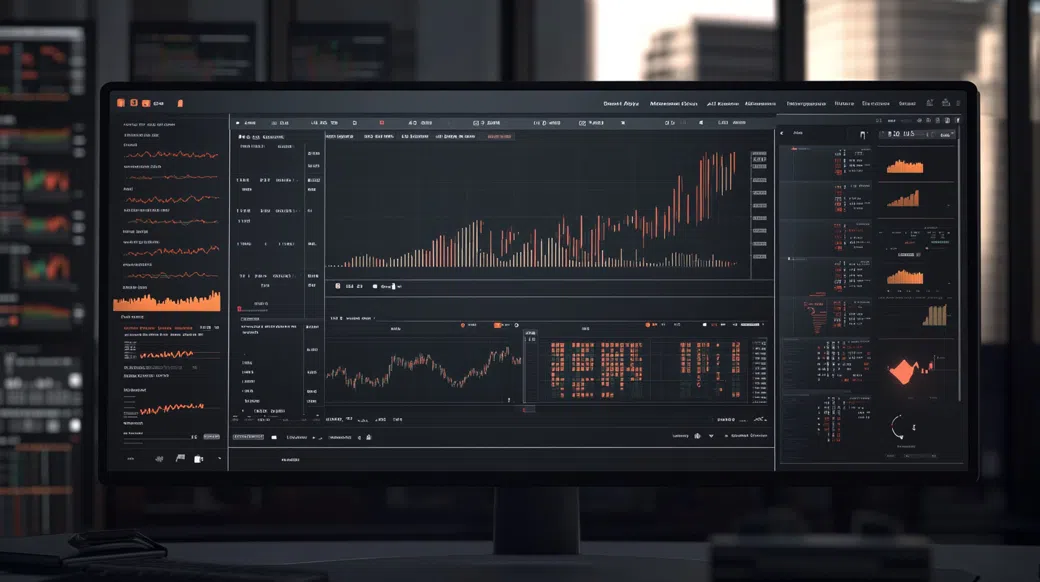
On desktop, the WebTrader loaded consistently across sessions and handled multi-chart layouts without the “browser lag” that plagues some lighter builds. Order tickets covered market, limit, and stop orders with adjustable take-profit/stop-loss, and I could set margin-related alerts before risk got away from me. If you live inside MT4/MT5 expert advisors, note that this service leans proprietary; you don’t get the same plug-in ecosystem or strategy marketplace, even if the core execution felt snappy during normal liquidity.
The Bold Accrudency app is designed as a true companion rather than a “check-only” mobile skin: real-time quotes, one-tap close, and funding/withdrawal menus are all in-app. I tested Bold Accrudency login with biometric unlock enabled, which reduced friction when managing open index exposure during the Asia session. Push notifications for price alerts worked reliably, though I did notice charts take a second to refresh when flipping quickly between instruments on weaker Wi-Fi.
Charting includes the staples—multiple timeframes, common indicators (MA, RSI, MACD, Bollinger Bands), and drawing tools for levels and trendlines. There’s also an economic calendar and a lightweight news feed; useful for awareness, not a substitute for a dedicated research terminal. Think of it as “enough to execute and manage risk,” with the ceiling lower than MT5/cTrader setups for traders who require custom studies or advanced depth-of-market tools.
Before I placed a live trade, the onboarding flow asked for the usual essentials: email/phone verification, a basic suitability questionnaire, and then KYC uploads in the client portal. For verification, I used a government-issued photo ID plus a recent bank statement as proof of address (dated within three months). My documents moved from “submitted” to “approved” the same business day, which aligned with what the help desk later described as their normal processing cadence.
One practical note: the platform nudges you to complete identity checks early, not at the last minute when you’re trying to withdraw. Account base currency choices were reasonable, but if you fund via crypto and trade in USD-denominated CFDs, keep an eye on conversion and network fees outside the broker’s control.
Support was tested with two questions that matter to real money: swap/overnight charges on gold and the timeline for card withdrawals after KYC. Live chat connected in roughly three minutes and the agent pointed me to the specific contract-spec page while also explaining when triple-swap applies. I followed up via email for a written confirmation of withdrawal processing steps, and the ticket reply landed in about nine hours with a clear checklist.
Coverage is effectively 24/5, which fits the FX week, and the tone was more “operations desk” than “sales desk” in my interactions. Language availability seems region-dependent, and I didn’t see a consistently staffed phone line advertised for my locale. Over weekends, crypto markets remain open but service staffing is thinner, so plan ahead if you expect time-sensitive account changes.
If you’re considering this broker, start by checking the live spreads on the instruments you actually trade and confirm your country eligibility before you fund. A demo run is also a smart way to test order controls and alerts without paying financing or commissions.
Visit Bold AccrudencyYes, it can work for beginners who keep position sizes small and use the demo first. The interface is not overly technical, and the Standard account avoids commission math. Still, the availability of 1:500 leverage means mistakes compound quickly, so risk limits matter more than features.
Yes, you can trade crypto CFDs such as BTC/USD and ETH/USD. These are leveraged derivatives, so you’re trading price movements rather than owning coins on-chain. Expect wider spreads and financing effects, especially over weekends.
No—based on my 2026 test cycle, it behaved like a functioning offshore CFD broker, including completing KYC and processing a small withdrawal. The key caveat is jurisdiction: offshore registration (Mauritius FSC) typically provides fewer formal remedies than Tier-1 regulation. Treat it as higher risk than a broker licensed by ASIC or the FCA.
No, Bold Accrudency is not available in the USA. US residents are typically restricted from offshore CFD offerings due to local regulatory rules. If you’re travelling, eligibility is still determined by residency and KYC, not just your current IP address.
A Bold Accrudency withdrawal typically takes 24–48 hours for internal processing after KYC is approved. After that, delivery depends on the rail: cards commonly take 2–5 business days, bank wires 3–7 business days, and crypto can arrive the same day. Timing can stretch during compliance checks or bank holidays.
The Bold Accrudency minimum deposit is $200 on the funding screen I used. That’s enough to test execution and withdrawals without overcommitting capital. If you plan to trade multiple markets, remember margin requirements can still make $200 feel tight.
Yes, there are iOS and Android apps, and they mirror most WebTrader functions. You can monitor positions, place orders, set alerts, and access deposits/withdrawals from the phone. For active traders, biometric login and push notifications are the practical highlights.
Overall Score: 4.0/5
For traders who value a clean proprietary interface and flexible leverage, Bold Accrudency lands in the “competent offshore” bucket—strong enough execution for liquid CFDs, sensible account tiers, and an onboarding flow that actually enforces KYC. The flip side is governance: offshore oversight won’t give you the same safety net as Tier-1 jurisdictions, so position sizing and withdrawal discipline become non-negotiable. I’d treat it as a tactical trading venue, not a long-term vault. If you proceed, keep leverage modest and review the cost stack (spreads, swaps, inactivity) inside Bold Accrudency.
Best for: active CFD traders in accepted regions who want WebTrader + mobile execution and can manage risk tightly. Avoid if: you require Tier-1 regulation, deep research tooling, or you’re prone to over-leveraging.