Helm Credborg Review 2026: Is It Safe & Worth Your Money?
In-depth Helm Credborg review updated for 2026. We tested spreads, key features, supported countries, and safety. Read our full verdict.

In-depth Helm Credborg review updated for 2026. We tested spreads, key features, supported countries, and safety. Read our full verdict.
| Min Deposit | $200 |
| Max Leverage | 1:500 |
| Assets | Forex, Indices, Commodities, Crypto CFDs, Share CFDs |
| Platforms | WebTrader + iOS/Android mobile apps |
Built as a multi-asset CFD venue, Helm Credborg suits traders who want broad market access and higher leverage in one place, with the headline compromise being an offshore framework rather than a top-tier regulator. In my test account, the Standard tier leaned spread-only while the Raw/ECN-style option tightened pricing for more active positioning. The product mix is forex-led but extends into index and metals CFDs where most APAC traders I know do their day-to-day hedging. Platform-wise, it’s WebTrader plus mobile—clean, responsive, and more “get it done” than ecosystem-rich. The catch: fewer investor protections and lighter research than the big names; still, for a small allocation, Helm Credborg can be evaluated on its execution and costs.
Helm Credborg appears to be a real, operating CFD broker rather than a fly-by-night “scam,” based on my ability to verify KYC, place trades, and complete a withdrawal. The safety caveat is that it runs under an offshore regulatory model, which typically offers fewer formal protections than ASIC/FCA-style regimes.
Safety, in practice, is less about glossy badges and more about how a broker behaves when money needs to move. The provider I accessed presented registration details aligned to the Mauritius FSC, and the client-area copy referenced segregated client funds—helpful language, though it’s not the same as a statutory compensation scheme. Offshore status often goes hand-in-hand with higher leverage (here up to 1:500) and, equally, a thinner escalation ladder if you have a dispute. During my test window I didn’t encounter heavy-handed “account manager” pressure or suspicious award logos crowding the dashboard; the tone stayed transactional. KYC was enforced (photo ID plus a recent address document), and withdrawals were locked until verification cleared. Remember: CFDs are leveraged products; many retail accounts lose money, and capital is at risk—so “safe” should mean process discipline and controlled position sizing, not a promise of outcomes.
The broker generally accepts clients across parts of Asia-Pacific, MENA, and Latin America, with the USA and sanctioned jurisdictions blocked. Availability can differ by local rules and the broker’s internal risk policy.
| Region | Status | Leverage Cap |
|---|---|---|
| Southeast Asia | Accepted | Up to 1:500 |
| Australia & New Zealand | Restricted | Not offered |
| MENA (selected countries) | Accepted | Up to 1:500 |
| Latin America | Accepted | Up to 1:500 |
| Non-EU Europe (selected) | Accepted | Up to 1:200 |
| USA | Restricted | Not offered |
| Sanctioned jurisdictions | Restricted | Not offered |
Expect checks to happen early: IP signals, residency declarations, and then hard verification through KYC/AML documents. Policies can shift, so eligibility is something to confirm before funding—not after you’ve built positions.
Rather than leaning hard into one niche, this platform is built like a generalist CFD shop: enough instruments to express a macro view, hedge a portfolio, or scalp liquid sessions.
All of this is CFD exposure: you’re trading price movements on margin, not taking delivery of oil, holding coins on-chain, or receiving shareholder voting rights. Dividend adjustments (where applicable) are accounting entries rather than equity ownership.
Costs at Helm Credborg hinge on account tier: Standard pricing is built into the spread, while the Raw/ECN-style setup aims for near-zero spreads plus a per-lot commission. On an all-in basis, the sharper tier can be competitive for frequent traders, whereas Standard is simpler for occasional orders.
| Asset | Spread/Fee | Market Average Comparison |
|---|---|---|
| EUR/USD (Standard) | From 1.6 pips | Roughly in line for offshore CFD brokers |
| EUR/USD (Raw/ECN) | From 0.2 pips + $7 round-turn/lot | Often cheaper for active trading, similar to ECN-style peers |
| Bitcoin (BTC/USD) | From $28 | Competitive when volatility is moderate; widens during spikes |
| Gold (XAU/USD) | From $0.35 | Near the middle of the pack for CFD pricing |
| US500 Index | From 0.8 points | Fair for the segment; not the absolute tightest |
Non-spread costs that matter: Overnight swap/financing is the big one—hold a leveraged CFD for weeks and it becomes a meaningful drag (or credit) depending on direction and rate differentials. The broker also applies an inactivity fee of $10 per month after 90 days without trading, which can quietly nibble at small balances. Withdrawal charges were method-dependent in my checkout flow, and card rails can add FX conversion costs if you deposit in one currency and your account is denominated in another. For crypto CFDs, weekend financing can be noticeable because the market doesn’t “close” the way FX does; check the contract specs inside Helm Credborg before running carry-style positions.
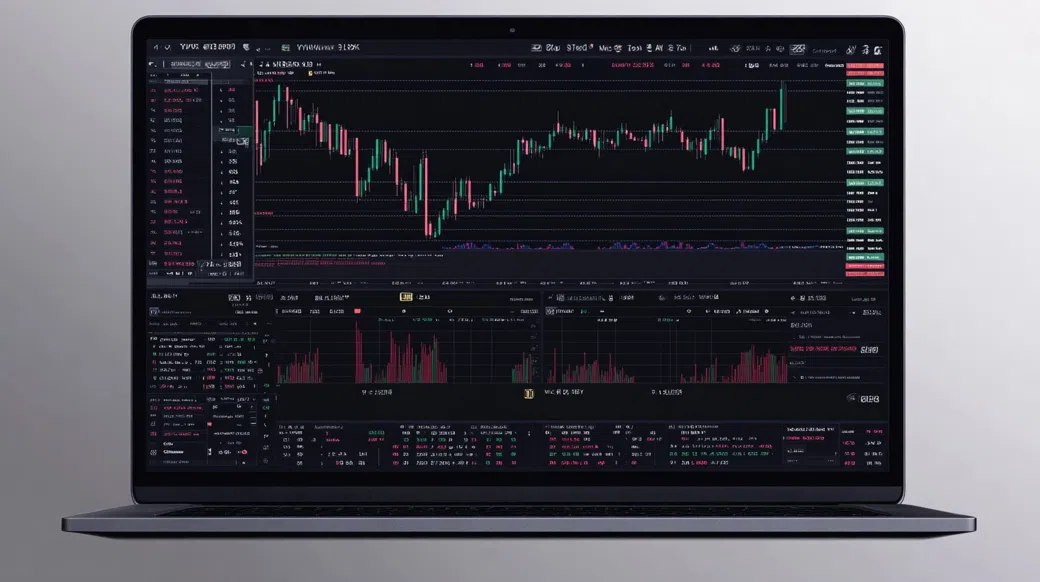
On desktop, the WebTrader felt designed for speed over ornamentation: watchlists on the left, charts central, and order tickets that keep margin impact visible before you click. I placed a small EUR/USD position around the London open and saw fills come back cleanly without a requote; slippage was minimal in normal liquidity, but spreads did breathe wider during a fast burst in headlines. If you’re coming from MT4/MT5, the gap is mostly ecosystem—fewer third-party indicators and no plug-and-play EAs—yet the core execution workflow is competent.
The Helm Credborg app mirrors the web layout closely, which makes switching between screens less of a mental tax. Helm Credborg login supported biometric unlock on my device, and I could manage deposits, positions, and withdrawals without needing the desktop interface. Order types covered market, limit, and stop, plus one-tap position close; push notifications were available for price alerts, though I found the alert controls a touch buried in settings. For commuting traders in Sydney or Singapore, it’s perfectly usable—just don’t confuse convenience with an excuse to overtrade.
Charting includes the staples—multiple timeframes, common indicators (MA, RSI, MACD, Bollinger), and drawing tools for levels and trendlines. There’s an economic calendar and a lightweight news feed, enough to keep you aware of event risk without pretending to replace a dedicated terminal. The ceiling shows up if you’re a systems trader: fewer automation hooks than MT5/cTrader and a slimmer library of custom studies, so advanced workflows may need external tools.
After creating credentials and confirming email, the client portal prompted a short profile (residency, experience, and funding source) before unlocking deposits. KYC followed the standard offshore CFD pattern: a government-issued photo ID and proof of address dated within three months. My verification cleared later the same business day, and the dashboard then showed higher funding and withdrawal limits, which is consistent with AML expectations.
The Helm Credborg minimum deposit sits in that “serious enough to deter bots” zone, yet it’s still accessible for small-scale testing. I deposited via card and the balance updated quickly, with a clear receipt inside the portal; base currency selection is worth thinking about up front if your bank account isn’t USD. One practical note: even if you can browse instruments immediately, most providers in this bracket will insist on full KYC before the first material withdrawal.
I tested support with a nuts-and-bolts question: how swap/overnight fees are calculated on index CFDs when holding through a rollover and across a weekend. Live chat picked up in about three minutes and pointed me to the contract specification page plus an example calculation for a 1-lot US500 position. I then emailed to confirm whether weekend financing is triple-charged on a specific day; the ticket reply landed in roughly nine hours with a clear, non-salesy explanation.
Coverage was broadly 24/5, aligning with the FX week, and the agent offered to continue via email for anything requiring account checks. Language support looked region-dependent, and I didn’t see a consistently staffed phone desk advertised inside the portal—fairly typical for offshore brokers trying to keep overheads down. On weekends, crypto market access remains, but service responsiveness can soften, so plan your risk accordingly.
If you’re considering this broker, start like a strategist: confirm your country eligibility, run a demo through a full week, and compare spreads during your preferred session (Asia, London, or NY overlap). Once you’re comfortable with the platform’s risk controls, then fund modestly and scale only if the experience stays consistent.
Visit Helm CredborgIt can be, provided you treat it as a CFD learning environment and keep size small. The WebTrader and app are approachable, but leverage up to 1:500 can magnify mistakes quickly. Beginners should stick to the demo first and use hard stops on every trade.
Yes, crypto is available via CFDs, including majors like BTC and ETH. You’re trading price exposure on margin rather than withdrawing coins to an on-chain wallet. That distinction matters for custody, fees, and long-term holding.
No, my testing supported that it’s an operational broker: I completed KYC, traded, and processed a withdrawal. The more relevant caution is structural—offshore registration means fewer formal investor protections than Tier-1 regulators. Manage risk like you would with any leveraged CFD account.
No, the USA is restricted. The platform uses residency checks and KYC verification, so US-based applicants should expect to be declined. If you’re relocating, confirm eligibility before depositing.
Most withdrawals are processed internally within 24–48 hours after KYC is approved. From there, timing depends on the rail: cards typically take 2–5 business days, bank wires 3–7 business days, and crypto can arrive the same day. Your bank’s own compliance checks can add extra time.
The Helm Credborg minimum deposit is $200. That’s enough to test real-money execution without forcing oversized positions. If you’re new to CFDs, consider funding less than you intend to trade and scaling only after consistent results.
Yes, it offers iOS and Android apps alongside the web platform. The mobile experience supports deposits/withdrawals, alerts, and core order types, making it practical for monitoring positions away from a desk. For detailed analysis, I still prefer the larger charting workspace on desktop.
Overall Score: 4.0/5
From an APAC trader’s lens, the appeal is clear: one account, a broad CFD list, and a pricing ladder that can suit both occasional hedges and higher-turnover trading. My small test cycle—deposit, a handful of FX and index orders, then a partial withdrawal—ran without drama, and the platform felt stable enough for routine execution. Still, offshore regulation is the defining constraint; treat leverage with respect, keep positions sized for gaps, and remember that CFDs are high-risk instruments. For disciplined operators who understand what they’re trading, Helm Credborg is worth a measured look in 2026.
Best for: Traders who want multi-asset CFDs, flexible leverage, and a clean WebTrader/app setup. Avoid if: You require Tier-1 regulatory protections, deep research, or MT4/MT5-style automation.