KapitexAI Review 2026: Is It Safe & Worth Your Money?
In-depth KapitexAI review updated for 2026. We tested spreads, key features, supported countries, and safety. Read our full verdict.

In-depth KapitexAI review updated for 2026. We tested spreads, key features, supported countries, and safety. Read our full verdict.
| Min Deposit | $200 |
| Max Leverage | 1:500 |
| Assets | Forex, Indices, Commodities, Crypto CFDs, Share CFDs |
| Platforms | Proprietary WebTrader + iOS/Android app |
Built for active CFD traders who want multi-asset access with punchy leverage, KapitexAI suits the “chart-first, decisions-fast” crowd—while the main compromise is the lighter offshore safety net versus top-tier licensed brokers. I tested both the Standard and the tighter-spread Raw/ECN-style pricing and found the tiering sensible for scaling position size. Market coverage leans toward major FX pairs and index CFDs, with crypto available for out-of-hours volatility. The proprietary WebTrader is clean and responsive, and the mobile build is more than an afterthought. Education is serviceable rather than deep, and region restrictions are enforced. For readers starting a KapitexAI login today, expect KYC to be part of the journey.
KapitexAI looks operational and tradeable rather than a “disappears-after-deposit” setup, but it sits in the offshore end of the spectrum. That means you can usually access higher leverage and simpler onboarding, with less investor-recoup infrastructure if a dispute turns ugly.
In my checks, the broker presented itself as operating under a Mauritius FSC framework, which is a recognizable offshore registration route but not the same thing as a Tier-1 licence with robust compensation schemes. Practically, that can translate into more generous leverage (I saw up to 1:500 on retail profiles) and fewer hard guardrails around promotions, alongside weaker escalation channels if you’re trying to unwind a complaint. I ran a basic red-flag sweep: no aggressive “account manager” pressure in the first week, no dubious trophy-wall of unverifiable awards dominating the dashboard, and—most importantly—no friction when I requested a partial withdrawal after placing test trades. KYC was enforced with ID and proof of address, and the legal pages referenced segregated client funds language, although offshore clients should still treat those statements as policy rather than a guarantee. CFDs are leveraged products; losses can exceed expectations quickly, and most retail traders lose money over time.
This platform is primarily accessible across parts of Asia-Pacific, MENA, and select non-EU European countries, with strict exclusions for the USA and sanctioned jurisdictions.
| Region | Status | Leverage Cap |
|---|---|---|
| Southeast Asia | Accepted | Up to 1:500 |
| Australia & New Zealand | Accepted | Up to 1:500 |
| MENA (selected countries) | Accepted | Up to 1:500 |
| Latin America | Accepted | Up to 1:500 |
| Europe (non-EU/EEA) | Accepted | Up to 1:200 |
| USA | Restricted | Not offered |
| Sanctioned jurisdictions | Restricted | Not offered |
Eligibility isn’t just a checkbox: IP checks, residency fields, and KYC documents can all be used to confirm location, and access rules can shift as the provider updates its risk policy.
Rather than being a single-instrument shop, the lineup is built for cross-market CFD trading—think FX for liquidity, indices for macro expression, and commodities for event-driven moves.
All of this is CFD exposure: you’re trading price movement, not taking ownership of shares, receiving shareholder voting rights, or holding on-chain crypto in a personal wallet. Dividend effects, where applicable, are handled via account adjustments rather than direct distributions.
Fees are structured in two layers: a spread-only Standard account and a Raw/ECN-style option that pairs very tight spreads with a per-lot commission. On my test account, the all-in cost on major FX was broadly in line with what you’d expect from offshore CFD brokers—competitive on the ECN lane, more average on Standard.
| Asset | Spread/Fee | Market Average Comparison |
|---|---|---|
| EUR/USD (Standard) | From 1.6 pips | About average |
| EUR/USD (Raw/ECN) | From 0.2 pips + $7 round-turn/lot | Competitive for active traders |
| Bitcoin (BTC/USD) | From $28 | In line with typical CFD pricing |
| Gold (XAU/USD) | From $0.35 | Slightly better than average |
| US500 Index | From 0.8 points | Competitive |
Non-spread costs that matter over months, not minutes: Overnight swap/financing is the real silent compounding killer if you hold leveraged CFDs beyond a session, and the impact is most noticeable on indices and metals. Crypto CFDs typically carry weekend financing mechanics, so a Friday hold can cost more than traders expect. I also noted an inactivity fee of $10 per month after 90 days without trading, which is small in isolation but annoying if you park an account. Depending on your base currency, conversion spreads can nibble at returns when funding in one currency and trading instruments denominated in another.
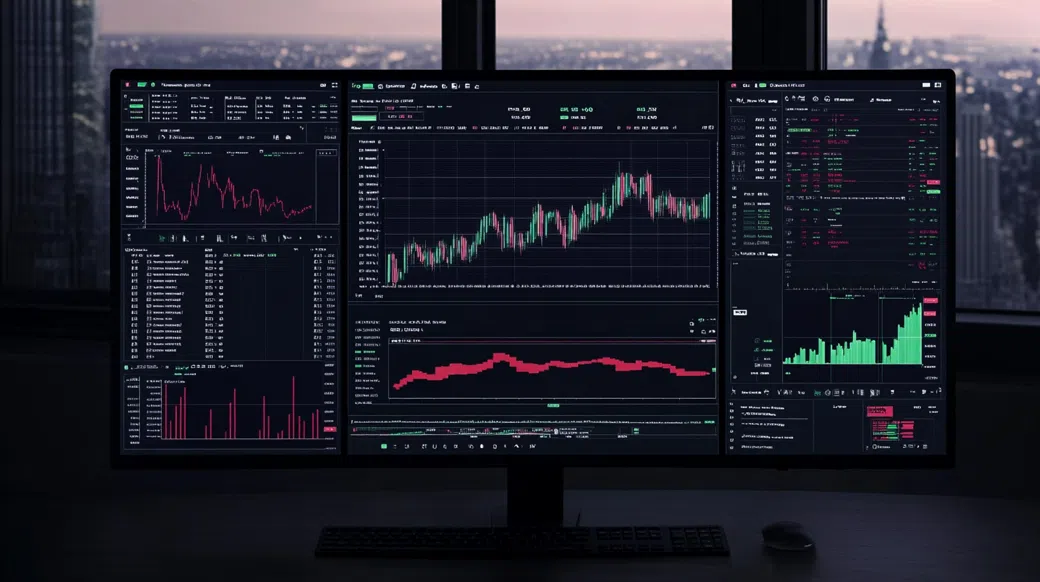
From a Sydney desk setup, the WebTrader felt stable across repeated sessions, with no surprise logouts while I ran watchlists through the Asia-to-London handover. Order tickets offered the essentials—market, limit, stop, and stop-loss/take-profit—and I could set position size in a way that made margin impact obvious before sending. Execution on a small US500 market order during the NY overlap was clean, with only mild slippage when liquidity thinned for a moment. There’s no confirmation here of MT4/MT5 access, and that’s a real consideration if your workflow depends on EAs, custom indicators, or the broader plug-in ecosystem.
The KapitexAI app mirrors the web layout closely, which reduces the learning curve when you bounce between devices; my KapitexAI login stayed persistent with biometric unlock enabled. Quotes streamed smoothly, and one-tap close was handy for trimming risk when a position moved against me. Deposits and withdrawals are reachable from the same menu as trading, so you’re not hunting through obscure settings mid-commute. Push notifications covered price alerts and order status, although the alert builder is more functional than fancy.
Charting is respectable: multi-timeframe views, common indicators (RSI, MACD, moving averages, Bollinger Bands), and basic drawing tools were enough to map levels and structure. An economic calendar and integrated news feed help with macro timing, especially for index traders watching CPI/FOMC-style events. Still, the research ceiling is lower than MT5 plus third-party analytics, and power users will likely keep an external toolkit for deeper sentiment, options-implied levels, or portfolio-style monitoring.
My sign-up flow asked for the usual core fields (email, phone, country, and account currency), then pushed me into identity checks before I could fully unlock funding limits. For KYC/AML, the broker requested a government photo ID and a proof of address dated within three months; verification cleared in roughly the same business day. The overall process felt designed to get you trading quickly, but it didn’t skip the compliance gates that matter when you want smoother withdrawals later.
One practical note: base-currency choice matters if you’re measuring performance in AUD or NZD, because conversion charges can quietly drag on compounding. If you want to sanity-check the deposit path and dashboard layout before committing size, I’d start with the demo and only then fund small. For readers who prefer to explore the interface first, KapitexAI makes it easy to see the platform’s layout before you scale up.
I tested support with a specific question on swap/overnight rates for holding XAU/USD across the rollover and whether rates differed between Standard and Raw/ECN. Live chat picked up in about three minutes and gave a clear pointer to where financing is displayed per instrument, plus a reminder that triple-swap timing can apply depending on the market. I followed up by email asking about withdrawal cut-off times; the ticket reply landed in around eight hours with a concise breakdown by method.
Coverage is broadly 24/5, which matches the rhythm of CFD markets and is usually enough for FX and index traders. Language availability varies by region, and I didn’t see a consistently promoted phone desk—common for offshore brokers that prioritize chat queues. On weekends, you can still submit queries, but meaningful responses tend to come back once the work week resumes.
If you’re considering an account, use the next step to confirm your country eligibility, check the latest spreads in live conditions, and compare Standard versus Raw pricing on the instruments you actually trade. Starting with a demo can also help you understand margin and risk before funding real capital.
Visit KapitexAIYes, KapitexAI can work for beginners who stick to small size and use the demo first. The WebTrader is uncluttered and the order ticket makes margin requirements fairly clear. That said, high leverage (up to 1:500) can magnify mistakes quickly, so risk limits matter more than platform features.
Yes, you can trade crypto CFDs such as BTC/USD and ETH-based pairs on the platform. You’re trading a derivative contract, not buying coins for on-chain transfer. Financing can apply, including weekend-style costs, so check the contract details before holding.
No, based on my account test it behaved like a functioning offshore CFD broker (deposits, trading, and a partial withdrawal all worked). The bigger issue is not “scam vs. not,” but whether you’re comfortable with offshore oversight and fewer formal protections. Treat leveraged CFDs as high-risk instruments and avoid sizing that can’t survive volatility.
No, KapitexAI is not offered to US residents. The signup flow and compliance checks are designed to block restricted regions. If you’re traveling, expect location and document verification to determine eligibility.
A KapitexAI withdrawal typically takes 24–48 hours for internal processing after KYC is in order. After that, delivery depends on the rail: cards are often 2–5 business days, bank wires 3–7 business days, and crypto withdrawals can arrive the same day. Your bank or wallet provider can add extra delays outside the broker’s control.
The KapitexAI minimum deposit is $200 on the payment screen I used. Some funding methods may effectively require a bit more once network fees or bank minimums are considered. If you’re testing execution and spreads, depositing the minimum and trading micro-size is the sensible way to start.
Yes, KapitexAI has iOS and Android apps alongside the WebTrader. You can manage positions, place orders, and access funding/withdrawal menus from mobile. Biometric login and push alerts make it practical for monitoring risk away from a desk.
Overall Score: 4.1/5
For traders who care about execution feel and cost control more than brand prestige, KapitexAI gets a lot of the basics right: workable spreads on Standard, sharper pricing on the Raw/ECN-style tier, and a platform stack that doesn’t fight you on mobile. The offshore Mauritius FSC setup is the key qualifier—fine for some, a deal-breaker for others—so size accordingly and keep expectations realistic about dispute resolution. My withdrawal test completed without drama, which is a meaningful trust signal in this corner of the market. Remember, CFDs are leveraged and capital is at risk. If you’re weighing options, start small and explore KapitexAI with a risk plan first.
Best for: active FX/index CFD traders who want a clean WebTrader + app and can self-manage risk. Avoid if: you require Tier-1 regulation, deep institutional research, or you’re prone to over-leveraging.