Luc Digitholm Review 2026: Is It Safe & Worth Your Money?
In-depth Luc Digitholm review updated for 2026. We tested spreads, key features, supported countries, and safety. Read our full verdict.

In-depth Luc Digitholm review updated for 2026. We tested spreads, key features, supported countries, and safety. Read our full verdict.
| Min Deposit | $200 |
| Max Leverage | 1:500 |
| Assets | Forex, Indices, Commodities, Crypto CFDs, Share CFDs |
| Platforms | Proprietary WebTrader + iOS/Android app |
Built as a multi-asset CFD venue, Luc Digitholm suits traders who want broad market access and punchy leverage, with the obvious trade-off being an offshore oversight framework rather than a top-tier regulator. In my test account, the menu splits cleanly into spread-only pricing for casual flow and a tighter-spread tier for more active hands. You’re essentially getting Forex majors, key indices, metals, and a crypto CFD list from one dashboard, delivered through a browser platform and a mobile companion. The differentiator is convenience: quick market switching and decent charting without installing desktop software. The drawback is that protections and dispute pathways are lighter than you’d expect under ASIC/FCA-style regimes—worth factoring in before you size positions. I used Luc Digitholm across web and mobile to sanity-check pricing, execution and payouts.
Luc Digitholm looks operational rather than a “vanish overnight” operation, and my deposit, trading and withdrawal checks behaved normally. That said, it’s not the same safety proposition as a Tier‑1 regulated broker: you’re dealing with an offshore framework and must manage that risk accordingly.
Regulatory posture matters because it sets the rules of the road. On the legal pages I reviewed during onboarding, the provider referenced a Mauritius FSC registration model, which is common in the international CFD segment and typically enables higher leverage (up to 1:500 here) at the cost of lighter investor protections and fewer formal compensation schemes. My red-flag scan focused on the usual problem areas: withdrawal friction, aggressive “account manager” pressure, and questionable marketing badges. I didn’t see pushy sales calls during the test window, and the platform forced KYC (photo ID plus proof of address) before I could submit a withdrawal request—an AML safeguard I actually like to see. The client-funds wording also leaned on segregation language, though offshore structures still make dispute escalation harder in practice. Remember: CFDs are leveraged products; margin calls happen fast, and most retail accounts lose money—trade small until you trust the plumbing.
This broker primarily targets international clients across parts of Asia-Pacific, MENA, LATAM and selected non‑EU European markets, with strict exclusions for the USA and sanctioned jurisdictions.
| Region | Status | Leverage Cap |
|---|---|---|
| Southeast Asia | Accepted | Up to 1:500 |
| Middle East & North Africa (MENA) | Accepted | Up to 1:500 |
| Latin America | Accepted | Up to 1:500 |
| Non‑EU Europe (selected) | Accepted | Up to 1:200 |
| USA | Restricted | Not offered |
| Sanctioned jurisdictions | Restricted | Not offered |
In practice, access is enforced via signup declarations, IP/geolocation checks, and KYC country validation. Eligibility can shift as compliance policies tighten, so it’s worth confirming your region before funding a live account.
The platform is built with a “global macro” mindset: currencies and indices sit at the centre, with commodities and crypto CFDs as the satellites for volatility and hedging.
All of this is CFD exposure: you’re trading price movements, not taking delivery of assets. That means no shareholder voting rights on equities and no on-chain transfers for crypto—just margin-based contracts with financing costs.
Costs are structured around two account styles: a spread-only Standard tier and a Raw/ECN-style option that tightens the spread and adds commission. On balance, the pricing I saw sits in the middle of the offshore CFD pack—competitive on the raw tier, less exciting on Standard if you scalp.
| Asset | Spread/Fee | Market Average Comparison |
|---|---|---|
| EUR/USD (Standard) | From 1.6 pips | In line with many offshore CFD brokers |
| EUR/USD (Raw/ECN) | From 0.2 pips + $7 round-turn per lot | Competitive for active FX traders |
| Bitcoin (BTC/USD) | From $35 | Typical; can widen on weekend volatility |
| Gold (XAU/USD) | From $0.30 | About average for a non-exchange CFD quote |
| US500 Index | From 0.7 points | Reasonable for retail CFD execution |
Non-spread costs that matter: Overnight swap/financing is the silent compounding killer for long holds, and it showed up clearly when I kept a small EUR/USD position open past rollover. The inactivity fee is $10 per month after 90 days without trading, which makes “set-and-forget” accounts a poor fit. Withdrawals themselves were not hit with a platform-side fee in my test, but your payment rail can still charge, and FX conversion spreads apply if you fund in a currency different to your account base.
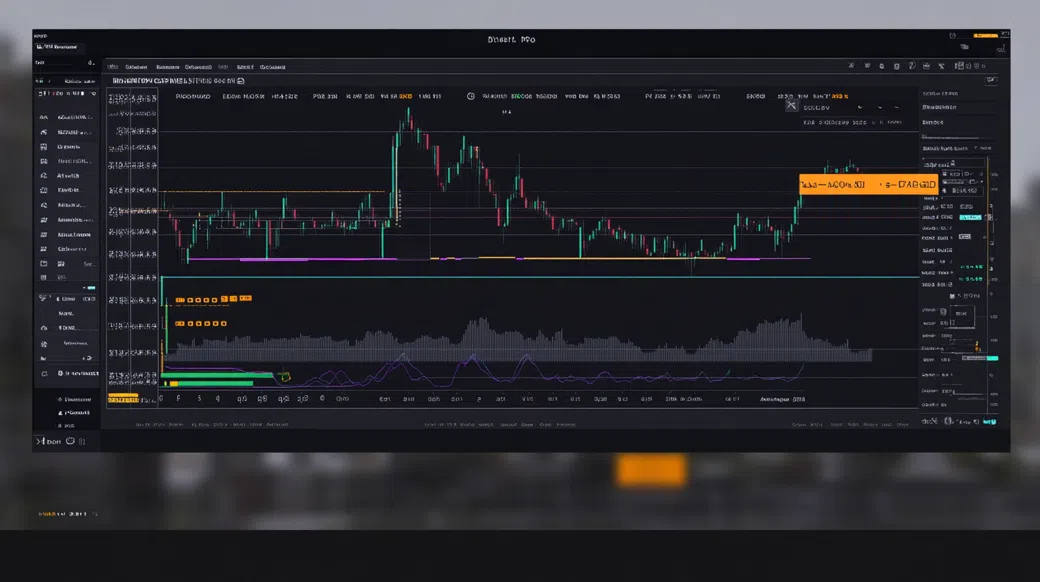
On desktop, the WebTrader behaved like a modern lightweight dealing screen: stable sessions, fast chart redraws, and enough order controls to run basic risk (market, limit, stop, plus stop-loss/take-profit attachments). Execution during the London open on US500 and EUR/USD was clean on small size, though you should still expect slippage around high-impact releases—this is CFD dealing, not an exchange book. If you live inside MT4/MT5 indicators and EAs, note that this service leans proprietary; the ecosystem advantage of MetaTrader isn’t the headline feature here.
The Luc Digitholm app mirrors the web layout closely, which reduces the “where did they hide that button?” problem when you switch screens mid-session. My Luc Digitholm login stayed persistent with biometric unlock enabled, and I could manage orders, set price alerts, and trigger a quick position close without hunting through menus. Deposits and withdrawals are accessible in-app, and push notifications for fills/alerts arrived promptly. The main quirk: on smaller phones, indicator settings feel a touch cramped, so detailed chart work is better on a tablet or desktop.
Charting covers the staples—multi-timeframe views, drawing tools, and the common indicator shelf (MA, RSI, MACD, Bollinger). There’s an economic calendar and a rolling news feed for macro awareness, plus watchlists that helped me keep FX and metals ideas separated. The ceiling is obvious if you’re used to cTrader/MT5 plug-ins and advanced strategy testing, but for discretionary trading and quick risk management it’s fit for purpose.
From the signup screen, the broker asked for the usual profile basics (email, phone, country, and a short suitability-style questionnaire) before pushing me into identity checks. KYC required a government-issued photo ID and a recent proof of address dated within three months; my verification cleared later the same business day after a quick document resubmission for glare. Funding was available immediately after approval, and I used a card deposit to avoid bank-wire delays. The Luc Digitholm minimum deposit on the live account I opened was $200.
Account base currency selection is worth a pause—choosing one that matches your funding source reduces conversion leakage. I also noticed the platform nudges you to complete verification early, which is a positive; it tends to prevent the classic “KYC surprise” when you attempt your first payout.
I tested support with a practical question: how rollover swap is calculated on index CFDs and whether rates differ between Standard and Raw/ECN. Live chat picked up in about three minutes and pointed me to the instrument-spec sheet, including the time the platform applies financing and how triple-swap days work. I then followed up by email asking what to expect for a card withdrawal timeline after KYC; the ticket reply landed in roughly eight hours with a clear range and a reminder to keep the card in the same name as the trading account.
Coverage is broadly what you’d expect from this segment: 24/5 chat and email, with the weekend typically limited to self-serve help pages and automated messages. Language support varies by region, and phone assistance looked selective rather than universal. Relative to other offshore CFD desks, it’s competent—just don’t expect the depth of a full-service institutional helpdesk.
If you’re considering an offshore CFD account, start by validating your country eligibility, then run a demo to see spreads and margin requirements in real time. Once you’re comfortable with the workflow, you can compare the Standard vs. Raw/ECN pricing on the instruments you actually trade.
Visit Luc DigitholmYes, it can work for beginners who keep position sizes small and use the demo first. The interface is less intimidating than some legacy terminals, and the $200 entry point is manageable. The offshore leverage on offer is powerful, though—new traders should treat 1:500 as a risk factor, not a feature.
Yes, crypto is available via CFDs, including majors like BTC and ETH. You’re trading price exposure with leverage and financing considerations rather than holding coins in a wallet. Weekend spreads can widen, so risk controls matter.
No, my checks didn’t flag it as a scam: trades executed, support responded, and a test withdrawal processed. The more relevant question is “what protections apply,” because it operates under an offshore registration model (Mauritius FSC), not a Tier‑1 regulator. With any CFD broker, losses can exceed expectations quickly if leverage is misused.
No, Luc Digitholm is not offered to US residents. The platform blocks restricted jurisdictions during onboarding and through KYC checks. If you’re in the US, you’ll need a CFTC/NFA-compliant alternative.
Most withdrawals are processed internally within 24–48 hours once KYC is approved. After that, the payment rail determines arrival: cards usually take 2–5 business days, bank wires 3–7 business days, and crypto transfers can land the same day. In my card test, the request moved to “processed” the next day.
The Luc Digitholm minimum deposit is $200 for the live account tier I opened. That’s enough to test execution and withdrawals without overcommitting capital. If you plan to trade indices or crypto CFDs with wide intraday swings, consider funding above the minimum to avoid constant margin stress.
Yes, there’s a dedicated mobile app for iOS and Android. It supports charting, order placement, alerts, and account actions like deposits and withdrawals. For detailed analysis, the larger screen of the WebTrader is still more comfortable.
Overall Score: 3.9/5
From an Asia-Pacific lens, the appeal is simple: one CFD account that covers FX, indices and metals with leverage up to 1:500, plus a raw-style tier that can keep transaction costs honest if you trade frequently. My funding and Luc Digitholm withdrawal test didn’t throw up operational alarms, and the WebTrader/mobile pairing is coherent for on-the-go risk management. The compromise is jurisdictional—offshore registration means fewer formal protections and a thinner safety net if disputes arise. Keep sizing conservative, respect margin, and remember CFDs are leveraged instruments where capital is at risk.
Best for: active CFD traders who value a proprietary WebTrader, multi-asset access, and Raw/ECN pricing. Avoid if: you require Tier‑1 regulation, deep institutional-grade research tools, or you’re prone to overusing leverage.