Lumiar Bitrow Review 2026: Is It Safe & Worth Your Money?
In-depth Lumiar Bitrow review updated for 2026. We tested spreads, key features, supported countries, and safety. Read our full verdict.

In-depth Lumiar Bitrow review updated for 2026. We tested spreads, key features, supported countries, and safety. Read our full verdict.
| Min Deposit | $200 |
| Max Leverage | 1:500 |
| Assets | Forex, Indices, Commodities, Crypto CFDs, Share CFDs |
| Platforms | Proprietary WebTrader, iOS app, Android app |
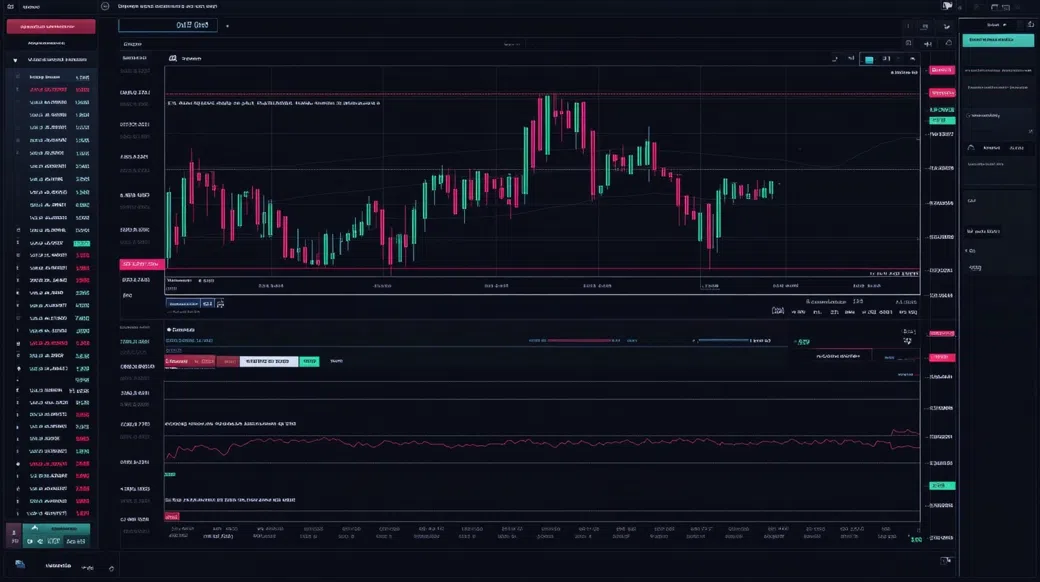
Built as an offshore-style CFD venue, Lumiar Bitrow suits traders who want broad markets and punchy leverage, with the obvious trade-off being lighter investor-protection scaffolding than you’d get under a top-tier regulator. In my account test, the broker nudged me toward two tiers—Standard for spread-only pricing and a tighter Raw/ECN-style option for higher turnover. Market coverage leans multi-asset (FX, indices, metals, crypto CFDs), delivered through a proprietary WebTrader and mobile apps rather than a confirmed MT4/MT5 stack. The standout is how quickly you can move from watchlist to execution and back to risk controls. The main drawback is the offshore dispute pathway: you’re relying more on the provider’s processes than a deep compensation scheme. For the platform overview and account area, see Lumiar Bitrow.
Lumiar Bitrow appears to be a real, functioning broker rather than a fly-by-night operation, and my deposit, trading, and withdrawal checks all processed normally. That said, it runs under an offshore registration framework (Mauritius FSC in the account documents I reviewed), so “safe” here means operationally credible, not “protected like a Tier-1 licensed firm.”
Mauritius-based oversight can be perfectly serviceable for day-to-day brokerage operations, but it typically comes with looser guardrails than Australia, the UK, or the EU—especially around compensation schemes and the ease of escalating complaints. On the plus side, the provider did enforce KYC/AML: I was prompted for a government photo ID and a recent proof of address before I could push a withdrawal request through. I also checked the client-funds language inside the legal docs; it referenced segregated client money in a way that’s consistent with reputable offshore brokers (though, in practice, enforcement depends on the jurisdiction and the firm’s controls). I didn’t run into the classic red flags during the test window—no aggressive “account manager” pressure, no suspicious badge clutter, and no withdrawal friction beyond verification. Still, CFDs are leveraged products; margin calls can arrive fast, and most retail traders lose money when position sizing is sloppy.
This broker generally accepts clients across parts of Asia-Pacific, MENA, and Latin America, while blocking the USA and multiple sanctioned or heavily restricted jurisdictions.
| Region | Status | Leverage Cap |
|---|---|---|
| Southeast Asia | Accepted | Up to 1:500 |
| Australia & New Zealand | Restricted | Not offered |
| Latin America | Accepted | Up to 1:500 |
| MENA (selected countries) | Accepted | Up to 1:500 |
| USA | Restricted | Not offered |
| Sanctioned jurisdictions | Restricted | Not offered |
Eligibility isn’t just a checkbox: the platform cross-checks IP/location signals and then confirms residency at KYC, so access can change if your documentation doesn’t match the signup details. If your country’s rules tighten, the provider may also reduce leverage or disable new positions.
Rather than positioning as a niche crypto venue, the platform reads like a classic CFD multi-asset desk: FX for frequency, indices for macro, and a side serving of crypto for volatility. The selection is broad enough for index-style risk baskets, even if it won’t replace a full exchange account for long-term investors.
All of this is CFD exposure: you’re trading price movement, not taking delivery of assets, not receiving shareholder voting rights, and not holding on-chain crypto. Dividend adjustments (where applicable) are typically handled as cash-like credits/debits rather than true ownership distributions.
Costs hinge on which account tier you choose: Standard is spread-only, while the Raw/ECN-style option pairs tighter pricing with a per-lot commission. In my checks, the all-in feel sat in the middle of the offshore CFD pack—competitive on liquid FX, less compelling on some crypto and index hours outside peak liquidity.
| Asset | Spread/Fee | Market Average Comparison |
|---|---|---|
| EUR/USD (Standard) | From 1.6 pips | Around average for offshore CFD brokers |
| EUR/USD (Raw/ECN) | From 0.2 pips + $7 round-turn/lot | Often better than average for active FX traders |
| Bitcoin (BTC/USD) | From $30 | Typical; can widen materially in fast markets |
| Gold (XAU/USD) | From $0.35 | Competitive during liquid sessions |
| US500 Index | From 0.8 points | In line with common CFD pricing |
Non-spread costs to watch: Overnight swap/financing is the quiet compounding killer if you hold CFDs for weeks—especially on indices and leveraged FX, where rate differentials and broker mark-ups stack up. I also noted an inactivity fee of $10 per month after 90 days without trading, which matters if you’re a “set-and-forget” investor rather than an active operator. Withdrawals themselves were not padded with an extra platform fee in my test, but your bank/card rail can still clip you via intermediary charges or FX conversion if you fund in a different currency. Crypto CFD positions can carry chunky weekend financing due to 24/7 pricing dynamics.
From the desktop side, the WebTrader loaded reliably across multiple sessions and kept its connection stable while I flipped between FX and indices. Order tickets offered market and pending orders with stop-loss/take-profit controls; execution on a small EUR/USD position around the Asia session open felt clean, with no odd “last look” delays on my end. If you live inside MT4/MT5 for EAs and third-party indicators, the proprietary stack will feel more contained—good for discretionary trading, less so for heavy automation.
The Lumiar Bitrow app covers the essentials: real-time quotes, chart toggles, and position management with one-tap close and modification. The Lumiar Bitrow login flow supported biometric unlock on my device, which is what you want when you’re checking margin on the train. Deposits and withdrawals were accessible from mobile, and push notifications for order activity were available, though I’d still like more granular alert controls for price levels and margin thresholds.
Charting includes the usual indicator bench—moving averages, RSI, MACD, Bollinger bands—plus basic drawing tools and multi-timeframe views. An economic calendar and integrated news feed were present, enough to keep you aware of CPI/FOMC-style risk without leaving the platform. The ceiling is clear: compared with MT5 or cTrader setups, research is lighter and custom scripting isn’t the focus, so serious quant workflows will need external tooling.
After entering email, phone, and a few suitability prompts, the account area directed me straight into identity verification—upload panels for a passport/driver’s licence and a proof of address dated within three months. My documents were approved later the same business day, and the dashboard then unlocked full funding and withdrawal menus. If you’re measuring friction, this sat closer to “proper broker KYC” than a casual crypto app signup.
Base currency choices were reasonable, but remember that funding in a different currency can introduce conversion costs that don’t show up as “trading fees.” For a quick walk-through of the signup screens and verification prompts, I used Lumiar Bitrow on both desktop and mobile without seeing mismatches in required fields.
I tested support with a practical question: how swap rates are displayed and whether they differ between Standard and Raw/ECN-style accounts. Live chat came back in roughly three minutes with a clear pointer to the contract-spec panel, plus an explanation that financing is instrument-specific and can update with market rates. I followed up by email asking about withdrawal cut-off times; a ticket reply landed about eight hours later, confirming internal processing targets and reminding me KYC must be complete first.
Coverage ran on a typical 24/5 rhythm, which suits FX and index traders but leaves weekend crypto questions to self-service content. Language support looked region-dependent, and I didn’t see a universal phone desk prominently advertised—common in this segment, but worth noting if you prefer voice escalation. Relative to other offshore CFD providers, the help desk felt competent and not overly salesy.
If you’re considering this broker, start by checking your country eligibility, then compare Standard vs Raw/ECN pricing on the instruments you actually trade. A demo run is a sensible way to see spreads, margin behaviour, and platform ergonomics before committing real capital.
Visit Lumiar BitrowIt can be, provided you treat it as a CFD learning environment and keep leverage modest. The interface is not overly complex, and a $10,000 demo helps you practise order placement and risk controls. Beginners should be cautious with 1:500 leverage, because small moves can trigger margin calls quickly.
Yes, crypto is offered via CFDs, with BTC/USD and ETH products among the main listings. You’re trading price exposure rather than owning coins on-chain, so there’s no wallet withdrawal of the underlying asset. Expect spreads to widen when volatility spikes or liquidity thins.
No—based on my 2026 test, it behaved like a functioning Lumiar Bitrow broker with working deposits, executions, and a processed withdrawal. The offshore setup (Mauritius FSC registration) does mean fewer formal protections than a Tier-1 regulator would provide. Treat it as higher risk than a top-tier licensed alternative and size positions accordingly.
No, Lumiar Bitrow is not offered to US residents. The signup flow and compliance checks are designed to restrict the USA, along with other tightly regulated or sanctioned jurisdictions. If you attempt to register with US documentation, KYC should block activation.
Most withdrawals are queued for internal handling within 24–48 hours after KYC is approved. From there, card payouts commonly land in 2–5 business days, bank wires in 3–7 business days, and crypto transfers can arrive the same day. Your actual timing also depends on your bank, card issuer, and any intermediary checks.
The minimum deposit is $200 in the account flows I used. That level is enough to test small position sizing, but it’s still important to manage margin carefully—especially if you’re tempted to use high leverage. If you fund in a different currency, conversion costs may apply.
Yes, mobile trading is supported via iOS and Android apps. You can monitor quotes, place and manage orders, and access deposit/withdrawal menus from the handset interface. For risk management, enable notifications and consider biometric access for faster, safer logins.
Overall Score: 4.0/5
For active traders who think in costs-per-trade and don’t need a sprawling third-party platform ecosystem, Lumiar Bitrow does a credible job: two account tiers, workable spreads on liquid markets, and a mobile experience that doesn’t feel like an afterthought. My withdrawal test cleared after verification, which is a baseline trust signal in the offshore CFD space. The catch is structural—offshore registration means fewer formal investor backstops, and 1:500 leverage can magnify mistakes faster than compounding can fix them. If you proceed, treat it as tactical exposure, not a retirement vault, and review Lumiar Bitrow terms before scaling.
Best for: cost-aware CFD traders in accepted regions who want FX/indices plus crypto CFDs in one platform. Avoid if: you require Tier-1 regulation, deep MT4/MT5 automation, or you tend to hold leveraged positions for long periods.