Pregioranza Review 2026: Is It Safe & Worth Your Money?
In-depth Pregioranza review updated for 2026. We tested spreads, key features, supported countries, and safety. Read our full verdict.

In-depth Pregioranza review updated for 2026. We tested spreads, key features, supported countries, and safety. Read our full verdict.
| Min Deposit | $200 |
| Max Leverage | 1:500 |
| Assets | Forex CFDs, Indices CFDs, Commodity CFDs, Crypto CFDs, Share CFDs |
| Platforms | Proprietary WebTrader, iOS app, Android app |
Built for traders who want broad CFD access with punchy leverage, Pregioranza suits active speculators more than conservative, long-horizon investors—and the headline compromise is an offshore setup in exchange for flexibility. I ran a Standard and a Raw-style profile side-by-side, and the pricing differences were clear once positions went beyond a quick scalp. Markets span the usual staples (FX, indices, metals, crypto), delivered via a proprietary WebTrader plus mobile apps, rather than an MT4/MT5-heavy ecosystem. The platform’s strongest note is its clean execution workflow and sensible risk controls like margin visibility; the weak point is that dispute escalation and investor protections aren’t on the same footing as Tier-1 venues. Here’s the hands-on Pregioranza review for 2026.
Pregioranza operated as a functioning broker in my test—deposits, trading, and withdrawals all worked—so it didn’t present as a “vanishing act” scam. The caveat is structural: it runs under an offshore registration model, which typically offers fewer formal protections than ASIC/FCA-style regimes.
The registration path I reviewed points to the Mauritius FSC as the supervisory touchpoint, a common choice for international CFD providers offering higher leverage. In practice, that offshore status can be a double-edged sword: you often get looser leverage caps and faster product rollout, but you also lose robust compensation schemes and the clean dispute channels that come with stricter jurisdictions. During my test window, I looked for the usual red flags—pressure-heavy account “handlers”, questionable award badges, or withdrawal friction. None of that showed up; KYC was enforced before withdrawal, and the client-area copy repeatedly referenced segregated client funds and AML checks. Still, with CFDs the main risk sits with leverage itself: a small move can snowball into a margin call, and most retail accounts lose money trading leveraged products.
This broker accepts clients across a mix of Asia-Pacific, parts of Europe (outside tightly restricted zones), and several emerging-market regions, while the USA and sanctioned countries are off-limits.
| Region | Status | Leverage Cap |
|---|---|---|
| Southeast Asia | Accepted | Up to 1:500 |
| Australia & New Zealand | Accepted | Up to 1:500 |
| MENA (selected countries) | Accepted | Up to 1:500 |
| Latin America | Accepted | Up to 1:500 |
| USA | Restricted | Not offered |
| Sanctioned jurisdictions | Restricted | Not offered |
Eligibility wasn’t treated as a box-ticking exercise: IP checks and address verification were part of the funnel, and the platform reserved the right to request extra documentation if your signup details didn’t align. Regional availability can shift, so treat the country list as “current policy”, not a lifetime guarantee.
Rather than trying to be everything to everyone, the lineup leans toward the instruments that dominate real trading screens: currencies, headline indices, and the big-ticket commodities, with crypto CFDs as the higher-volatility sidecar.
All exposure is via CFDs, meaning you’re trading price movement, not acquiring the underlying asset. That also means no shareholder voting rights, no on-chain withdrawals for crypto, and any “dividend” effect is typically handled as an adjustment rather than ownership income.
Pricing is split into two lanes: a spread-only Standard account and a Raw/ECN-style option that trades tighter spreads for a per-lot commission. On EUR/USD, my Standard quotes hovered around the mid-1s in pips, while the Raw profile tightened materially—broadly in line with what you’d expect from offshore CFD peers targeting active traders.
| Asset | Spread/Fee | Market Average Comparison |
|---|---|---|
| EUR/USD (Standard) | From 1.6 pips | About average for spread-only CFD accounts |
| EUR/USD (Raw/ECN) | From 0.2 pips + $7 round-turn per lot | Competitive for commission-based pricing |
| Bitcoin (BTC/USD) | From $35 (variable) | In the typical range for CFD crypto spreads |
| Gold (XAU/USD) | From $0.30 | Roughly middle-of-pack |
| US500 Index | From 0.8 points | Comparable to many offshore multi-asset platforms |
Non-spread costs matter more than most traders admit, particularly if you hold risk overnight. Swap/overnight financing is applied on leveraged CFD positions (and crypto often carries extra weekend financing), so multi-day trades can quietly drag returns. I also noted an inactivity fee of $10 per month after 90 days without trading, plus potential charges outside the broker’s control—bank wire fees, card FX conversion, or blockchain network costs on crypto withdrawals. If you’re benchmarking Pregioranza fees, compare total cost-of-trade (spread + commission + financing), not the headline spread alone.
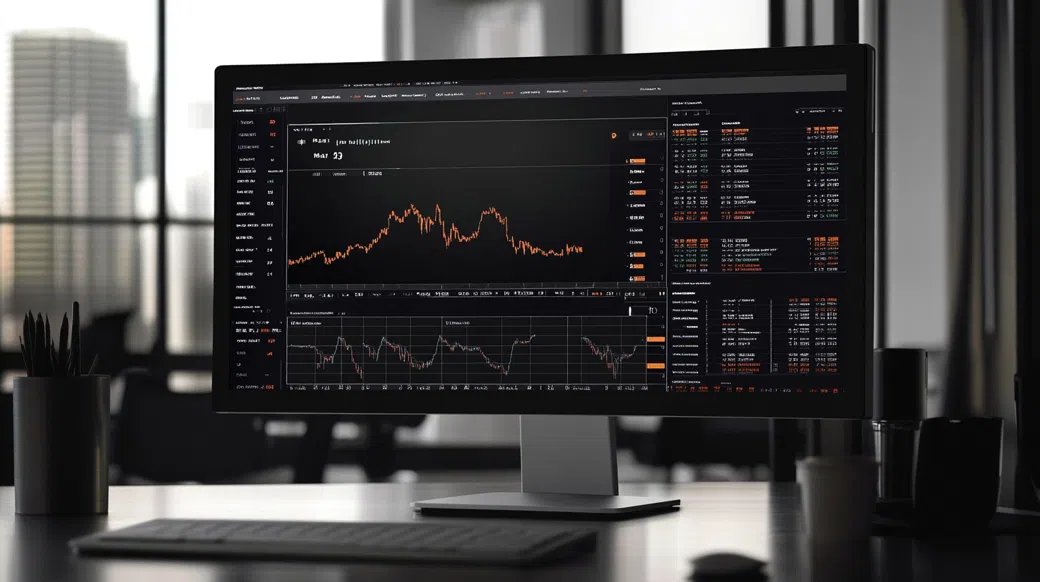
WebTrader is the centre of gravity here, and it behaved reliably across Sydney mornings and the London open—no surprise logouts, no chart freezes, and order tickets that kept the essentials upfront (size, stop-loss, take-profit, margin impact). Market, limit, and stop orders were all present; partial close and position-level edits were easy to find. What you don’t get is the MT4/MT5 plugin universe—EAs, custom indicators, and third-party trade copiers aren’t part of this native stack, so systematic traders may feel fenced in.
The Pregioranza app mirrors the web layout closely, which helps when you’re managing risk away from your desk. Quotes updated cleanly, one-tap position close worked as expected, and deposits/withdrawals are accessible from the same menu (no “desktop-only” bottlenecks). On my device, biometric unlock was available, and push notifications for price alerts were dependable. The only quirk I noticed was that deep chart customisation takes more taps on mobile than on desktop, so you’ll want your key templates saved before the session. For access, the Pregioranza login screen supported email-based sign-in plus a device trust prompt.
Charting covers the trader’s basics: multiple timeframes, a solid indicator list (MA, RSI, MACD, Bollinger), and drawing tools for levels and trends. The integrated economic calendar is handy for macro weeks, and the news feed is adequate for headlines, though not the institutional-grade analysis you’d get from premium terminals. Watchlists and alerts did the heavy lifting for me, but if you live inside advanced strategy testing or need cTrader/MT5-grade depth, this toolkit has a ceiling.
After entering email, country, and a short personal-details form, the client area immediately pushed me toward identity checks before enabling withdrawals. KYC followed the familiar playbook: a government-issued photo ID plus proof of address (utility bill or bank statement dated within three months). Verification came through the same business day in my case, and the AML prompts were clear about why each document was required.
Deposit confirmation was instant by card, with a clear receipt screen and balance update inside the terminal. Base currency choice matters: if you fund in a different currency, conversion at the card issuer or payment rail can be the hidden cost that swamps a “cheap spread”.
I tested support with a practical question: how swap is calculated on gold when you roll positions across the New York close, and where to see it inside the platform. Live chat picked up in roughly three minutes, and the agent pointed me to the contract-specs panel plus the daily financing line item in the position details. To cross-check, I sent an email asking about withdrawal cut-off times; a ticket reply landed later the same day (about eight hours), consistent and specific rather than copy-paste fluff.
Coverage runs on a 24/5 rhythm, which matches the FX week and is broadly what you’d expect in this segment. Language support is serviceable for English-first users, with additional languages appearing to depend on staffing cycles. I didn’t see a universally advertised phone desk, so if you’re the type who wants escalation by voice on demand, that’s worth factoring into your broker selection.
If you’re considering this platform, start by checking whether your country is currently eligible, then use the demo to stress-test spreads and order handling around your usual session. Once you’re comfortable, a small live deposit lets you validate the full deposit/withdrawal loop before scaling up.
Visit PregioranzaIt can be, provided you respect leverage and keep position sizes small. The interface is approachable and the demo helps, but the offshore framework and 1:500 leverage mean beginners need stricter self-imposed risk rules than they might at a tightly regulated broker.
Yes, crypto is available as CFDs, with BTC and ETH as core instruments. You’re trading price exposure with leverage, not buying coins for on-chain transfer, so treat it as short-term speculation rather than custody.
No—based on my 2026 testing, it functioned like a real broker (account access, trading, and payouts worked). The more relevant question is “is Pregioranza legit for your risk tolerance?”, because offshore oversight (Mauritius FSC) generally provides fewer formal protections than Tier-1 regulators.
No, the USA is restricted. If you attempt to register from the US, expect geo/ID checks to block onboarding or limit account functionality.
Withdrawals typically go through internal processing within 24–48 hours after KYC is complete. Receipt time then depends on the rail: cards are commonly 2–5 business days, bank wires 3–7 business days, and crypto often lands the same day (network conditions permitting).
The Pregioranza minimum deposit is $200. That’s enough to test execution and funding flows, but it’s not a licence to use maximum leverage—risk scales much faster than most people expect.
Yes, there are iOS and Android apps, and they cover trading plus account actions like deposits and withdrawals. The experience is close to the web version, with biometric login and alerts available on supported devices.
Overall Score: 3.9/5
From a trader’s perspective, the appeal is clear: flexible leverage up to 1:500, a usable WebTrader/mobile combo, and fee tiers that make sense if you’re executing frequently. The part I can’t gloss over is jurisdictional—offshore registration changes the “safety net” equation, even when the day-to-day service behaves properly. My own withdrawal landed within the expected window after KYC, which helped confidence, but I’d still treat this as a tactical trading venue rather than a place to park long-term capital. If you’re weighing Pregioranza broker review 2026 notes, keep the CFD risk front and centre: leverage cuts both ways and capital is at risk.
Best for: active CFD traders who value Raw-style pricing and don’t need MT4/MT5 automation. Avoid if: you require Tier-1 regulation, formal compensation schemes, or you’re prone to overusing leverage.