Redmont Calvholm Review 2026: Is It Safe & Worth Your Money?
In-depth Redmont Calvholm review updated for 2026. We tested spreads, key features, supported countries, and safety. Read our full verdict.

In-depth Redmont Calvholm review updated for 2026. We tested spreads, key features, supported countries, and safety. Read our full verdict.
| Min Deposit | $200 |
| Max Leverage | 1:500 |
| Assets | Forex, indices, commodities, crypto CFDs, share CFDs |
| Platforms | WebTrader, iOS app, Android app |
Built as an offshore CFD venue with a multi-asset menu, Redmont Calvholm suits traders who want higher leverage and quick access to majors, indices, and crypto—while accepting that protections and dispute pathways are lighter than at top-tier regulated houses. Two pricing tiers stood out in my testing: a spread-only Standard account and a tighter Raw/ECN-style option with per-lot commission. Coverage is broad enough for macro-style rotation (think US500 + gold + AUD pairs), and the proprietary WebTrader keeps it simple. The catch is familiar: education is thin and fee details (like financing) need checking instrument by instrument.
Redmont Calvholm looked operational and tradeable in my 2026 checks, not a “vanishing broker” setup. That said, it’s structured around offshore oversight, so “safe” depends on your tolerance for weaker investor backstops versus the leverage and product flexibility.
The account documentation I reviewed referenced registration under the Mauritius FSC, which is a materially different proposition to ASIC or FCA-style supervision many Australian investors are used to. In practice, offshore regulation tends to mean higher leverage availability (here up to 1:500) but fewer formal compensation schemes and a narrower path for external dispute resolution if something goes sideways. I scanned for obvious warning signs—overly aggressive sales nudges, dubious award badges, or withdrawal games—and didn’t run into anything dramatic: KYC was enforced before I could move money out, and the legal pages used the usual “segregated client funds” language (still, wording is not the same as a guarantee). Remember the product risk as well: CFDs are leveraged instruments, and most retail accounts lose money; a margin call can arrive faster than your thesis does.
The broker primarily accepts clients across parts of Asia-Pacific, MENA, and selected non-EU European jurisdictions, with eligibility confirmed at signup. The USA and sanctioned locations are blocked.
| Region | Status | Leverage Cap |
|---|---|---|
| Southeast Asia (selected countries) | Accepted | Up to 1:500 |
| Australia & New Zealand | Accepted | Up to 1:500 |
| MENA (selected countries) | Accepted | Up to 1:500 |
| Non-EU Europe (selected jurisdictions) | Accepted | Up to 1:200 |
| USA | Restricted | Not offered |
| Sanctioned jurisdictions | Restricted | Not offered |
Access is enforced through a mix of IP checks and identity verification—your profile is effectively “geo-fenced” once documents are assessed. Policies move, so I’d re-check eligibility during onboarding rather than assuming last year’s status still holds.
Redmont Calvholm is built as a macro-friendly CFD lineup: enough FX depth for daily flow, plus the usual index and metal benchmarks to express risk-on/risk-off without leaving the platform.
Everything here is CFD exposure—so you’re trading price movement, not taking shareholder rights in equities or holding crypto on-chain. Dividends (where offered) are generally handled as cash adjustments rather than true ownership income.
Pricing is split between a spread-only Standard account and a Raw/ECN-style tier that pairs tighter spreads with a commission. On my test instruments, the “all-in” cost sat broadly in line with offshore CFD peers—competitive for active FX, less so for crypto if you hold over weekends.
| Asset | Spread/Fee | Market Average Comparison |
|---|---|---|
| EUR/USD (Standard) | From 1.4 pips | About average |
| EUR/USD (Raw/ECN) | From 0.2 pips + $7 round-turn/lot | Competitive for high-turnover |
| Bitcoin (BTC/USD) | From 0.35% | Slightly higher than best-in-class |
| Gold (XAU/USD) | From 25 cents | In the middle of the pack |
| US500 Index | From 0.8 points | Competitive |
Non-spread costs to watch: Overnight swap/financing will matter more than the entry spread if you hold positions for days, especially on indices and metals. The platform also applies an inactivity fee of $10 per month after 90 days without trading, which quietly punishes dormant accounts (the opposite of compounding-friendly behaviour). I also noticed conversion friction when funding in a non-USD currency—if your base currency differs, bake in FX conversion costs. Crypto CFDs can carry weekend financing, so a Friday hold can be pricier than traders expect.
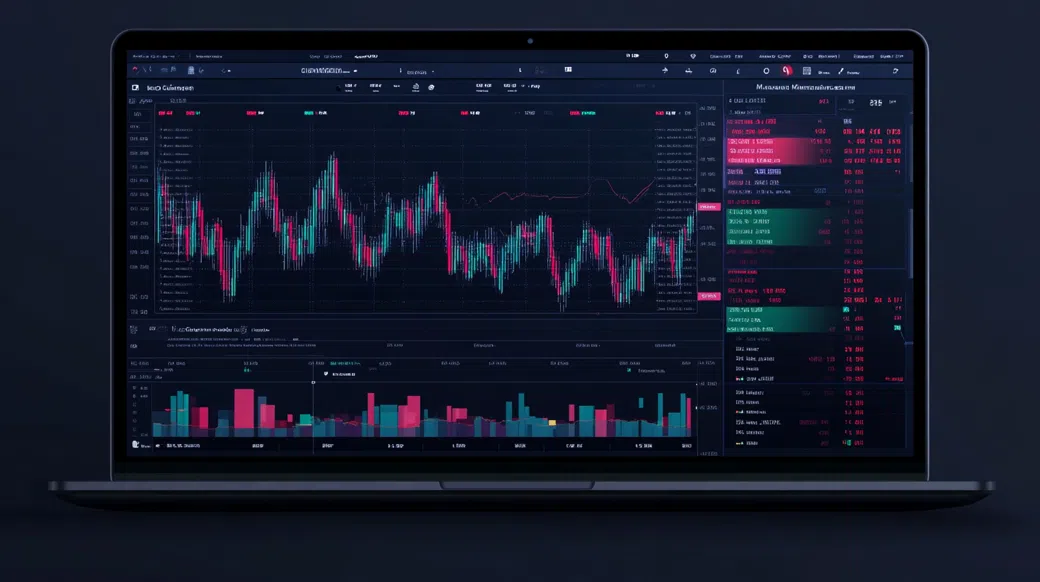
WebTrader was steady through repeated sessions from Sydney, and the layout prioritised speed over bells and whistles: quote panel left, chart centre, positions and margin detail below. Order tickets supported market and pending orders with SL/TP, and margin utilisation was clearly shown—useful when you’re running leverage and don’t want a surprise margin call. If you live inside MT4/MT5 ecosystems (EAs, custom indicators, third-party bridges), note that I didn’t see an MT4/MT5 download inside my portal, so this is more “contained” than the classic MetaTrader universe.
The Redmont Calvholm app mirrors the web layout closely, which makes switching devices painless after the first Redmont Calvholm login. Quotes updated cleanly, and I could modify stops and limits with a couple of taps; one-tap close is there for fast risk reduction. Deposits and withdrawals are accessible in-app, and push notifications can be enabled for fills and price alerts, though chart annotations felt a touch fiddly on smaller screens. Biometric unlock worked reliably on my test handset.
Indicator depth covers the essentials—moving averages, RSI, MACD, Bollinger Bands—and drawing tools are adequate for marking levels and trend structure. An economic calendar and a basic news feed help with event awareness, but the research ceiling is lower than dedicated platforms like MT5 plus third-party analytics. Watchlists and alerts do the job for monitoring a small “core” book, which is how many index investors start before branching out.
From the first screen, the signup flow asked for the usual identity basics (email, phone, and residency), then pushed into AML checks before I could access full funding options. For KYC, I uploaded a passport photo page and a bank statement dated within three months; verification landed later the same day. That pace felt reasonable, and it aligned with the platform’s stance that withdrawals are gated behind completed checks.
The Redmont Calvholm minimum deposit is pitched at $200, which is accessible but still meaningful enough to encourage risk controls. I funded via USDT to keep bank rails out of the test, and the balance updated after network confirmations; you can explore the same deposit path directly inside Redmont Calvholm once your profile is created.
I tested support with a practical question traders actually care about: how swap rates are displayed and whether weekend financing applies to BTC/USD CFDs. Live chat replied in roughly three minutes with a step-by-step path to the instrument details and a reminder that financing can differ by symbol. I followed up by email asking about withdrawal sequencing after KYC; the ticket response came back in about eight hours with a clear timeline and method-dependent estimates.
Coverage is broadly 24/5, which matches the FX week, and the tone was more “service desk” than “sales floor” in my interactions. Language options appear region-dependent, and I didn’t see a prominently listed phone line inside the portal—fairly common in offshore setups where chat and email carry most of the load. Weekend support for crypto is limited, so plan ahead if you’re trading Saturday volatility.
If you’re considering an offshore CFD account, it’s worth checking real spreads, margin requirements, and funding rails in your own region before committing meaningful capital. Start with a demo, then a small live deposit, and validate the withdrawal workflow early—those are the practical “trust” tests that matter.
Visit Redmont CalvholmIt can be, provided you keep position sizes small and use the demo first. The interface is not overly complex, but the higher leverage (up to 1:500) raises the stakes for new traders. Beginners should focus on risk controls—stop-loss discipline and margin awareness—before chasing tighter spreads.
Yes, crypto is offered as CFDs, with BTC and ETH among the core symbols. You’re trading price movement rather than holding coins in a wallet, so there’s no on-chain transfer or staking. Keep an eye on weekend financing and wider spreads relative to FX majors.
No, my 2026 test run didn’t show scam-like behaviour such as blocked access, unreachable support, or impossible withdrawals. However, it operates under offshore oversight (Mauritius FSC), which generally offers fewer investor protections than top-tier regulators. Treat it as a higher-risk venue and manage exposure accordingly.
No, Redmont Calvholm is not available to U.S. residents. The signup flow and compliance checks restrict access, and leverage terms are not offered for that jurisdiction. If you’re in the U.S., you’ll need a locally authorised broker.
Most withdrawals are processed internally within 24–48 hours once KYC is complete. After that, receipt time depends on the rail: cards typically take 2–5 business days, bank wires 3–7 business days, and crypto can land the same day. I’d still test a small withdrawal early to confirm your specific method.
The minimum deposit is $200. That amount is enough to open positions, but it doesn’t leave much room for error if you use high leverage. For new accounts, a smaller risk budget per trade matters more than starting capital.
Yes, there are iOS and Android apps alongside the WebTrader platform. You can monitor margin, place and manage orders, and access funding/withdrawal menus from mobile. The experience is functional for active management, though heavy chart work is still easier on desktop.
Overall Score: 4.0/5
For traders in the Asia-Pacific time zone who want a compact, multi-asset CFD setup, the appeal here is practicality: two clear account tiers, usable WebTrader/mobile tooling, and access to core macro markets without hunting through a cluttered product list. My deposit-and-withdrawal loop behaved as expected once KYC was complete, which is the baseline test I care about before scaling anything. Still, the offshore wrapper means you should keep expectations realistic on protections and escalation. If you proceed, treat leverage with respect—CFDs can magnify losses as quickly as they magnify gains—and use Redmont Calvholm with position sizing that lets compounding do its slow work.
Best for: active FX/index traders who value higher leverage and a simple proprietary platform. Avoid if: you require Tier-1 regulation, MT4/MT5 ecosystems, or deep in-house research.