Rhonevène Trading Platform Alternatives 2026
Compare Rhonevène alternatives in 2026: regulated brokers, spreads, platforms, markets (FX/CFDs/stocks), and a safety-first migration checklist.

Compare Rhonevène alternatives in 2026: regulated brokers, spreads, platforms, markets (FX/CFDs/stocks), and a safety-first migration checklist.
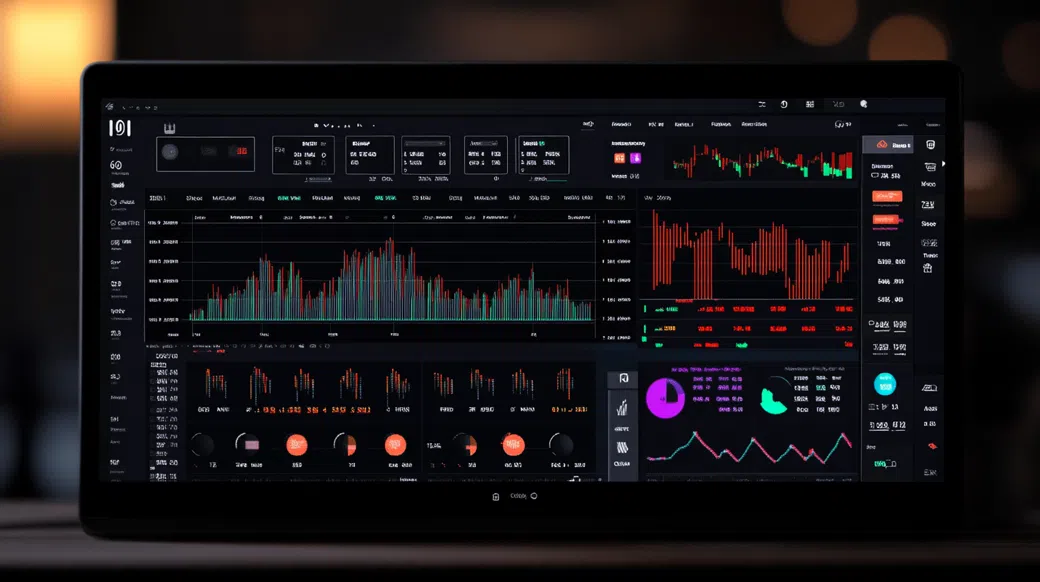
From a Sydney desk, I’ve watched a familiar cycle play out: traders start with a simple WebTrader, enjoy the convenience, then discover that execution quality, product access, and protections matter far more than flashy leverage once position sizes begin to compound. Rhonevène sits in a category that tends to emphasise Forex and CFDs, typically delivered via a proprietary browser platform and mobile app, with headline leverage that can reach around 1:500. Those ingredients can feel efficient—right up until you need deeper tools, clearer oversight, or the ability to build a diversified, index-tilted portfolio rather than a single-instrument trading routine.
For a global audience (particularly US/EU readers), the question isn’t whether you can place trades—it’s whether the venue you’re using supports repeatable decision-making and sound risk controls. Publicly observable patterns for offshore-style providers often include wider “all-in” trading costs (for example, EUR/USD around 2.0 pips on a standard-style setup), fewer investor-protection layers, and limited access to real stocks/ETFs versus CFD-only exposure. That’s why Rhonevène alternatives are usually evaluated on regulation, product breadth, and the practical mechanics of deposits, withdrawals, and dispute resolution. If you’re currently using Rhonevène, think of this guide as a structured way to compare “good enough to start” versus “good enough to scale.”
Disclaimer: This article is for informational purposes only and does not constitute investment advice. CFDs and other leveraged products carry a high risk of loss and are not suitable for every investor.
In practice, Rhonevène presents as a CFD-first trading venue aimed at retail traders who want quick access to FX pairs, major indices, commodities, and often crypto CFDs. The regulatory posture commonly associated with this segment is offshore—here, I’ll treat it as operating under a Seychelles FSA-style framework rather than a top-tier onshore licence. That distinction matters because the day-to-day experience (execution model, complaint pathways, and disclosure standards) can diverge from what you’d expect at brokers similar to Rhonevène that are supervised by the FCA, ASIC, CySEC, or the NFA.
The core stack is typically a proprietary WebTrader with a companion iOS/Android app. Charting is usually serviceable—enough indicators and drawing tools for basic technical work—yet it can feel shallow once you start relying on multi-timeframe templates, robust alerts, or advanced order controls. Order tickets in this class of platform often cover market/limit/stop with standard risk fields, but conditional logic and algorithmic workflows are where MT4/MT5 or cTrader ecosystems tend to pull away. Mobile parity is decent for monitoring and quick execution, while the account dashboard generally focuses on margin, open P/L, and simple funding actions rather than portfolio analytics.
Cost structure in offshore CFD setups is frequently spread-led, with EUR/USD commonly around 2.0 pips on a standard-style account. Some providers in this bracket advertise a “raw” or “ECN-style” tier where spreads can compress toward 0.0–0.4 pips, but the economics then shift into commission—often roughly $6–$8 per round turn. Add the less-visible line items: swap/overnight financing on held CFD positions, potential withdrawal fees depending on payment method, and occasional inactivity charges. For traders comparing platforms like Rhonevène, the cleanest approach is to estimate your monthly trade count and average holding time, then translate that into an all-in cost per round turn.
Regulation tends to be the first domino. Once you’ve lived through a fast market—an index gap on a macro headline, or a crypto wick that triggers a margin call—the value of clear oversight, dispute processes, and well-defined client-money rules becomes more than academic. Rhonevène alternatives also come onto the radar when trading turns from “trying it out” into a system: recurring deposits, consistent position sizing, and the kind of record-keeping that tax time forces on everyone eventually.
I treat broker selection as “strategy fit under a risk budget.” If your edge is small, costs and slippage can erase it; if your horizon is long, product access (real ETFs vs CFDs) can dominate outcomes. Good Rhonevène alternatives make these trade-offs explicit rather than burying them in footnotes.
Start with the licence and confirm it on the regulator’s register: FCA (UK), ASIC (Australia), CySEC (Cyprus/EU), or NFA/CFTC (US). For UK clients, FCA-regulated firms may fall under FSCS protections (up to £85,000 in eligible cases). In the EU, CySEC firms can be linked to the ICF (up to €20,000, subject to conditions). Also look for segregated client funds policies and whether negative balance protection is clearly stated for retail accounts—these details matter when volatility spikes.
Match the instrument set to the job. FX and index CFDs suit active trading, but investors building a diversified core often need real stocks and ETFs, not just CFDs referencing them. Options and futures access can be a differentiator for hedging (or for implementing systematic strategies). Many competitors to Rhonevène are excellent at short-term CFDs but thin on true multi-asset investing; a broker that offers both can reduce platform sprawl and simplify reporting.
Spreads are only one piece. The more reliable comparison is round-turn cost: (spread in pips × pip value) + commissions, plus the less obvious charges like swap/overnight fees for multi-day holds. Inactive-account fees and withdrawal costs can also bite long-horizon investors who trade infrequently. If you’re assessing Rhonevène versus regulated options vs Rhonevène, put your typical month into a spreadsheet—trade count, average lot size, and holding time—and let the arithmetic do the arguing.
Platform choice is really a proxy for workflow. Proprietary WebTraders can be clean and quick, while MT4/MT5 bring a huge ecosystem of EAs and indicators, and cTrader tends to appeal to traders who care about depth-of-market and order control. Ask how orders are routed: market maker, STP, ECN, or DMA, and what that implies for slippage in fast markets. Latency is not just a scalper’s concern—poor execution can distort your risk limits, especially around stop-loss levels.
Support quality shows up when something goes wrong: a rejected withdrawal, a margin query, or a platform outage. Check service hours in your time zone, languages available, and whether responses arrive in minutes or days. Education matters too, particularly around leverage, margin calls, and position sizing—areas where new traders tend to learn through expensive mistakes. Strong mobile parity is a practical advantage, but it shouldn’t substitute for robust reporting and downloadable statements.
Forex and CFDs are the natural habitat here: roughly a few dozen FX pairs (often 30–50), a cluster of indices (around 8–15), and a small menu of commodities. The trade-off is usually cost and execution transparency. If EUR/USD is commonly around ~2.0 pips on a standard-style account, frequent traders can feel the drag quickly—50 round turns a month at 1 lot can turn “a couple of pips” into a meaningful line item. FX/CFD specialists such as Pepperstone or IC Markets are often used as top substitutes for Rhonevène because they pair MT4/MT5/cTrader stacks with sharper pricing options (raw spreads plus commission) and a clearer execution model discussion. Leverage can still be available, but regulated regimes often cap it for retail clients—less thrill, more survivability.
Here’s where the long-term compounding crowd should pay attention. Offshore CFD platforms frequently provide equity exposure as CFDs (if offered at all), which means you’re trading a derivative: no shareholder rights, different tax treatment in some jurisdictions, and financing costs if you hold leveraged CFD positions. For US/EU readers aiming to build an index core—broad ETFs, factor tilts, dividend reinvestment—the leap to a true multi-asset broker is significant. Interactive Brokers (IBKR) is a common choice for real stocks/ETFs plus options and futures, with a platform built for portfolio management and reporting. Saxo Bank also sits comfortably in the multi-asset camp, particularly for investors who want curated tools, research, and a “one account, many markets” approach. Those are practical Rhonevène alternatives when the goal is owning assets, not just trading price moves.
Crypto exposure on CFD-first venues is typically delivered as crypto CFDs—price speculation without on-chain ownership. That can be fine for short-term directional trades, but it’s not the same as holding the underlying asset in a wallet, and it can carry financing charges if you hold positions. In regulated contexts, availability varies by region and licence: some brokers focus on crypto CFDs (often with tighter rules on marketing and risk warnings), while others restrict crypto entirely for certain clients. IG is often cited among platforms like Rhonevène for regulated crypto CFD access in eligible jurisdictions, alongside a broad CFD lineup for indices and FX. For traders who want crypto as a small satellite allocation rather than a core holding, regulated CFD access can be acceptable—provided margin rules, volatility risk, and gap risk are fully understood.
Regulation: SEC/FINRA (US), FCA (UK), IIROC (Canada)
Markets: Stocks, ETFs, options, futures, FX, bonds (multi-asset access)
Fees: Pricing varies by product; FX spreads can be competitive on larger sizes; commissions typically apply on exchange-traded products
Platform: Trader Workstation (TWS), IBKR Desktop, web platform, mobile app, APIs
Best For: Index investors building real ETF portfolios
Regulation: FCA (UK), ASIC (Australia), CySEC (EU), DFSA (UAE)
Markets: FX and CFDs (indices, commodities; product set depends on region)
Fees: Standard spreads often around ~1.0 pip+ on EUR/USD; Raw-style pricing can run ~0.0–0.3 pips plus commission (varies by entity)
Platform: MT4, MT5, cTrader, TradingView integration (where available), mobile apps
Best For: System traders running MT4/MT5 or cTrader
Regulation: FCA (UK), ASIC (Australia), MAS (Singapore)
Markets: CFDs across indices, FX, shares (often as CFDs), commodities; availability varies by country
Fees: CFD costs are typically spread-based; FX spreads can be competitive for major pairs, depending on account and region
Platform: IG web platform, mobile app; MT4 offered in many regions
Best For: Macro traders focused on indices and news-driven moves
Regulation: FCA (UK), MAS (Singapore), DFSA (UAE)
Markets: Stocks, ETFs, bonds, options, futures, FX, CFDs (broad multi-asset)
Fees: Tiered pricing by client segment; spreads and commissions vary by asset and region
Platform: SaxoTraderGO, SaxoTraderPRO
Best For: Multi-asset portfolios with strong reporting needs
Regulation: ASIC (Australia), CySEC (EU), FSA (Seychelles) (group-level)
Markets: FX and CFDs (indices, commodities; product set depends on entity)
Fees: Raw spreads can be ~0.0–0.2 pips on EUR/USD plus commission; standard accounts typically wider (varies by platform/entity)
Platform: MT4, MT5, cTrader
Best For: Cost-sensitive high-frequency FX traders
Regulation: FCA (UK), CySEC (EU), FSC (Bulgaria)
Markets: Stocks and ETFs (investing), plus CFDs (availability varies by region)
Fees: Investing accounts may be commission-free on many stocks/ETFs; CFD trading costs are spread-based and vary by market
Platform: Proprietary web and mobile platform
Best For: Beginners starting a simple stock/ETF plan
| Platform | Regulation | Main Markets | Typical Costs | Best For |
|---|---|---|---|---|
| Interactive Brokers (IBKR) | SEC/FINRA, FCA, IIROC | Real stocks/ETFs, options, futures, FX, bonds | Commissions on many exchange-traded products; FX pricing varies by size | Index investors building real ETF portfolios |
| Pepperstone | FCA, ASIC, CySEC, DFSA | FX + CFDs (indices/commodities) | ~0.0–0.3 pips + commission (Raw); ~1.0 pip+ (Standard) | System traders running MT4/MT5 or cTrader |
| IG | FCA, ASIC, MAS | CFDs on indices/FX/commodities; share CFDs in many regions | Mostly spread-based; majors can be competitive by region | Macro traders focused on indices and news-driven moves |
| Saxo Bank | FCA, MAS, DFSA | Multi-asset: stocks/ETFs/options/futures/FX/CFDs | Tiered spreads/commissions by asset and client segment | Multi-asset portfolios with strong reporting needs |
| IC Markets | ASIC, CySEC, FSA (Seychelles) (group-level) | FX + CFDs (indices/commodities) | ~0.0–0.2 pips + commission (Raw); wider on Standard | Cost-sensitive high-frequency FX traders |
| Trading 212 | FCA, CySEC, FSC (Bulgaria) | Stocks/ETFs (investing) + CFDs (region-dependent) | Investing often commission-free; CFDs are spread-based | Beginners starting a simple stock/ETF plan |
Switching brokers is less about clicking “close account” and more about sequencing—so you don’t strand funds, lose records, or create avoidable execution risk mid-transition. Treat the move as an operational task: verify oversight, set up the new environment, then unwind exposure methodically. Leverage magnifies mistakes, so keep position sizes small while you’re bedding in a new platform.
If you’re still weighing your options, review the current onboarding flow, product list, and trading conditions for your region before committing fresh capital. Then compare those terms against the Rhonevène trading platform alternatives 2026 covered above—especially regulation, execution setup, and whether you’re trading CFDs or investing in real assets.
Visit RhonevèneThe best option depends on whether you’re trading CFDs actively or building a long-term portfolio. For real stocks/ETFs and broad market access, Interactive Brokers (IBKR) is hard to beat; for MT4/MT5/cTrader-based FX/CFD trading, Pepperstone or IC Markets are common picks. In that sense, the best Rhonevène alternatives 2026 are usually chosen by instrument needs first, then pricing and platform stack.
Rhonevène appears to fit an offshore/unregulated profile (often associated with Seychelles-style frameworks) rather than FCA/CySEC/NFA oversight. That doesn’t automatically mean you can’t trade, but it can change the level of investor protection, compensation scheme access, and the practical avenues for dispute resolution. If safety is your priority, regulated options vs Rhonevène—paired with segregated client funds and clear negative balance protection—tend to be the more conservative route.
Rhonevène is typically positioned around FX and CFDs, with crypto often offered as crypto CFDs rather than on-chain ownership. Stocks and ETFs, where available, are commonly presented as CFDs—so you’re trading price exposure, not holding the underlying security. For futures and options access, platforms like Rhonevène are usually less comprehensive than multi-asset brokers such as IBKR or Saxo Bank.
Check the new broker’s regulator entry first (FCA/ASIC/CySEC/NFA) and confirm which legal entity will hold your account in your country. Next, compare round-turn trading costs (spread + commission) and review margin rules, negative balance protection, and withdrawal policies. Finally, test execution with small trades before moving full size—slippage and platform behaviour under volatility are where good Rhonevène alternatives separate themselves.
About the Author: Liam Ashford is a former portfolio strategist based in Sydney who covers Asia-Pacific brokerage landscapes and index investing for a global readership. He focuses on the real-world frictions—fees, execution, regulation, and product design—that shape compounding outcomes over time.