Sguardo Rendione Review 2026: Is It Safe & Worth Your Money?
In-depth Sguardo Rendione review updated for 2026. We tested spreads, key features, supported countries, and safety. Read our full verdict.

In-depth Sguardo Rendione review updated for 2026. We tested spreads, key features, supported countries, and safety. Read our full verdict.
| Min Deposit | $200 |
| Max Leverage | 1:500 |
| Assets | Forex, Indices, Commodities, Crypto CFDs, Share CFDs |
| Platforms | Proprietary WebTrader, iOS app, Android app |
Built as a multi-asset CFD venue, Sguardo Rendione suits traders who want broad market access and punchy leverage, but can live with an offshore framework and a lighter research stack. In my test, the broker split accounts into a spread-only Standard tier and a tighter-spread Pro/Raw-style tier with a per-lot commission, which helps active traders keep transaction costs predictable. Market coverage leans practical—majors in FX, the big global indices, and the headline commodities—while the platform mix stays proprietary via Sguardo Rendione WebTrader plus mobile. The standout is the clean execution workflow for simple strategies; the main drawback is that investor protections aren’t comparable to Tier-1 jurisdictions.
Sguardo Rendione looked operational and functional in my checks—it didn’t behave like a “disappear-with-your-deposit” setup. That said, it sits in the offshore end of the CFD market, so the safety profile depends heavily on your own risk controls and expectations.
From a paperwork standpoint, the provider presented itself as registered with the Mauritius FSC, which typically means a lawful corporate wrapper but not the same compensation schemes or enforcement muscle you’d expect under ASIC or the FCA. Practically, that trade-off shows up in two places: leverage (the platform offers up to 1:500) and the path for complaints if something goes pear-shaped. I ran a basic red-flag sweep—no “limited-time trophy” banners, no aggressive sales calls after signup, and withdrawal screens were accessible without hoops once KYC was complete. On the safeguard side, the platform pushed AML/KYC early (ID + proof of address) and referenced segregated client funds in its legal pages. Keep your feet on the ground: CFDs are leveraged products, and most retail accounts lose money—only risk capital you can afford to lose.
The broker primarily accepts clients across parts of Asia-Pacific, Latin America, and selected non-EU European jurisdictions, subject to onboarding checks. The USA is not supported, and sanctioned jurisdictions are blocked.
| Region | Status | Leverage Cap |
|---|---|---|
| Southeast Asia (selected countries) | Accepted | Up to 1:500 |
| Latin America (selected countries) | Accepted | Up to 1:500 |
| MENA (selected countries) | Accepted | Up to 1:500 |
| Non-EU Europe (selected countries) | Accepted | Up to 1:500 |
| USA | Restricted | Not offered |
| Sanctioned jurisdictions | Restricted | Not offered |
Access is enforced through a mix of signup declarations, IP checks, and KYC address verification. Eligibility can change quickly when local rules tighten, so it’s worth confirming acceptance before funding.
Instead of chasing thousands of tickers, this platform focuses on the instruments most CFD traders actually rotate through: FX majors, the big indices, and headline commodities, with crypto CFDs as a satellite.
All exposure here is via CFDs, meaning you’re trading price movement on margin rather than buying the underlying asset. That also means no shareholder voting rights, and crypto positions aren’t “on-chain” holdings you can withdraw to a personal wallet.
Costs are set up in two lanes: a Standard account that bakes fees into the spread, and a Pro/Raw-style option that pairs tighter pricing with a commission. On my screen, EUR/USD started around 1.6 pips on Standard, while the commission tier pushed spreads close to zero with a per-lot charge—broadly in line for offshore CFD brokers.
| Asset | Spread/Fee | Market Average Comparison |
|---|---|---|
| EUR/USD (Standard) | From 1.6 pips | About average |
| EUR/USD (Raw/ECN) | From 0.2 pips + $7 round-turn/lot | Competitive for active traders |
| Bitcoin (BTC/USD) | From $35 | Slightly above average |
| Gold (XAU/USD) | From $0.35 | Near average |
| US500 Index | From 0.8 points | Near average |
Non-spread costs to watch: overnight swap (financing) adds up fast on leveraged positions, and crypto CFDs can carry chunkier weekend financing. The inactivity fee is $10 per month after 90 days without trading, which matters for set-and-forget accounts. I also saw currency conversion charges where the funding currency didn’t match the account base, and withdrawals can attract third-party banking or network fees even when the broker’s side is “no extra charge.”
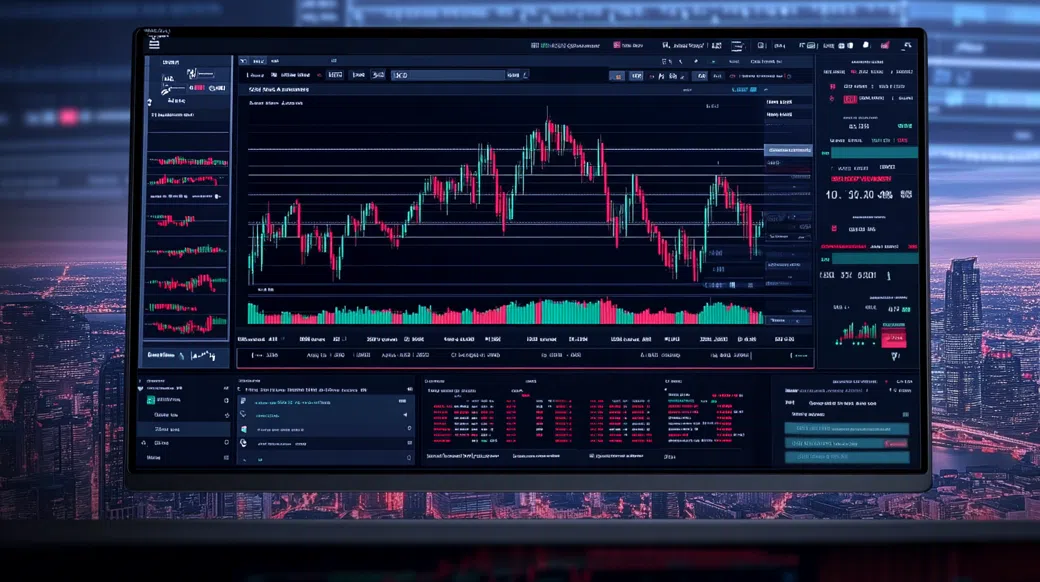
On desktop, the proprietary WebTrader felt built for speed rather than ceremony: stable sessions, quick symbol search, and a layout that keeps margin, equity, and free margin in constant view. Order handling covered the basics (market, limit, stop, SL/TP), and execution on a small EUR/USD ticket around the London open filled without drama, though you don’t get the plug-in ecosystem that comes with MT4/MT5. If you rely on third-party algo marketplaces, that gap is material.
The Sguardo Rendione app tracked the web layout closely—watchlists, chart, and ticket are all one or two taps away. My Sguardo Rendione login stayed persistent with biometric unlock enabled, and you can manage deposits/withdrawals from the same menu as positions (useful when you’re travelling). Push alerts were available for price levels, and “close position” is genuinely one-tap. The quirk: chart space feels tight in landscape when multiple indicators are stacked.
Tools are serviceable: multi-timeframe charts, a familiar indicator set (RSI, MACD, moving averages, Bollinger Bands), plus basic drawing. An economic calendar and integrated news feed cover the macro headlines, but this is not a research powerhouse like you’d see at the big multi-asset houses. For systematic traders, alerts and watchlists help, yet advanced strategy testing and deep analytics remain limited.
After creating credentials and a short personal-details form, the platform moved straight to identity verification rather than letting me trade indefinitely on a “soft” profile. KYC required a government photo ID and a proof of address dated within three months; my documents cleared later the same business day. The overall flow was clean, with AML prompts that were clear enough for first-timers without being patronising.
One practical note: the base currency options were straightforward, but funding in a different currency can trigger conversion costs. I funded via card to test speed, then later verified the Sguardo Rendione withdrawal menu was visible only after KYC was fully approved—which is sensible from a compliance standpoint.
I put support through a real-world question: how swap/overnight fees are displayed before holding an index CFD past the New York close. Live chat replied in roughly three minutes with directions to the instrument’s contract-spec panel and a note on triple-swap timing, which matched what I later saw on the platform. I also sent an email asking whether card withdrawals can be split across multiple transactions; the ticket landed back in my inbox in about eight hours with a clear, step-by-step answer.
Coverage is broadly 24/5, which fits the FX week but leaves weekend crypto traders leaning on self-serve help. Language support felt adequate for international clients, though it’s not a full multilingual desk like you’d see at a top-tier global broker. Phone support looked region-dependent, and I wouldn’t assume a local number in Australia or New Zealand without checking your account portal first.
If you’re considering an offshore CFD account, start by checking current spreads and margin requirements on the instruments you actually trade, not the marketing highlights. Open a demo first, confirm your region is accepted, then move to a small live deposit once you’re comfortable with the platform’s workflow.
Visit Sguardo RendioneIt can be, provided you treat it as a CFD platform first and a “learn to trade” school second. The WebTrader and app are uncluttered, and the demo account helps you understand leverage and margin calls before risking cash. Beginners should keep position sizes small because 1:500 leverage can magnify mistakes quickly.
Yes, crypto is available as CFDs, including BTC/USD and ETH-based pairs. You’re trading price exposure with leverage rather than owning coins on-chain. Expect wider spreads and higher financing sensitivity, especially over weekends.
No—based on my account test, it operated like a functioning broker with KYC checks and a usable withdrawal flow, not a vanishing act. The bigger question is oversight: it’s positioned under offshore regulation (Mauritius FSC), which usually means fewer formal protections than Tier-1 regimes. As always, manage risk tightly and avoid depositing money you can’t afford to lose.
No, the USA is restricted and accounts aren’t offered to US residents. This is common for offshore CFD providers due to US regulatory requirements. If you’re travelling, eligibility still ties to residency and KYC documentation.
Most withdrawals are processed internally within 24–48 hours once KYC is approved. After that, receipt time depends on the rail: cards typically take 2–5 business days, bank wires 3–7 business days, and crypto transfers are often same-day. Delays can happen if your payment provider adds extra compliance checks.
The minimum deposit is $200 for a live account. That’s enough to test real spreads and execution, but it’s not a cushion against volatility if you use high leverage. For newer traders, consider staying on demo until your risk per trade is consistent.
Yes, there are iOS and Android apps, and they mirror the WebTrader closely. You can monitor margin, place and close trades, and handle funding from the app. The mobile charting is solid for on-the-go decisions, though heavy indicator stacks feel cramped on smaller screens.
Overall Score: 4.0/5
From a trader’s lens, Sguardo Rendione lands in that pragmatic middle ground: respectable platform usability, a clear two-tier pricing setup, and enough markets to run a global macro watchlist without hunting for obscure tickers. Where I’d stay conservative is the jurisdictional reality—offshore registration can mean less leverage on dispute resolution, even if day-to-day operations feel smooth. If you proceed, treat Sguardo Rendione as a tactical CFD account, keep leverage modest, and plan positions with swaps and volatility in mind. CFDs are high-risk instruments; capital is at risk.
Best for: self-directed CFD traders who want a clean web/mobile workflow and can quantify costs (spreads, commission, swaps). Avoid if: you require Tier-1 regulatory protection, deep research, or third-party platform ecosystems for automation.