Slide +Fin Atarax Review 2026: Is It Safe & Worth Your Money?
In-depth Slide +Fin Atarax review updated for 2026. We tested spreads, key features, supported countries, and safety. Read our full verdict.

In-depth Slide +Fin Atarax review updated for 2026. We tested spreads, key features, supported countries, and safety. Read our full verdict.
| Min Deposit | $200 |
| Max Leverage | 1:500 |
| Assets | Forex CFDs, Indices CFDs, Commodities CFDs, Crypto CFDs, Share CFDs |
| Platforms | Proprietary WebTrader + iOS/Android mobile apps |
Built as a multi-asset CFD venue with a leverage-first pitch, Slide +Fin Atarax suits short-horizon traders who value platform access and product variety, while accepting the looser protections that often come with offshore-style setups. In my 2026 Slide +Fin Atarax review, the account structure broke cleanly into a spread-only Standard tier and a tighter Raw/ECN-style option aimed at higher turnover. The lineup leans practical—majors, headline indices, gold, and large-cap crypto are all easy to find—while the proprietary WebTrader does most of the heavy lifting. The main upside is flexible leverage with a modern interface; the core compromise is that safety backstops and dispute pathways aren’t the same as Tier‑1 jurisdictions.
Slide +Fin Atarax operated as a functioning broker in my testing—orders filled, KYC was enforced, and withdrawals followed the stated workflow. That said, it sits under an offshore registration model, so “safe” depends heavily on how you size risk and how much you rely on regulator-backed protections.
From the paperwork and footer disclosures I reviewed, the provider presents itself under Seychelles FSA-style oversight rather than an ASIC/FCA-style rulebook. In practice, that tends to come with a familiar trade: higher leverage and simpler product access, but thinner compensation schemes and fewer escalation avenues if you end up in a dispute. I ran a basic red-flag check during the test window—no fake “trophy cabinet” pop-ups, no relentless bonus pushing, and no hard-sell calls after registration. On the safeguard side, identity verification wasn’t optional: the dashboard prompted for a photo ID and proof of address before certain account actions, and the terms referenced segregated client funds language (worth reading, but not a guarantee). Finally, remember the product wrapper here is CFD trading with leverage; margin calls can arrive quickly, and most retail accounts lose money when risk controls are loose.
This broker generally accepts many traders across Asia-Pacific, parts of Africa, and LATAM, while keeping a hard line on the USA and sanctioned territories.
| Region | Status | Leverage Cap |
|---|---|---|
| Australia & New Zealand | Accepted | Up to 1:500 |
| Southeast Asia | Accepted | Up to 1:500 |
| Latin America | Accepted | Up to 1:500 |
| MENA (selected countries) | Accepted | Up to 1:500 |
| USA | Restricted | Not offered |
| Sanctioned jurisdictions | Restricted | Not offered |
Eligibility is checked through a mix of IP/location screening and KYC/AML documentation, so approval isn’t just a toggle you click. Policies also shift as compliance priorities change, so it’s worth confirming access inside the signup flow before funding.
The market list reads like a “headline movers” menu—enough depth for macro-driven trading, without trying to be an institutional multi-venue terminal. I found the best coverage in liquid benchmarks where spreads and fills matter most.
All of this is CFD exposure: you’re trading price movement, not taking delivery of commodities, holding on-chain coins, or gaining shareholder voting rights. Dividend equivalents, where offered, are typically cash adjustments rather than true equity ownership.
Costs on Slide +Fin Atarax split into two tracks: a Standard account where you “pay in the spread,” and a Raw/ECN-style tier where spreads tighten and a per-lot commission appears. On EUR/USD I saw the Standard lane hover from 1.5 pips, while the Raw model pushed towards 0.2 pips plus a fixed round-turn fee—broadly in line with offshore CFD peers.
| Asset | Spread/Fee | Market Average Comparison |
|---|---|---|
| EUR/USD (Standard) | From 1.5 pips | Near average for non-Tier‑1 CFD brokers |
| EUR/USD (Raw/ECN) | From 0.2 pips + $7 round-turn/lot | Competitive for commission-based pricing |
| Bitcoin (BTC/USD) | From $35 spread | Typical; varies heavily by volatility and session |
| Gold (XAU/USD) | From $0.25 | Reasonable versus many retail CFD feeds |
| US500 Index | From 0.8 points | In the middle of the pack |
Non-spread costs that add up over time: Overnight swap/financing is the quiet line item—hold positions for weeks and it can outweigh the entry spread, particularly on indices and crypto. I also noted an inactivity fee of $10 per month after 90 days without trading, which matters for set-and-forget accounts. Withdrawals can be method-dependent (some rails pass on third-party charges), and if you fund in one currency and trade in another, conversion markups can sneak into the ledger. For weekend crypto positions, financing is often applied across Saturday/Sunday in one hit, so check the schedule before you “hodl” via CFDs.
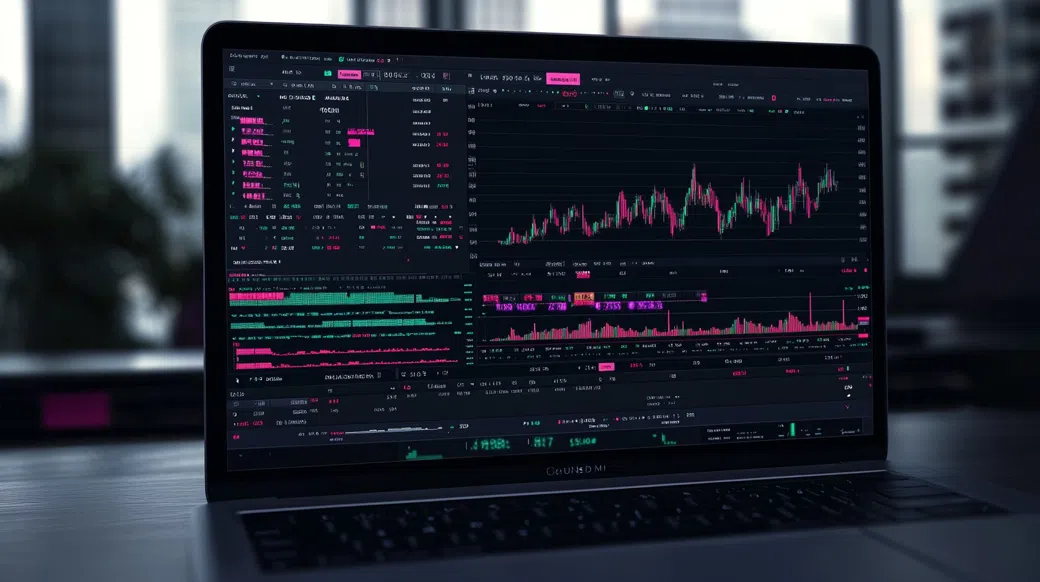
On desktop, the proprietary WebTrader felt tuned for speed rather than endless plug-ins: watchlists on the left, a multi-timeframe chart in the center, and tickets that keep margin and pip value visible while you size. My Slide +Fin Atarax login held steady across multiple sessions, including the Asia-to-London handover, and market orders on EUR/USD and US500 filled without awkward “try again” loops. If you’re coming from MT4/MT5, the difference is ecosystem depth—fewer third-party indicators and automation routes, but a cleaner, more controlled interface.
The Slide +Fin Atarax app is geared to monitoring and quick risk actions: real-time quotes, one-tap close, and push alerts for price levels are front and center. I could place limit and stop orders from mobile and review open margin in a compact panel, and biometric unlock worked reliably after the first setup. Deposits and withdrawals are accessible in-app, which is convenient, though the chart area is naturally tighter and drawing tools feel basic compared with desktop. If your routine includes frequent checks, the mobile build does the job; if you live on complex multi-chart layouts, you’ll still prefer the browser.
Tooling is pragmatic: common indicators (MA, RSI, MACD, Bollinger), basic annotation, and a simple economic calendar for scheduled risk. The integrated news feed helps with context, but it won’t replace a dedicated research terminal or the breadth you’d get in MT5/cTrader communities. Alerts and watchlists are the features I leaned on most—useful when you’re managing several correlated positions across FX and indices.
After entering email, phone, and basic residency details, the portal moved straight into identity checks with clear upload slots rather than an email back-and-forth. For KYC I submitted a government photo ID plus a recent proof of address (bank statement under three months), and verification cleared the same day on my test profile. The overall flow is modern, but it’s still AML-driven—expect the provider to ask follow-up questions if your funding source looks inconsistent with stated income.
One practical note from a Sydney strategist’s lens: if you’re planning to compound steadily, friction matters as much as headline spreads. Base-currency choice and conversion costs will shape returns over time, so align your account denomination with your primary funding currency before you start building a track record.
I tested support by asking live chat how weekend financing is applied on BTC/USD CFDs and whether swap-free settings are available for specific regions. The agent came back in roughly three minutes with a plain-English explanation and pointed me to the contract spec page for the rollover schedule. I then opened an email ticket about withdrawal timing on card vs. crypto, and the written reply landed later that evening—around eight hours—with a step-by-step checklist tied to KYC status.
Coverage follows the typical 24/5 pattern, which suits FX and index traders but can feel thin if you trade crypto actively across weekends. Language support is adequate in English, and additional languages appear to be handled case-by-case. Phone access wasn’t prominently offered in my region, so if you insist on voice escalation, factor that into your decision alongside the offshore regulation context.
If you’re considering this broker, start by checking the live spreads during your usual trading hours and confirm your country eligibility before depositing. A demo run is a sensible first lap—especially if you plan to use higher leverage and want to see how margin behaves in fast markets.
Visit Slide +Fin AtaraxYes, it can work for beginners who keep position sizes small and use the demo first. The interface is uncluttered and the Standard account keeps pricing simple. The bigger issue is risk: CFDs with up to 1:500 leverage can magnify mistakes, so new traders should treat margin as a tool, not a target.
Yes, crypto is offered as CFDs, typically including BTC/USD and ETH pairs plus a few large caps. You’re trading price exposure rather than moving coins on-chain. Pay close attention to spreads during volatility and to weekend financing charges.
No—based on my 2026 testing, the platform behaved like an operating broker, with KYC checks and a withdrawal process that followed stated timelines. However, “not a scam” isn’t the same as “Tier‑1 protected,” and the offshore setup means fewer formal safety nets. Treat it as a higher-risk venue and manage exposure accordingly.
No, Slide +Fin Atarax is not offered to US residents. The broker lists the USA as restricted, and in practice you should expect residency checks during signup and KYC. If you’re US-based, look for a CFTC/NFA-regulated alternative.
Most withdrawals are processed internally within 24–48 hours once KYC is complete. After that, delivery depends on the rail: cards commonly take 2–5 business days, bank wires 3–7 business days, and crypto transfers often arrive the same day. In my test, the timeline matched the method-specific expectations shared by support.
The Slide +Fin Atarax minimum deposit is $200 for the standard retail setup I used. That level is enough to test order execution and margin mechanics without overcommitting. If you plan to trade frequently, consider that fees and swaps can matter more than the initial deposit size.
Yes, there’s a Slide +Fin Atarax app for iOS and Android alongside the WebTrader. It supports order placement, position monitoring, and account actions like deposits and withdrawals. For serious chart work, the desktop browser remains more comfortable, but mobile is solid for alerts and quick adjustments.
Overall Score: 4.0/5
Execution and usability are the parts that stood out: the platform feels built for active CFD traders who watch spreads, manage margin closely, and want a clean workflow across web and mobile. The Raw/ECN-style pricing is attractive if you’re turning over lots, while the $200 entry point keeps the barrier reasonable for cautious testing. Still, the offshore registration profile is the hinge—complaints and compensation structures won’t mirror Tier‑1 brokers, so position sizing and withdrawal discipline matter. If you’re comfortable with that trade-off, Slide +Fin Atarax is a credible option—but CFDs are leveraged products and capital is at risk.
Best for: active FX/index traders who want a modern proprietary platform and can manage leverage responsibly. Avoid if: you need top-tier regulatory protections, US access, or a deep MT4/MT5-style ecosystem.