SmartAI Capital Trading Platform Alternatives 2026
Compare SmartAI Capital alternatives for 2026: regulated brokers, costs, platforms (MT4/MT5/cTrader), and safety checks for US/EU-focused traders.

Compare SmartAI Capital alternatives for 2026: regulated brokers, costs, platforms (MT4/MT5/cTrader), and safety checks for US/EU-focused traders.
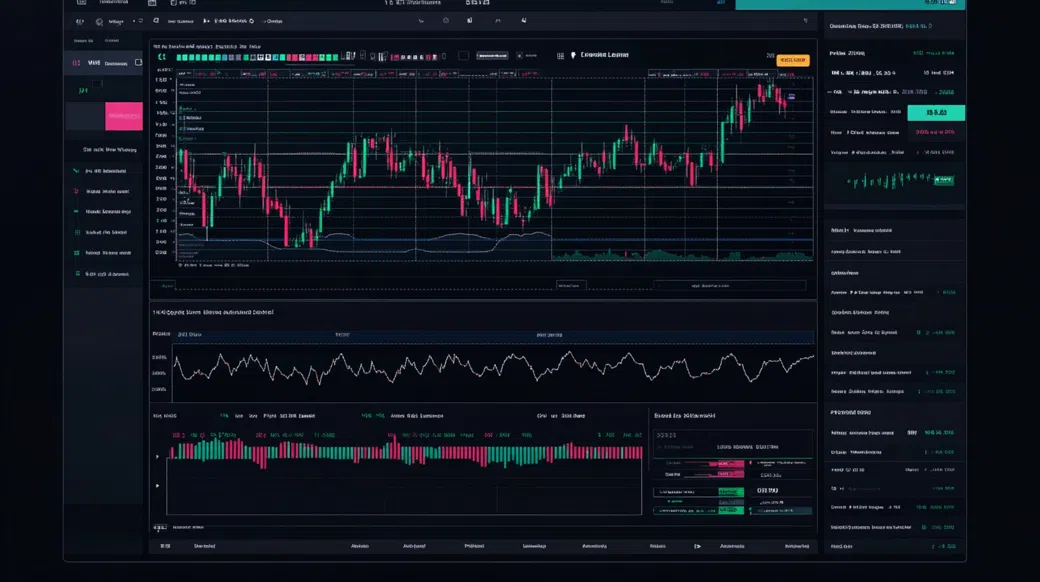
After years building model portfolios in Sydney, I learned a simple rule: the platform is never “just plumbing.” It decides your costs, your execution, your protections, and—when markets get ugly—how quickly you can get your money back. Traders who land on SmartAI Capital are typically looking for a CFD-first setup: forex pairs, headline leverage, and a browser-based WebTrader with a companion mobile app. That mix can feel convenient, especially if your aim is short-term exposure to indices, commodities, or crypto CFDs without building a multi-asset book.
But convenience is only half the scorecard. Offshore frameworks and very high leverage (often marketed up to 1:500 in this segment) can change the risk profile dramatically, particularly for newer traders who haven’t lived through a fast gap or a liquidity squeeze. Cost matters too: a “from 2.0 pips” style EUR/USD spread may not look catastrophic on a single trade, yet it compounds into real drag if you trade frequently—compounding works both ways. This guide to SmartAI Capital alternatives focuses on regulated venues where the rules around client money, complaints, and disclosures are clearer, and where you can match platform features to your strategy rather than adapting your strategy to the platform.
Disclaimer: This article is for informational purposes only and does not constitute investment advice. CFDs and other leveraged products carry a high risk of loss and may not be suitable for all investors.
From what’s commonly observable among offshore CFD providers, SmartAI Capital presents as a forex-and-CFD trading venue aimed at retail traders seeking simplified access to major markets. The product menu typically centers on 30–50 FX pairs, a modest set of indices and commodities, plus a small slate of crypto CFDs—useful for price exposure, but not the same as owning an underlying asset. Operationally, this category often runs a market-maker style execution model where the broker is the principal counterparty, which can be perfectly workable for many strategies, but deserves scrutiny around slippage, re-quotes, and how fast markets are handled. For US residents, access is commonly restricted, which is a practical reason global traders start researching brokers similar to SmartAI Capital.
The platform stack is usually a proprietary WebTrader with an iOS/Android app—designed to get you trading quickly rather than to replicate a full workstation. Expect functional charting, a set of common indicators, and basic drawing tools for levels and trendlines. Order entry tends to cover the essentials (market/limit/stop), while more advanced workflows—strategy testing, custom indicators, complex order management—are typically lighter than what MT4/MT5 or cTrader users are accustomed to. Mobile parity is often decent for monitoring and simple execution, and the account dashboard generally focuses on margin, open P&L, and funding actions. That’s the trade-off you see with platforms like SmartAI Capital: speed to start, fewer pro-grade knobs.
In this offshore CFD bracket, fees are commonly packaged into the spread on standard-style accounts, with EUR/USD often around 2.0 pips in typical conditions. Some brokers in the same segment advertise an ECN/Raw tier where spreads can compress (say 0.0–0.4 pips) but add a commission—often in the ballpark of $6 round-turn per standard lot. Overnight financing (swap) is the quiet cost that catches swing traders: hold positions for days and the carry charges become the real line item. You may also encounter non-trading fees such as withdrawal charges or inactivity fees depending on account terms, so reading the fee schedule matters as much as watching the spread widget.
Nothing prompts a platform switch like a risk event. If you’re using high leverage and a fast market moves against you, the details—negative balance protection, margin closeout rules, and withdrawal processing—stop being fine print and become the whole story. Many traders exploring SmartAI Capital alternatives are not chasing novelty; they’re trying to align their broker choice with a longer time horizon, a clearer regulatory perimeter, or a more capable platform stack for systematic execution. Another recurring driver is cost “leakage”: a couple of pips here, a swap charge there, and suddenly your strategy’s edge is underwriting the broker’s revenue line.
Think of this as a fit-to-strategy exercise, not a popularity contest. Day traders need predictable transaction costs and execution; long-horizon investors care more about product breadth, custody structure, and the ability to hold assets without perpetual financing. The best “regulated options vs SmartAI Capital” are the ones that match your instrument needs and your tolerance for complexity—while keeping the guardrails of credible oversight.
Start with the regulator, then work backward to features. FCA (UK), ASIC (Australia), CySEC (Cyprus/EU), and NFA/CFTC (US) each impose different conduct rules, but all are a stronger baseline than an offshore setup. In the UK, FCA-regulated firms may provide access to the FSCS (up to £85,000 in eligible cases); in Cyprus, the ICF can cover up to €20,000 for eligible clients. Look for segregated client funds, clear complaints pathways, and documented negative balance protection where applicable.
Write down what you actually trade. FX and index CFDs are one thing; real stocks/ETFs, options, and futures are another universe entirely. If your plan includes compounding via diversified ETFs, you’ll want a broker built for ownership and custody rather than synthetic exposure. Conversely, if you mostly trade majors and a handful of indices, an FX/CFD specialist can be a sharper tool. This is where alternatives to the SmartAI Capital trading platform separate into “portfolio platforms” and “trading platforms.”
Headline spreads are only the entry point. A proper comparison uses round-turn cost (spread + commission) at your typical trade size, then layers in swap/overnight fees for holding periods. Inactive-account charges and withdrawal fees also matter because they strike when you’re not trading—exactly when you’re least likely to notice. If you’re trading frequently, a move from ~2.0 pips EUR/USD toward a raw-spread + commission model can be meaningful over a month of volume.
Platform choice dictates what you can automate, how you manage risk, and how you audit fills. MT4/MT5 and cTrader support EAs, custom indicators, and more detailed trade logs; proprietary platforms can be simpler but less extensible. Execution model matters too: market maker vs STP/ECN/DMA affects how orders are routed and what slippage might look like in thin liquidity. If you’re comparing competitors to SmartAI Capital, test with small size and track fill quality around volatile sessions.
Support is a trading tool when something breaks mid-session. Check service hours in your time zone, the availability of live chat/phone, and whether responses are procedural or genuinely helpful. Education is a bonus, but clarity is the real value: margin policies, product disclosures, and fee tables should be readable without detective work. Mobile parity matters if you manage risk on the move—closing a position should be just as straightforward on a phone as on a desktop.
On FX and CFDs, SmartAI Capital’s appeal is usually straightforward access—major pairs, a handful of indices and commodities, and leverage that can run as high as 1:500 in offshore frameworks. The flip side is cost and execution transparency: a typical EUR/USD spread around 2.0 pips can be a heavy hurdle for short-term traders, and market-maker execution can behave differently during fast tape. For regulated substitutes for SmartAI Capital, FX specialists like Pepperstone and OANDA are often stronger on platform choice and oversight: Pepperstone supports MT4/MT5/cTrader and is regulated by FCA/ASIC/CySEC/DFSA; OANDA has CFTC/NFA oversight in the US (plus FCA/ASIC/IIROC elsewhere) and tends to publish clearer pricing and execution information. If you scalp or trade news, those structural differences—platform tooling, slippage behavior, and the discipline of top-tier regulation—can matter more than the advertised leverage.
This is the big fork in the road for 2026. Many CFD-first venues provide equity exposure mainly via stock CFDs, which means no shareholder rights, no custody of underlying shares, and ongoing financing costs for longer holds. That’s workable for tactical trades, but it’s the opposite of “set-and-compound” investing. If you’re looking for SmartAI Capital trading platform alternatives 2026 with true multi-asset depth, Interactive Brokers (IBKR) is the benchmark for global exchange access—stocks, ETFs, options, futures, bonds, and FX under a heavily regulated umbrella (SEC/FINRA in the US, FCA in the UK, IIROC in Canada). Saxo Bank is another credible route, pairing broad market access with strong platform tooling and multiple regulatory touchpoints (FCA/MAS/DFSA depending on region). For US/EU investors building diversified ETF portfolios, owning the asset—not renting the price via a CFD—usually aligns better with long-run compounding.
Crypto exposure is often offered as CFDs in this segment: you’re trading price movements with leverage, not holding coins on-chain. That distinction is not philosophical—it changes counterparty risk, fees, and what happens if you want to transfer assets. If SmartAI Capital provides 10–30 crypto CFDs, the practical question becomes whether you need leveraged trading or simply portfolio exposure. Among regulated SmartAI Capital alternatives, IG offers crypto CFDs in many jurisdictions under a well-known regulatory footprint (FCA/ASIC/MAS, subject to local rules), while Plus500 also provides crypto CFDs under multiple regulators (FCA/CySEC/ASIC/MAS, again depending on region). Either way, treat leverage with respect: crypto’s volatility can trigger margin calls quickly, and gaps can exceed stop levels in illiquid moments. For many investors, the cleaner approach is limiting crypto CFDs to small, predefined risk budgets rather than “sizing up” because leverage is available.
Regulation: SEC/FINRA (US), FCA (UK), IIROC (Canada)
Markets: Stocks, ETFs, options, futures, bonds, FX, funds (product access varies by region)
Fees: FX pricing typically tight with commission-based models; equity pricing varies by venue and plan
Platform: Trader Workstation (TWS), IBKR Desktop/Web, mobile
Best For: ETF-and-index investors building global portfolios
Regulation: FCA, ASIC, CySEC, DFSA
Markets: FX, index CFDs, commodity CFDs, some crypto CFDs (availability varies)
Fees: Standard spreads often around ~1.0–1.3 pips EUR/USD; Raw-style pricing can run ~0.0–0.3 pips + commission (varies by entity)
Platform: MT4, MT5, cTrader, TradingView (where offered)
Best For: Systematic FX traders using MT4/MT5/cTrader
Regulation: FCA, ASIC, MAS
Markets: CFDs (indices, FX, shares, commodities), spread betting (UK/IE), limited crypto CFDs (jurisdiction-dependent)
Fees: FX spreads often from ~0.6–1.0 pips on majors (varies by market/region); share CFD costs depend on market
Platform: IG web platform, mobile; MT4 available in some regions
Best For: Macro traders focused on indices and event risk
Regulation: FCA, MAS, DFSA
Markets: Stocks, ETFs, options, futures, FX, bonds, CFDs (product scope varies by jurisdiction)
Fees: FX spreads often from ~0.6–1.0 pips on majors (tiered by client segment); commissions apply on exchange-traded products
Platform: SaxoTraderGO, SaxoTraderPRO
Best For: Multi-asset allocators wanting robust research and tools
Regulation: CFTC/NFA (US), FCA, ASIC, IIROC
Markets: FX, CFDs (availability varies by region)
Fees: Pricing typically spread-based; EUR/USD often around ~0.6–1.2 pips depending on account and region
Platform: OANDA web/mobile, MT4 (region-dependent)
Best For: US-eligible FX traders prioritizing oversight
Regulation: FCA, CySEC, ASIC, MAS
Markets: CFDs on FX, indices, shares, commodities, ETFs; crypto CFDs in some regions
Fees: Primarily spread-based pricing; costs vary by instrument and market conditions
Platform: Plus500 WebTrader, mobile app
Best For: Beginners who want a clean, app-first CFD experience
| Platform | Regulation | Main Markets | Typical Costs | Best For |
|---|---|---|---|---|
| Interactive Brokers (IBKR) | SEC/FINRA, FCA, IIROC | Stocks/ETFs, options, futures, bonds, FX | Commission-based; FX typically tight, equities venue-dependent | ETF-and-index investors building global portfolios |
| Pepperstone | FCA, ASIC, CySEC, DFSA | FX + major CFD suite | ~1.0–1.3 pips (Standard) or ~0.0–0.3 pips + commission (Raw-style) | Systematic FX traders using MT4/MT5/cTrader |
| IG | FCA, ASIC, MAS | CFDs (indices/FX/shares/commodities); spread betting (UK/IE) | Majors often ~0.6–1.0 pips; share CFD pricing market-dependent | Macro traders focused on indices and event risk |
| Saxo Bank | FCA, MAS, DFSA | Multi-asset (stocks/ETFs/options/futures/FX) + CFDs | FX often ~0.6–1.0 pips (tiered); commissions on exchanges | Multi-asset allocators wanting robust research and tools |
| OANDA | CFTC/NFA, FCA, ASIC, IIROC | FX; CFDs in some regions | Typically ~0.6–1.2 pips EUR/USD (region/account-dependent) | US-eligible FX traders prioritizing oversight |
| Plus500 | FCA, CySEC, ASIC, MAS | CFDs across FX/indices/shares/commodities/ETFs | Spread-based; varies widely by instrument | Beginners who want a clean, app-first CFD experience |
Switching brokers is less like changing apps and more like moving custodians: you’re managing counterparty exposure while trying to keep your trading routine intact. The cleanest sequence is to set up the new account, confirm it works for your strategy, then unwind and withdraw from the old venue in an orderly way. Rushing this process can create avoidable risk—especially if you’re carrying leveraged CFDs through a volatile week.
If you’re still assessing whether the current setup fits your plan, review the product list, fee schedule, and regional eligibility side by side with the best SmartAI Capital alternatives 2026 above. A quick platform test—charts, order types, funding workflow—often reveals more than a marketing page.
Visit SmartAI CapitalThe best alternative depends on whether you’re trading frequently or building a long-term portfolio. For broad, real-asset access (stocks/ETFs/options/futures), Interactive Brokers and Saxo Bank are hard to ignore; for FX/CFD execution with MT4/MT5/cTrader, Pepperstone is a common pick. If you’re US-based and want regulated spot FX access, OANDA is often the most practical route.
SmartAI Capital appears to operate in an offshore/unregulated-style framework typical of high-leverage CFD venues, rather than under FCA/ASIC/CySEC/NFA supervision. That doesn’t automatically mean you can’t trade, but it does mean fewer formal investor-protection levers compared with tier‑1 regulated brokers. If safety is your priority, focus on client-fund segregation, clear legal-entity disclosure, and strong regulatory oversight before you fund any account.
SmartAI Capital is generally positioned around forex and CFDs, with crypto commonly offered as CFDs (price exposure, not on-chain ownership). Stock and ETF access is often CFD-based in this category, while exchange-traded futures are typically not part of the core offering. If you need real stocks/ETFs or listed futures, brokers like IBKR or Saxo are better-aligned.
Before switching, verify the new broker’s regulator and legal entity on the official register, then confirm the product you want is available in your country. Next, compare round-turn costs (spread + commission) and read the margin/negative-balance rules so leverage behaves the way you expect. Finally, export statements from SmartAI Capital and test the new platform with small size before moving meaningful capital.
Liam Ashford is a former portfolio strategist based in Sydney, covering Asia-Pacific brokerage markets and index investing with a trader’s eye for execution and costs. He focuses on the practical details—fees, platform design, and regulation—because compounding is powerful, and friction compounds too.