Trustenix AI Trading Platform Alternatives 2026
Compare Trustenix AI alternatives for 2026 with a safety-first lens: regulated brokers, costs, platforms, and migration steps for US/EU-focused traders.

Compare Trustenix AI alternatives for 2026 with a safety-first lens: regulated brokers, costs, platforms, and migration steps for US/EU-focused traders.
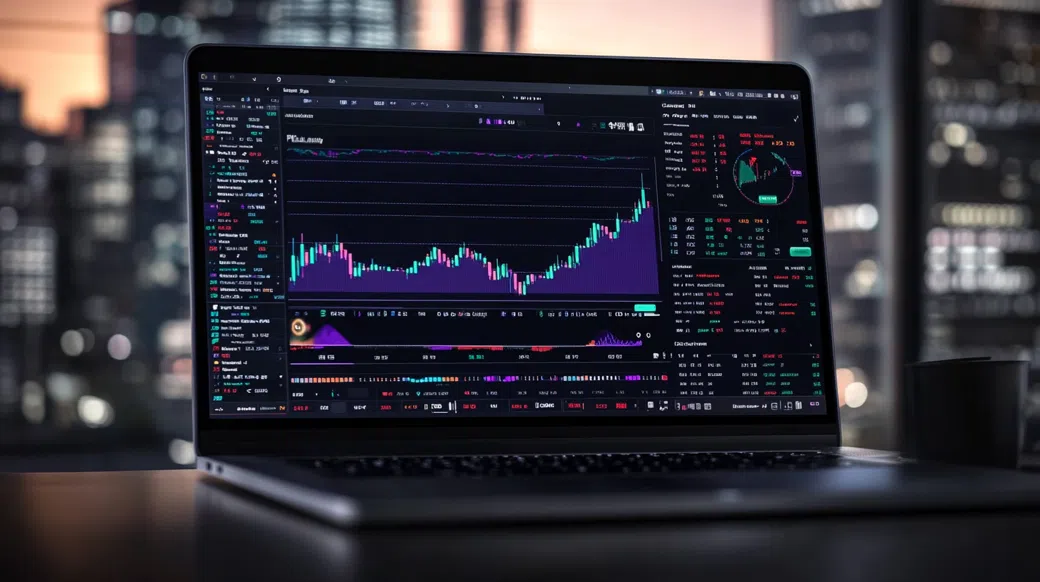
Markets have a habit of humbling anyone who confuses convenience with robustness. That’s the lens I bring to Trustenix AI: it appears to sit in the familiar offshore CFD lane—Forex and index CFDs as the main event, a proprietary WebTrader plus mobile apps, and leverage that can look enticing on a landing page but punishing in a fast tape. Based on what’s commonly observed in this segment, you may see a minimum deposit around $250, EUR/USD spreads around 2.0 pips on a standard-style account, and leverage that can run up to 1:500. Those settings can suit small, tactical positions, yet they’re not the same thing as institutional-grade market access.
For US and EU readers—especially anyone building a long-horizon plan around index exposure and steady contributions—the bigger question isn’t “Can I place a trade?” It’s “What happens on the bad day?” Regulation, segregation of client funds, negative balance protection, and the quality of execution matter more than marketing claims. That’s why this guide focuses on Trustenix AI alternatives that are better aligned with transparent pricing, broader product shelves (including real stocks/ETFs where relevant), and verifiable oversight. Used correctly, CFDs are tools; used casually, they’re accelerants.
This article rounds up practical, regulated substitutes, explains how to compare platforms like Trustenix AI, and lays out a clean migration path so you can move capital without turning the process into another trade.
Disclaimer: This article is for informational purposes only and does not constitute investment advice. Leveraged products such as CFDs carry a high risk of loss and may not be suitable for all investors.
From a practical trading standpoint, Trustenix AI reads like a CFD-first brokerage setup designed for retail clients who want fast onboarding and a straightforward interface. The product mix is usually centered on Forex pairs, major indices, a handful of commodities, and crypto CFDs—useful for short-term views, less so for investors who want to own underlying assets. Execution in this category is often run on a market-maker model (the broker can be the counterparty), which is not automatically “bad,” but it does shift the burden onto the trader to watch fills, slippage, and re-quotes during volatile releases.
The platform stack is typically a proprietary WebTrader with a companion iOS/Android app. Expect functional charting with a moderate indicator set, common drawing tools (trendlines, fibs), and standard order controls (market, limit, stop; sometimes trailing stops). The better versions of these WebTraders offer decent watchlists and a clean account dashboard for margin, equity, and open P&L—though they can feel light if you’re used to MT4/MT5 or cTrader’s deeper automation and analytics. Mobile usually mirrors the web experience, but rapid order edits and multi-chart workflows can be tighter on desktop.
Costs are where competitors to Trustenix AI can separate themselves. A typical offshore-style “Standard” account often prices EUR/USD around 2.0 pips; some firms also advertise a tighter, commission-based tier (think 0.0–0.4 pips plus roughly $6–$8 round-turn per lot). Beyond spreads, keep an eye on swap/overnight financing (especially for index and crypto CFDs), plus potential withdrawal or inactivity charges that can quietly erode smaller accounts. In my experience, the fee line items matter most for strategies that hold positions for days rather than minutes.
One of the earliest prompts to explore Trustenix AI alternatives is discovering that your strategy needs “plumbing” the current setup can’t provide—platform depth, product access, or a regulatory framework you can verify on a public register. For US/EU traders, the friction often shows up around withdrawals, regional restrictions, or uncertainty about investor protections. And for anyone running a systematic approach, execution quality—how orders behave when markets gap—beats the comfort of a familiar interface.
Think of this selection process as matching a broker to your risk controls, not your impulses. The right alternative to the Trustenix AI trading platform should fit your instruments (FX, indices, ETFs), your holding period (intraday vs swing), and your operational needs (tax reporting, funding, support). A good comparison uses the same trade size and the same market conditions; otherwise, you’re just comparing brochures.
Start with oversight you can independently confirm: FCA (UK), ASIC (Australia), CySEC (Cyprus/EU), or NFA/CFTC (US). In the UK, eligible clients may have FSCS coverage up to £85,000; in Cyprus, the ICF can cover up to €20,000 for qualifying claims. Also look for segregated client funds and clear negative balance protection language—these are structural features, not “nice-to-haves,” when leverage is involved.
Write down what you actually need to trade. If your core is index investing, access to real stocks/ETFs (not just stock CFDs) can change everything: dividends, corporate actions, and portfolio reporting are cleaner. FX/CFD specialists can be excellent for currencies and indices, but multi-asset brokers tend to win when you want to blend tactical trades with long-term holdings under one roof.
Compare the all-in, round-turn cost: spread + commission + expected slippage. A headline “0.0 pip” raw spread means little if commissions are high or fills deteriorate at the open. For positions held overnight, swap/financing can dwarf entry costs—particularly on equity indices and crypto CFDs. Finally, watch for non-trading costs such as inactivity and withdrawal fees, which can be a stealth drag on compounding.
Platform choice is really a workflow choice. MT4/MT5 and cTrader support automation, custom indicators, and a mature ecosystem; proprietary platforms can be simpler and safer for beginners but may cap your edge. Execution model matters too: market maker vs STP/ECN/DMA influences how orders are routed and how slippage behaves in fast markets. If you’re moving from Trustenix AI, test fills with small size during liquid and illiquid sessions before you scale.
Good support is measured in response quality, not chat widgets. Check service hours in your time zone, language coverage, and whether the broker provides clear documentation on margin calls, order types, and corporate actions. Education can be a signal too: brokers that publish platform guides, webinars, and market explainers often have better operational maturity. Mobile parity matters if you manage risk on the move—especially around stops and margin alerts.
Forex and CFDs are where Trustenix AI is most likely concentrated: roughly a few dozen FX pairs, a compact list of indices, and a small commodity menu. The headline attraction is usually leverage—often up to 1:500—yet the trade-off is that pricing and execution transparency can be thinner than at large regulated venues. If you’re trading frequently, a 2.0-pip EUR/USD spread can add up quickly, especially once you layer in slippage around data releases. Pepperstone and IC Markets are frequently used reference points here because they offer MT4/MT5/cTrader stacks and raw-style pricing where the spread can sit near zero in liquid hours, with commissions that are visible and comparable. That doesn’t remove risk—CFDs are leveraged products—but it does make the cost of doing business easier to quantify.
This is where the gap often becomes obvious for US/EU readers building durable portfolios. Offshore CFD-first brokers typically offer equities as CFDs (if at all), which means you’re trading price exposure rather than owning the asset—no shareholder rights, and the financing cost can be meaningful if you hold for weeks. If your aim is to accumulate broad-market ETFs or rebalance a core portfolio, Interactive Brokers is hard to ignore thanks to its deep global market access (stocks, ETFs, options, futures, bonds) and institutional-style tooling. Saxo Bank is another strong pick for multi-asset investors who want a polished interface plus broad exchange coverage. In plain English: if compounding is your north star, owning the underlying instrument is usually a cleaner vehicle than rolling CFD exposure.
Where crypto is available on platforms like Trustenix AI, it’s commonly delivered as crypto CFDs—price exposure without on-chain ownership. That can be perfectly adequate for short-term positioning, but it’s not the same as withdrawing coins to a wallet, participating in networks, or holding spot assets long-term. For regulated CFD access, IG and Plus500 are well-known names in many regions for offering crypto CFDs alongside indices and FX (availability depends on jurisdiction and evolving rules). The key comparison points are margin requirements, weekend pricing behavior, and financing costs—crypto CFDs can carry chunky overnight charges. Also be realistic about volatility: crypto moves can trigger margin calls faster than many new traders expect, especially when leverage is layered on top.
Regulation: SEC/FINRA (US), FCA (UK), IIROC (Canada)
Markets: Stocks, ETFs, options, futures, bonds, FX, funds
Fees: FX spreads typically from ~0.1–0.8 pips (market-dependent) with commissions; stock/ETF pricing varies by venue and plan
Platform: Trader Workstation (TWS), IBKR Desktop/Web, mobile
Best For: Long-term ETF builders who also trade tactically
Regulation: FCA (UK), ASIC (Australia), CySEC (EU), DFSA (UAE)
Markets: FX, index CFDs, commodity CFDs, some crypto CFDs (jurisdiction-dependent)
Fees: Standard spreads often ~1.0–1.3 pips on EUR/USD; Raw-style pricing can be ~0.0–0.3 pips + commission (varies by entity)
Platform: MT4, MT5, cTrader, TradingView (integration where available)
Best For: Systematic FX traders using EAs and cTrader
Regulation: FCA (UK), MAS (Singapore), DFSA (UAE)
Markets: Stocks, ETFs, options, futures, FX, bonds, CFDs
Fees: FX spreads commonly from ~0.6–1.2 pips (tier-dependent); commissions apply on many exchange-traded products
Platform: SaxoTraderGO, SaxoTraderPRO
Best For: Multi-asset investors who want one account across regions
Regulation: FCA (UK), ASIC (Australia), MAS (Singapore)
Markets: CFDs across FX, indices, commodities, shares; crypto CFDs in some regions
Fees: FX spreads often from ~0.6–1.0 pips on major pairs (varies by market and account); financing applies to leveraged positions
Platform: IG Web platform, mobile apps; MT4 available in certain regions
Best For: Macro traders focused on indices and event-driven moves
Regulation: ASIC (Australia), CySEC (EU)
Markets: FX, index CFDs, commodity CFDs, crypto CFDs (jurisdiction-dependent)
Fees: Raw spreads often ~0.0–0.3 pips on EUR/USD + commission; Standard accounts commonly ~0.8–1.2 pips
Platform: MT4, MT5, cTrader
Best For: High-frequency style traders chasing tight spreads
Regulation: FCA (UK), CySEC (EU)
Markets: Stocks and ETFs (investing account); CFDs in supported regions
Fees: Investing trades often commission-free (other charges like FX conversion may apply); CFD costs depend on spread and financing
Platform: Proprietary web platform, mobile apps
Best For: Simple ETF and stock accumulation with a clean UI
| Platform | Regulation | Main Markets | Typical Costs | Best For |
|---|---|---|---|---|
| Interactive Brokers (IBKR) | SEC/FINRA, FCA, IIROC | Stocks/ETFs, options, futures, bonds, FX | FX from ~0.1–0.8 pips + commissions (market-dependent) | Long-term ETF builders who also trade tactically |
| Pepperstone | FCA, ASIC, CySEC, DFSA | FX + major CFD suite (indices/commodities) | EUR/USD ~1.0–1.3 pips (Standard) or ~0.0–0.3 + commission (Raw) | Systematic FX traders using EAs and cTrader |
| Saxo Bank | FCA, MAS, DFSA | Broad multi-asset + CFDs | FX from ~0.6–1.2 pips (tiered); commissions on exchanges | Multi-asset investors who want one account across regions |
| IG | FCA, ASIC, MAS | CFDs across FX/indices/commodities/shares | FX from ~0.6–1.0 pips on majors (varies); financing on leverage | Macro traders focused on indices and event-driven moves |
| IC Markets | ASIC, CySEC | FX + CFDs (indices/commodities/crypto where allowed) | EUR/USD ~0.0–0.3 + commission (Raw) or ~0.8–1.2 (Standard) | High-frequency style traders chasing tight spreads |
| Trading 212 | FCA, CySEC | Stocks/ETFs (real), plus CFDs in some regions | Investing often commission-free; CFD spreads + financing; FX conversion may apply | Simple ETF and stock accumulation with a clean UI |
Switching brokers is operational risk dressed up as admin. Treat it like you would a portfolio rebalance: staged, documented, and reversible where possible. The objective is to keep control of your funds and your data while you move from an offshore-style setup into a regulated home. And remember—closing and reopening leveraged positions can change your risk profile if markets move between steps.
If you’re still assessing your options, it can help to review the current onboarding flow, instrument list, and trading conditions directly—then benchmark them against regulated options on your shortlist. Pay special attention to your region’s eligibility, leverage limits, and withdrawal rules before committing fresh capital.
Visit Trustenix AIThe best alternative depends on whether you’re trading CFDs actively or building a long-term portfolio. For real stocks/ETFs and global market access, Interactive Brokers is often the strongest fit; for FX/CFD traders prioritising platform choice and tight pricing, Pepperstone or IC Markets are common picks. If your focus is a simpler investing experience, Trading 212 can suit ETF accumulation in supported regions.
Trustenix AI appears to operate under an offshore or unregulated framework rather than a top-tier regime like the FCA, ASIC, CySEC, or NFA. That doesn’t automatically mean fraud, but it usually means fewer formal investor protections and less transparency around client-money handling and dispute processes. If safety is your priority, compare regulated options vs Trustenix AI and verify the legal entity on the regulator’s register.
In setups like this, stocks and ETFs are commonly offered as CFDs (if offered at all), and futures access is typically limited compared with multi-asset brokers. Crypto exposure, when available, is often via crypto CFDs—price exposure rather than on-chain ownership. If you want exchange-traded futures or to hold real ETFs, brokers like Interactive Brokers or Saxo Bank are designed for that job.
Before switching, confirm the new broker’s regulation (FCA/ASIC/CySEC/NFA) and read the client-money and negative balance protection terms. Next, compare your true trading costs—spread, commission, swap/overnight fees, and likely slippage—using the same position size. Finally, complete KYC at the new broker first and export your records before you close out positions and withdraw.
Liam Ashford is a Sydney-based former portfolio strategist who covers the Asia-Pacific brokerage landscape with a practical, risk-first mindset for global readers. He focuses on index investing mechanics, trading market structure, and the small operational details—fees, execution, and platform limits—that compound into big outcomes over time.