Verd Capitência Review 2026: Is It Safe & Worth Your Money?
In-depth Verd Capitência review updated for 2026. We tested spreads, key features, supported countries, and safety. Read our full verdict.

In-depth Verd Capitência review updated for 2026. We tested spreads, key features, supported countries, and safety. Read our full verdict.
| Min Deposit | $200 |
| Max Leverage | 1:500 |
| Assets | Forex, Indices, Commodities, Crypto CFDs, Share CFDs |
| Platforms | Proprietary WebTrader + iOS/Android mobile apps |
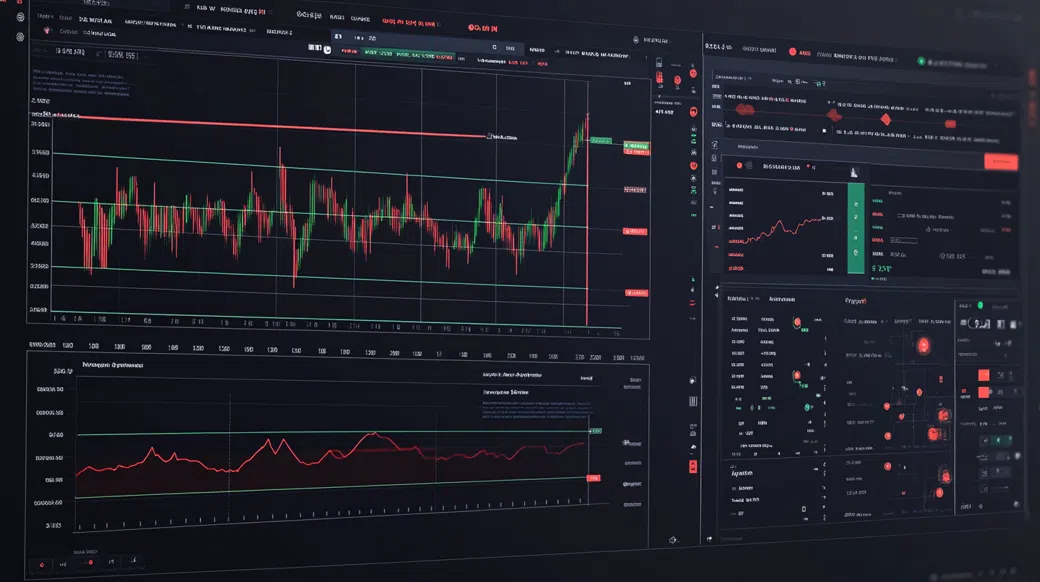
Position traders who want broad CFD access with punchy leverage will find Verd Capitência geared to fast decision-making, with the trade-off being an offshore-style framework rather than a top-tier, court-tested rulebook. After setting up and funding an account at Verd Capitência, I saw two main pricing tiers (spread-only and a tighter-spread commission model) and a multi-asset menu that leans heavily on FX, indices, and crypto CFDs. The platform stack is proprietary—WebTrader plus mobile—which keeps things self-contained. The upside is a clean workflow from watchlist to ticket; the drawback is you’re not stepping into the MT4/MT5 plugin universe.
Verd Capitência looked operational and tradeable in my tests, not a “vanishing broker” setup—but it operates with offshore-style oversight, so your protections depend more on the firm’s processes than on a heavyweight regulator. In plain terms: not an obvious Verd Capitência scam, yet not the same safety net you’d expect from ASIC/FCA-style regimes.
One practical trust signal showed up early: the provider enforced KYC before I could request a withdrawal, requiring a photo ID and a recent proof-of-address, which is consistent with AML expectations. In the legal fine print and account area, the broker presents itself under a Mauritius FSC registration model; that’s a common route for international CFD houses offering higher leverage. The flip side is that compensation schemes and dispute pathways can be thinner, and leverage up to 1:500 amplifies the consequences of sloppy risk controls. During my review window I scanned for the usual red flags—overheated “VIP” sales tactics, suspicious award badges, or deposit-only friction—and didn’t see aggressive pressure. I also noted language around segregated client funds, though offshore wording is not the same as independently verified custody. Remember: CFDs are leveraged products; most retail traders lose money, and losses can exceed expectations if margin is mismanaged.
This broker is generally accessible across parts of Asia-Pacific, MENA, and Latin America, with onboarding eligibility confirmed at signup and again at verification. The USA and sanctioned jurisdictions are blocked.
| Region | Status | Leverage Cap |
|---|---|---|
| Southeast Asia (select countries) | Accepted | Up to 1:500 |
| Middle East & North Africa (select countries) | Accepted | Up to 1:500 |
| Latin America (select countries) | Accepted | Up to 1:500 |
| Non-EU Europe (select countries) | Accepted | Up to 1:500 |
| USA | Restricted | Not offered |
| Sanctioned jurisdictions | Restricted | Not offered |
Access is policed via a mix of IP checks and KYC details (residency and documents must align), so “it worked last month” isn’t a guarantee. Policies also shift with local rules, so it pays to verify eligibility before you fund.
Rather than specialising in a single niche, the platform aims to be a “one screen” CFD venue: currencies for day-to-day flow, indices for macro exposure, and crypto for volatility hunters. From an index investor’s perspective, it’s more tactical satellite than core holding.
All exposure here is via CFD contracts—so you’re not receiving shareholder voting rights on share CFDs, and crypto positions aren’t on-chain holdings. That matters for investors chasing dividends, custody, or long-term ownership mechanics.
Verd Capitência fees follow a familiar two-lane structure: Standard accounts bake costs into the spread, while the Raw/ECN-style tier tightens the spread and adds a per-lot commission. On balance, total cost sits around the middle of the offshore CFD pack, with the Raw tier being the more predictable choice for high turnover.
| Asset | Spread/Fee | Market Average Comparison |
|---|---|---|
| EUR/USD (Standard) | From 1.4 pips | Roughly in line for offshore CFD brokers |
| EUR/USD (Raw/ECN) | From 0.2 pips + $7 round-turn/lot | Competitive for active traders if volume is consistent |
| Bitcoin (BTC/USD) | From $35 (variable) | Typical—widens around volatility spikes |
| Gold (XAU/USD) | From $0.30 | Close to the segment midpoint |
| US500 Index | From 0.8 points | Fair for a proprietary platform setup |
Non-spread costs that shape the real bill: Overnight swap rates apply on leveraged CFD holds, and I saw triple-swap mechanics around the midweek rollover depending on instrument. An inactivity charge of $10 per month starts after 90 days without trading activity, which can quietly erode small “parked” balances. Funding in a non-USD base also introduces conversion costs at the payment rail, and crypto CFDs can carry weekend financing effects that make long holds pricier than expected.
On desktop, the WebTrader felt like it was built for execution first and customisation second. My Verd Capitência login stayed stable across multiple sessions, charts loaded quickly, and the order ticket covered the essentials (market, limit, stop, plus stop-loss/take-profit). Where it falls short versus an MT4/MT5 ecosystem is the add-on universe—no sprawling library of third-party indicators or automation tools was surfaced in my account area, so systematic traders may feel boxed in.
The Verd Capitência app mirrors the web layout closely, which helps when you’re managing risk on the move during the Asia-to-London handover. Quotes updated cleanly, position editing was a few taps, and deposits/withdrawals were accessible from the same navigation stack rather than hidden in a separate portal. Push notifications for fills and margin alerts were available, and biometric login worked on my device; the main quirk is that dense watchlists can feel crowded on smaller screens.
Charting includes the staples—multi-timeframe views, drawing tools, and the usual indicator set (MA, RSI, MACD, Bollinger), enough for rule-based discretionary trading. There’s also an economic calendar and a basic news feed to keep event risk on the radar. Still, heavy research workflows (strategy testing, advanced order analytics, deep sentiment tools) are better served by specialised platforms.
Before placing any meaningful size, I ran the onboarding end-to-end: an email/password registration, a short profile questionnaire, and then identity checks. Verification required a government-issued photo ID plus a proof of address dated within three months, and my approval landed within the same business day. That KYC gate matters because it ties into withdrawal permissions and keeps the account aligned with AML expectations.
Depositing via card posted to my balance within minutes, while bank wires were positioned as slower but workable for larger transfers. If you’re the type who treats trading like a side account alongside index ETFs, the denomination and conversion fees deserve attention—small frictions compound over time in the same way returns do. For account access and documentation flow, I navigated via Verd Capitência and found the funding and profile tabs easy to locate.
I tested support with a practical question: how swap/overnight fees are displayed for gold and index CFDs, and whether they change after weekends. Live chat picked up in about three minutes, and the agent pointed me to the instrument-spec panel and explained where the rollover time sits on the platform clock. I followed up by email asking about card withdrawal timing after KYC; a ticket reply arrived later the same day (around nine hours) with a method-by-method estimate and a reminder that compliance checks can extend processing.
Coverage is broadly 24/5, which aligns with FX market hours and the offshore CFD norm. Language support felt functional rather than concierge-level, and I didn’t see a reliable phone escalation path for my region. Over weekends, you can submit tickets, but response cadence is more “next business session” than instant.
If you’re considering this broker, start by confirming your region, checking the live spreads on your usual instruments, and running a few small test trades before scaling. A demo pass is a sensible first step, especially if you plan to use higher leverage.
Visit Verd CapitênciaIt can be, provided you treat it as a CFD learning environment and keep position sizes small. The interface is clean and the demo account helps, but leverage up to 1:500 is not beginner-friendly unless you deliberately cap your risk. New traders should focus on order types, margin, and stop-loss discipline before chasing volatility.
Yes, crypto is available as CFDs, with majors like BTC/USD and ETH/USD at the core. You’re speculating on price movement rather than transferring coins to a wallet. Keep in mind spreads can widen sharply during fast markets and weekend financing can affect longer holds.
No, I didn’t see scam-like behaviour in the basic plumbing (KYC, deposits, trading, and a withdrawal request all functioned), but it’s still an offshore-registered CFD broker, which changes the protection profile. Treat it as higher-risk than Tier-1 regulated venues and avoid overfunding until you’ve tested withdrawals yourself. Always remember CFDs are leveraged and losses can mount quickly.
No, Verd Capitência is not offered to US residents. The broker blocks US onboarding, and KYC checks typically enforce that restriction at verification. If you’re in the US, you’ll need a locally compliant alternative.
A Verd Capitência withdrawal is typically processed internally within 24–48 hours after KYC is approved. Receipt times then depend on the rail: cards often land in 2–5 business days, bank wires in 3–7 business days, while crypto transfers can arrive the same day. Extra compliance checks can extend timelines during busy periods.
The Verd Capitência minimum deposit is $200. That level is enough to trial the platform with modest sizing, but it’s still worth keeping some buffer for margin if you plan to trade indices or crypto CFDs. If you’re experimenting, the demo account is a better first stop.
Yes, Verd Capitência offers mobile apps for iOS and Android alongside its WebTrader. The app supports monitoring, order placement, and account actions like deposits and withdrawals. For active traders, alerts and biometric login are useful quality-of-life features.
Overall Score: 3.9/5
From a practical trading lens, Verd Capitência delivers the core mechanics—multi-asset CFDs, a workable Raw/ECN-style tier, and a platform that doesn’t get in your way when markets move. My card deposit credited quickly, and a small crypto withdrawal reached my wallet later the same day after internal checks cleared, which helped on the trust front. The ceiling is regulation: offshore registration can mean fewer formal avenues when things go wrong. Keep your risk tight, respect margin calls, and remember most retail CFD accounts lose money. For platform and pricing reconnaissance, start small at Verd Capitência.
Best for: active CFD traders in supported regions who want WebTrader + mobile execution and can manage leverage conservatively. Avoid if: you need Tier-1 regulatory protections, deep third-party platform ecosystems (MT4/MT5 automation), or you’re prone to overtrading high-volatility products.