Wallapop Capital Trading Platform Alternatives 2026
Compare Wallapop Capital alternatives for 2026 with a US/EU focus: regulated brokers, platforms, costs, asset access, and safer switching steps.

Compare Wallapop Capital alternatives for 2026 with a US/EU focus: regulated brokers, platforms, costs, asset access, and safer switching steps.
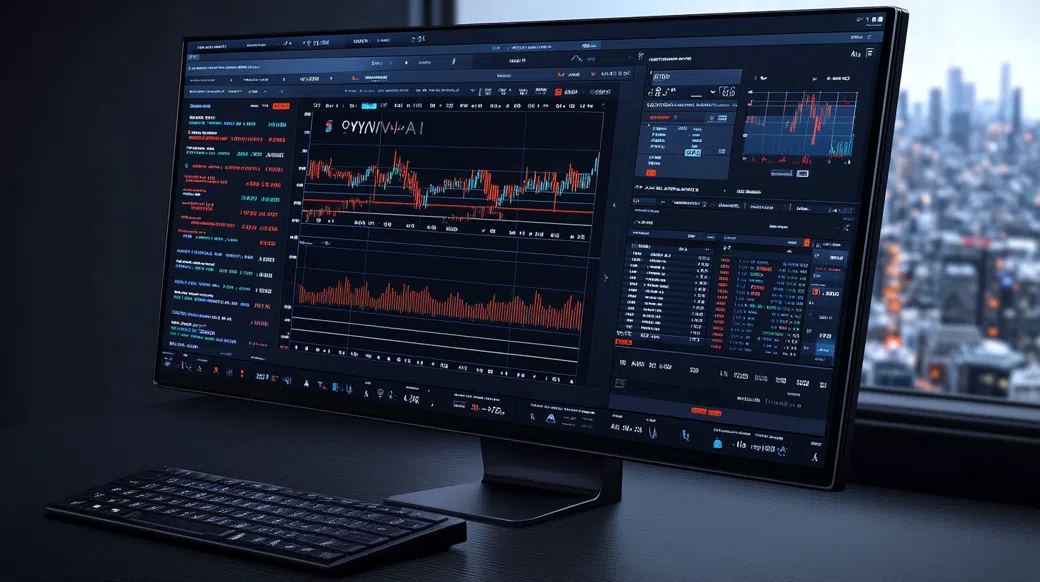
Compounding rewards patience; leverage punishes impatience. That’s the lens I use when readers ask about offshore CFD venues and the next best place to trade. Wallapop Capital appears to sit in the familiar “WebTrader + mobile app” category—Forex and CFDs at the core, crypto CFDs often on the menu, and the headline attraction typically being high leverage (commonly marketed around 1:500). The catch is that this segment frequently runs under an offshore framework (in this case, commonly presented as Seychelles FSA), which changes the safety net compared with a broker overseen by the FCA, ASIC, CySEC, or the NFA.
For many traders, the search for Wallapop Capital alternatives isn’t about novelty—it’s about reducing operational risk: clearer segregation of client funds, predictable withdrawal processes, stronger negative balance protection policies, and a platform stack that suits the strategy (MT4/MT5/cTrader for automation, or proper DMA for equities). Costs matter too. A EUR/USD spread “from ~2.0 pips” on a standard-style account can be workable for swing traders, but it’s a tax on frequent execution—especially once you factor in slippage, swap/overnight financing, and the spread widening that can show up around data releases.
The aim of this guide is practical: map what Wallapop Capital likely offers, show what regulated competitors do differently, and give you a migration sequence that treats your capital like it’s meant to stay in the game long enough to compound.
Disclaimer: This article is for informational purposes only and does not constitute investment advice. CFDs and other leveraged products carry a high risk of loss and may not be suitable for all investors.
From what is typically observable in offshore CFD providers, Wallapop Capital presents as a CFD-first broker focused on Forex and index/commodity CFDs, with crypto CFDs commonly offered alongside. The experience is usually geared to newer-to-intermediate traders who want a quick onboarding flow, simple charting, and the ability to trade from a browser without a heavy desktop install. In this category, the dealing setup is often closer to a market-maker or hybrid model than pure DMA—fine for many retail flows, but important context if your strategy is latency-sensitive or relies on very tight spreads.
The typical Wallapop-style stack is a proprietary WebTrader with an iOS/Android companion app. Expect functional charting rather than institutional depth: common indicators, basic drawing tools, and one-click trading for quick entries. Order handling is usually oriented around market and limit orders, with stop-loss/take-profit attached at entry from the ticket. Mobile parity tends to be decent for monitoring and simple execution, while the account area usually emphasizes deposits/withdrawals, open positions, and margin level. Traders comparing platforms like Wallapop Capital should pay attention to how the platform reports fills, re-quotes (if any), and whether stop orders are triggered reliably during fast markets.
Cost disclosure in offshore CFD venues often looks straightforward on paper but becomes meaningful only when you trade size. A common standard-style quote for EUR/USD is around ~2.0 pips typical spread. Some brokers in this segment advertise a tighter, raw/ECN-like option—often 0.0–0.4 pips plus a commission in the ballpark of $6–$8 round-turn. Also budget for swap/overnight financing on leveraged CFD positions, which can dominate your P&L if you hold for weeks. Minimum deposits are frequently set around $250, and withdrawal/inactivity fees may apply depending on the funding method and account activity.
A change in risk tolerance is usually the first domino. After a few quarters in markets, many traders stop optimizing for “fast onboarding” and start optimizing for governance: regulator oversight, complaint channels, and clarity on segregated client funds. That’s when Wallapop Capital alternatives move from a curiosity to a capital-preservation decision—particularly if your position sizing has grown and margin calls would do real damage. Leverage cuts both ways; at 1:500, small price moves can become account-defining events, especially during gaps or high-volatility sessions.
Think of the selection process as matching a broker to your strategy’s failure points. If your weak link is execution, you assess slippage and order types. If your weak link is operational risk, you start with regulation and protections. Either way, treat “broker choice” like choosing an index methodology: the details decide outcomes over time.
Start with the regulator and the jurisdiction. FCA-regulated firms in the UK can fall under the FSCS (up to £85,000 eligibility-dependent), while CySEC oversight in the EU can involve the ICF (up to €20,000 eligibility-dependent). ASIC and NFA frameworks don’t mirror those exact compensation schemes, but they do enforce capital, conduct, and reporting standards. Look for segregated client funds and clear negative balance protection policies where applicable, and verify the license on the regulator’s public register—don’t rely on a footer badge.
Your instrument list should reflect your intent. If you’re trading index CFDs tactically, you need liquid indices, reliable margining, and robust risk controls. If you’re building a long-only core around ETFs, you want real asset access (not just CFDs) and low custody friction. Brokers similar to Wallapop Capital can be fine for FX/CFDs, but they often don’t serve investors who want shareholder rights, voting, or straightforward tax reporting on real holdings.
Cost-of-trade is a three-part equation: spreads, commissions, and the “silent” line items—swap/overnight fees, inactivity charges, and withdrawal costs. For active FX, compare the round-turn cost in pips (or dollars) at your typical position size and monthly volume. A raw account at 0.1–0.3 pips plus commission can beat a 1.0–2.0 pip all-in spread quickly, even if the marketing headline looks less friendly.
Platform choice determines what you can realistically execute. MT4/MT5 supports EAs and a deep ecosystem; cTrader is popular for cleaner order handling and transparency; proprietary platforms can be smooth but sometimes limit automation and advanced order types. Execution model matters as well: market maker versus STP/ECN/DMA influences how spreads are formed and how slippage appears in fast markets. If you currently trade through Wallapop Capital, test alternatives by placing small orders around liquid sessions and major news to observe fills and stop behavior.
When something breaks—platform outage, deposit delay, or margin dispute—support becomes part of your risk management. Assess response channels (phone, chat, email), operating hours aligned to your time zone, and how well the broker documents margin calls, swap calculation, and corporate actions. Education is a bonus, not a substitute for controls, but strong brokers usually provide coherent product disclosures and platform tutorials. Finally, ensure the mobile app doesn’t turn into a “view-only” tool when you need to act.
For FX and index CFDs, the key trade-off is usually leverage versus trading friction. Wallapop-style accounts often advertise high maximum leverage (commonly around 1:500) with a standard EUR/USD spread near ~2.0 pips. That structure can work for lower-frequency strategies, but it’s less forgiving for scalpers and systematic traders where a pip here or there is the strategy. Regulated CFD specialists like Pepperstone and IG tend to provide tighter pricing options (often via raw/commission accounts or highly competitive spreads) and more established execution reporting. The other practical difference is risk controls: regulated venues are typically clearer on margin closeout rules, negative balance protection (region-dependent), and how they handle extreme volatility—details that matter more than the platform’s color scheme.
If your goal is a portfolio that can quietly compound—broad-market ETFs, dividend reinvestment, and the occasional rebalance—CFDs are usually the wrong chassis. CFDs on stocks/ETFs don’t provide shareholder rights and can introduce ongoing financing costs that eat into long holding periods. This is where multi-asset brokers shine. Interactive Brokers (IBKR) is built for access: global equities, ETFs, options, futures, and bonds, with a tooling stack that suits serious allocation work. Saxo Bank is another strong candidate for investors who want a wide universe and a cohesive platform for both investing and tactical trading. For readers comparing alternatives to the Wallapop Capital trading platform, this asset-class gap—real ownership versus derivative exposure—is often the decisive factor.
In the offshore CFD world, “crypto trading” commonly means crypto CFDs—price exposure without on-chain ownership, wallets, or transfer capability. That can be perfectly acceptable for short-term directional trades, but it’s a different proposition from holding spot crypto. If you want regulated, risk-managed exposure via derivatives, CFD providers like IG and Plus500 (availability varies by region) are often used for crypto CFDs with clearer disclosure and established risk warnings. If your intent is to integrate crypto exposure into a broader allocation framework, consider whether you actually need CFDs at all—or whether you’d prefer a separate, regulated spot venue (outside the scope of this broker comparison). Either way, treat crypto leverage with extra caution; gaps can turn stops into suggestions.
Regulation: SEC/FINRA (US), FCA (UK), IIROC (Canada)
Markets: Stocks, ETFs, options, futures, bonds, FX
Fees: FX spreads are typically competitive (often around ~0.1–0.6 pips equivalent depending on venue/size); commissions vary by product and region
Platform: Trader Workstation (TWS), IBKR Desktop, WebPortal, mobile app, APIs
Best For: Long-term investors building diversified, global portfolios
Regulation: FCA (UK), ASIC (Australia), CySEC (EU), DFSA (Dubai)
Markets: FX and CFDs (indices, commodities, some shares as CFDs depending on entity)
Fees: Standard accounts often around ~1.0+ pip on EUR/USD; Razor/Raw-style pricing often ~0.0–0.3 pips + commission (varies by platform/entity)
Platform: MT4, MT5, cTrader, TradingView integration (region/platform availability varies)
Best For: Active FX traders focused on tighter pricing and tooling
Regulation: FCA (UK), MAS (Singapore), DFSA (Dubai)
Markets: Stocks, ETFs, options, futures, bonds, FX, CFDs
Fees: Pricing varies by tier; FX spreads commonly start around ~0.6–1.0 pips on major pairs on standard tiers (tighter for higher tiers); commissions apply on exchange-traded products
Platform: SaxoTraderGO, SaxoTraderPRO
Best For: Multi-asset allocators who want investing and trading in one place
Regulation: CFTC/NFA (US), FCA (UK), ASIC (Australia), IIROC (Canada)
Markets: FX (and CFDs in certain jurisdictions)
Fees: Typically spread-only on many accounts; EUR/USD often around ~0.6–1.2 pips in liquid conditions (can widen with volatility)
Platform: OANDA Trade (web/mobile), MT4 (availability varies)
Best For: Risk-first traders who value transparency and strong oversight
Regulation: FCA (UK), ASIC (Australia), MAS (Singapore)
Markets: CFDs (indices, FX, commodities, shares), spread betting (UK/IE), limited investing products by region
Fees: FX spreads commonly start around ~0.6–1.0 pips on majors; CFD financing/overnight fees apply; share CFD commissions vary
Platform: IG web platform, mobile app, MT4 (where supported)
Best For: Index-CFD traders who want a mature platform and broad market coverage
Regulation: FCA (UK), CySEC (EU), ASIC (Australia), MAS (Singapore)
Markets: CFDs (FX, indices, commodities, shares, crypto CFDs where permitted)
Fees: Typically spread-based; EUR/USD often around ~0.6–1.5 pips depending on conditions; overnight fees apply
Platform: Plus500 proprietary WebTrader and mobile app
Best For: Simplicity-seekers who prefer a clean, app-first CFD experience
| Platform | Regulation | Main Markets | Typical Costs | Best For |
|---|---|---|---|---|
| Interactive Brokers (IBKR) | SEC/FINRA, FCA, IIROC | Real stocks/ETFs, options, futures, bonds, FX | FX often ~0.1–0.6 pip eq.; product-based commissions | Long-term investors building diversified, global portfolios |
| Pepperstone | FCA, ASIC, CySEC, DFSA | FX + CFDs (indices/commodities; share CFDs by entity) | Raw ~0.0–0.3 pips + commission; Standard ~1.0+ pip | Active FX traders focused on tighter pricing and tooling |
| Saxo Bank | FCA, MAS, DFSA | Multi-asset: stocks/ETFs/options/futures/bonds/FX/CFDs | FX ~0.6–1.0+ pips by tier; commissions on exchanges | Multi-asset allocators who want investing and trading in one place |
| OANDA | CFTC/NFA, FCA, ASIC, IIROC | FX (plus CFDs where permitted) | Often spread-only; EUR/USD ~0.6–1.2 pips in liquid hours | Risk-first traders who value transparency and strong oversight |
| IG | FCA, ASIC, MAS | CFDs (FX/indices/commodities/shares), spread betting (UK/IE) | Majors often ~0.6–1.0 pips; financing fees on holds | Index-CFD traders who want a mature platform and broad market coverage |
| Plus500 | FCA, CySEC, ASIC, MAS | CFDs across FX/indices/commodities/shares; crypto CFDs where permitted | Spread-based; EUR/USD ~0.6–1.5 pips; overnight fees apply | Simplicity-seekers who prefer a clean, app-first CFD experience |
Switching brokers is less about “opening a new login” and more about sequencing. You’re managing counterparty exposure, payment rails, and open-market risk all at once. Before you move serious size, set up the destination account properly, test execution with small trades, and keep a paper trail—because mistakes during a transfer phase can be costly, especially with leveraged CFDs.
If you’re still weighing competitors to Wallapop Capital, check the current onboarding flow, product list, and regional eligibility before committing funds. Conditions can vary by entity and country, so compare pricing, platforms, and protections side by side.
Visit Wallapop CapitalThe best choice depends on whether you’re trading CFDs tactically or building a long-term portfolio. For real stocks/ETFs and broad global access, Interactive Brokers (IBKR) is hard to ignore; for active FX, Pepperstone is a strong fit if you want MT4/MT5/cTrader and raw-style pricing. If your focus is indices via CFDs with a mature platform, IG is often shortlisted in “best Wallapop Capital alternatives 2026” comparisons.
Wallapop Capital is commonly presented under an offshore framework (often associated with Seychelles FSA), which generally offers fewer investor-protection features than FCA, ASIC, CySEC, or NFA-regulated brokers. That doesn’t automatically mean you can’t trade there, but it does mean you should treat counterparty and withdrawal risk as a first-order consideration. If safety is the priority, regulated options vs Wallapop Capital are typically the more conservative route.
With brokers in this segment, stocks and ETFs are often offered as CFDs (if offered at all), rather than as real exchange-traded ownership, and futures access is typically limited compared with multi-asset firms. Crypto exposure is commonly via crypto CFDs, not on-chain coins with withdrawal to a wallet. If you need real stocks/ETFs or exchange-traded futures, brokers like IBKR or Saxo are usually better top substitutes for Wallapop Capital.
Before switching, verify the new broker on the regulator’s official register and confirm the exact legal entity you’ll be onboarded to. Next, review the product disclosure for leverage, margin closeout rules, negative balance protection, and how swap/overnight fees are calculated. Finally, plan the withdrawal sequence and document your statements from Wallapop Capital trading platform alternatives 2026 research so you can reconcile balances cleanly.
About the Author: Liam Ashford is a Sydney-based former portfolio strategist who covers brokerage infrastructure across Asia-Pacific and the way it intersects with index investing. He writes with a trader’s respect for execution details and an investor’s obsession with compounding over long horizons.