Willow Capitwick Trading Platform Alternatives 2026
Compare Willow Capitwick alternatives for 2026: regulated brokers, trading costs, platforms, market access, and migration steps for safer trading decisions.

Compare Willow Capitwick alternatives for 2026: regulated brokers, trading costs, platforms, market access, and migration steps for safer trading decisions.
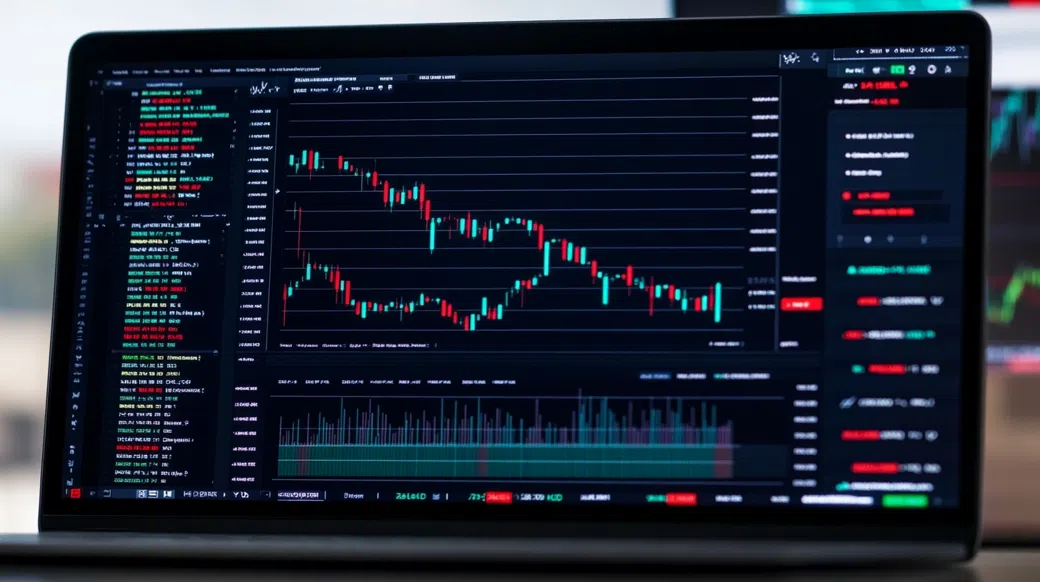
Most traders don’t leave a platform because of a single bad fill—they leave when the small frictions start compounding. Willow Capitwick sits in that familiar offshore CFD lane: a proprietary WebTrader with a companion mobile app, headline leverage that can run as high as 1:500, and a product shelf that typically leans on forex pairs, indices, commodities, and crypto CFDs rather than true exchange-traded ownership. Based on what’s commonly observable across this segment, entry funding is often around a $250 minimum, and EUR/USD pricing tends to land near ~2.0 pips on a standard-style account.
That setup can suit short-term speculation, but it’s also where the hard questions begin: execution model clarity (market maker versus STP/ECN), withdrawal handling, and what investor protections exist when the entity sits under an offshore framework such as the Seychelles FSA. For a US/EU audience—where FCA, CySEC, and NFA-style supervision sets higher expectations—this is exactly why Willow Capitwick alternatives draw attention. The practical goal isn’t to “find a nicer interface”; it’s to move risk from the murky bucket (counterparty and governance risk) back into the bucket you can actually manage (market risk). If you’re currently using Willow Capitwick, treat this guide as a map of regulated substitutes, with a bias toward transparent pricing and broader market access—especially for index investors who care about long-run compounding, not just the next trade.
Disclaimer: This article is for informational purposes only and does not constitute investment advice. CFDs and other leveraged products carry a high risk of loss and may not be suitable for all investors.
From a market-structure standpoint, Willow Capitwick looks like a CFD-first broker designed for retail speculators rather than long-horizon portfolio builders. The core experience is usually a browser-based trading terminal and app-based access, with a product menu centered on leveraged derivatives—forex and index CFDs in particular—plus commodities and crypto CFDs. In this offshore category, the broker commonly acts as principal to the trade (a market-maker style setup), which can be perfectly workable when disclosures are strong, but it does place more weight on governance, best-execution policies, and withdrawal reliability than you’d expect at fully onshore, tier‑1 regulated competitors. For traders comparing platforms like Willow Capitwick, the key distinction is often not “tools versus tools,” but how much of the risk sits with your counterparty.
Functionally, the WebTrader experience in this segment tends to be “enough to place and manage trades,” rather than a workstation built for deep workflow. Expect clean watchlists, straightforward charting, and a respectable set of indicators and drawing tools, but usually fewer order types than a pro stack (for example, limited advanced conditional orders). Mobile parity is typically solid for basic execution—entering market/limit orders, modifying stops, checking margin—yet heavier analysis still feels easier on desktop. Execution speed can look fine in calm markets, but the real test is fast-moving data releases where slippage and re-quotes (or order rejections) reveal how robust the plumbing really is.
Pricing is commonly presented as spread-based for standard accounts, with EUR/USD frequently around ~2.0 pips in typical conditions. Some brokers in this bracket also advertise a “raw/ECN-style” tier—often showing 0.0–0.4 pip spreads plus a $5–$8 round-turn commission—though the all-in cost still needs verifying in live trading. Overnight financing (swap) is a meaningful line item for multi-day holds, and it’s where many traders discover their real carrying costs. Also watch for non-trading charges such as inactivity or withdrawal processing fees; small amounts add up, and compounding works in reverse when friction is constant.
A platform change usually starts as a risk audit, not an impulse. If your strategy relies on tight spreads, predictable execution, or holding positions beyond a day, even small inconsistencies become expensive. For many, the trigger is a mismatch between what the broker is structurally built to offer (offshore CFD access with high leverage) and what the trader now needs (deeper market access, clearer investor protections, or professional-grade platform tooling). That’s the moment Willow Capitwick alternatives stop being a curiosity and become a plan—especially for EU traders thinking about negative balance protection, or US-based readers who can’t legally use many offshore CFD venues.
Think of broker selection as “fit to risk budget.” Market risk is unavoidable; counterparty and operational risk are optional. The best substitutes for Willow Capitwick are the ones that align with your instruments (FX vs equities vs ETFs), your time horizon (intraday vs swing vs long-term), and your tolerance for leverage and financing costs—while sitting under regulators with real enforcement history.
Start with the supervisor, then work outward. FCA- and CySEC-regulated brokers typically enforce segregated client funds, and in the UK, the FSCS can cover eligible claims up to £85,000; in Cyprus, the ICF can cover up to €20,000 (eligibility rules apply). NFA/CFTC oversight is the key reference point for US forex brokers. Offshore frameworks don’t automatically mean “bad,” but they often mean fewer safety nets if things go wrong—so the burden of proof shifts to the client.
Product range isn’t a vanity metric; it changes what you can build. If you’re accumulating broad-market exposure, access to real stocks and ETFs matters more than an extra 15 CFD symbols. Multi-asset brokers can offer exchange-traded shares, ETFs, options, futures, and bonds alongside FX. CFD specialists can still be excellent for indices and forex, but be clear-eyed about what you’re trading: a derivative contract, not the underlying security.
Ignore “from 0.0” headlines and calculate all-in cost: spread + commissions + swap/overnight fees + any non-trading charges. For active FX traders, the right unit is the round-turn cost per standard lot, not just the raw spread. Holding positions? Then financing dominates. Compare swap rates, the broker’s day-count conventions, and whether they widen spreads materially outside liquid hours.
Platform choice decides your ceiling. MT4/MT5 and cTrader support automation, advanced order management, and a broad ecosystem; proprietary platforms can be slick but closed. Execution model also matters: market makers internalise flow, while STP/ECN/DMA routes can reduce conflicts but may introduce variable spreads and commission. If you’ve traded on Willow Capitwick, replicate your real conditions—same session, same instruments, same order size—and measure slippage rather than trusting a demo fill.
When something breaks, “good UI” isn’t the solution—process is. Look for clear support hours, multilingual coverage if you need it, and transparent ticketing. Education should go beyond platform tutorials into risk, margin, and product-specific mechanics (like how CFDs handle dividends on index and stock contracts). Mobile experience matters too; the best brokers keep account controls, margin monitoring, and order management consistent across devices.
On forex and index CFDs, Willow Capitwick’s value proposition is typically leverage-forward: lots of tradable pairs (often in the 30–50 range), headline margin flexibility up to 1:500, and a simple WebTrader flow. The trade-off is that “simple” can become “thin” once you care about fill quality. Regulated FX specialists like Pepperstone or OANDA can be stronger on execution transparency and platform depth, including MT4/MT5 or robust proprietary tooling, plus clearer disclosures around pricing and order handling. Cost-wise, many regulated venues offer standard pricing around ~0.9–1.2 pips or raw-style pricing with tight spreads plus commission—often a better fit for high-frequency strategies where a fraction of a pip compounds into real money over a month of trades. Leverage is still available, but with stricter guardrails in the EU/UK.
This is where many offshore CFD platforms show their limits. Even if you see “stocks” on the menu, it’s commonly equity CFDs, not exchange-traded ownership—meaning no shareholder rights, and costs are shaped by spreads plus financing if you hold. For investors who care about long-run compounding via broad index ETFs, that difference is structural. Interactive Brokers (IBKR) is the obvious bridge for US/EU readers who want global exchange access, fractional shares in some regions, and a serious toolkit for portfolio construction. Saxo Bank is another strong option for multi-asset investors who want a curated but deep offering across equities, ETFs, bonds, and derivatives. If your “trading” is really building a portfolio, regulated multi-asset access is often a better match than a CFD-only workflow.
Crypto exposure on brokers in Willow Capitwick’s lane is typically via crypto CFDs—price exposure only, no on-chain withdrawals, and no custody wallet where you hold the underlying asset. That can be fine for short-term positioning or hedging, but it’s not the same as owning spot crypto. In regulated CFD land, IG and Plus500 are commonly used for crypto CFDs in eligible regions, with clearer risk disclosures and established compliance processes. Pay attention to weekend pricing, spread widening, and overnight charges; crypto CFDs can carry meaningful costs when volatility spikes. For many traders, the practical question is whether you need trading-style exposure (CFDs) or investment-style ownership (spot), then choosing the venue accordingly.
Regulation: SEC/FINRA (US), FCA (UK), IIROC (Canada) (entity depends on region)
Markets: Stocks, ETFs, options, futures, FX, bonds, funds (broad global market access)
Fees: FX pricing is typically commission-based with tight spreads; equities pricing varies by venue and plan (check region-specific schedules)
Platform: Trader Workstation (TWS), IBKR Desktop, web platform, mobile
Best For: Global index investors who want real ETF access
Regulation: FCA (UK), ASIC (Australia), CySEC (Cyprus), DFSA (Dubai)
Markets: FX and CFDs (indices, commodities; product list varies by entity)
Fees: Standard spreads often around ~1.0+ pip; Raw/Razor-style pricing can run ~0.0–0.3 pips + commission (varies by platform/account)
Platform: MT4, MT5, cTrader, TradingView integration (region-dependent)
Best For: Algorithmic FX traders using MT4/MT5 or cTrader
Regulation: FCA (UK), MAS (Singapore), DFSA (Dubai)
Markets: Stocks, ETFs, bonds, options, futures, FX, CFDs
Fees: FX spreads often from ~0.6+ pips (tiered by account); commissions apply on exchange-traded products (schedule varies by market)
Platform: SaxoTraderGO, SaxoTraderPRO
Best For: Multi-asset portfolios needing options and futures access
Regulation: FCA (UK), ASIC (Australia), MAS (Singapore)
Markets: CFDs (indices, FX, shares, commodities), spread betting (UK/IE where permitted)
Fees: CFD costs are primarily spread-based; major FX pairs can be competitive (exact spreads vary by market conditions)
Platform: IG web platform, mobile app; MT4 available in some regions
Best For: Hedgers focused on index CFDs and risk controls
Regulation: CFTC/NFA (US), FCA (UK), ASIC (Australia), IIROC (Canada)
Markets: FX (and CFDs in eligible jurisdictions; offering varies by entity)
Fees: Typically spread-based pricing; majors often around ~0.8–1.6 pips depending on conditions and account setup
Platform: OANDA web/mobile platform; MT4 supported in many regions
Best For: US-based FX traders prioritising regulatory coverage
Regulation: FCA (UK), CySEC (Cyprus), ASIC (Australia), MAS (Singapore)
Markets: CFDs (indices, FX, shares, commodities, crypto CFDs in eligible regions)
Fees: Spread-based pricing; financing/overnight fees apply for held positions (check instrument-specific charges)
Platform: Plus500 proprietary WebTrader and mobile app
Best For: Beginners wanting a simple, regulated CFD interface
| Platform | Regulation | Main Markets | Typical Costs | Best For |
|---|---|---|---|---|
| Interactive Brokers (IBKR) | SEC/FINRA, FCA, IIROC | Real stocks/ETFs, options, futures, FX, bonds | Commission-based; tight FX pricing; exchange fees vary | Global index investors who want real ETF access |
| Pepperstone | FCA, ASIC, CySEC, DFSA | FX + CFDs (indices/commodities) | Raw ~0.0–0.3 pips + commission; Standard ~1.0+ pip | Algorithmic FX traders using MT4/MT5 or cTrader |
| Saxo Bank | FCA, MAS, DFSA | Stocks/ETFs, options, futures, FX, CFDs, bonds | Tiered spreads + commissions on exchanges | Multi-asset portfolios needing options and futures access |
| IG | FCA, ASIC, MAS | CFDs; spread betting (where permitted) | Mostly spread-based; financing applies on holds | Hedgers focused on index CFDs and risk controls |
| OANDA | CFTC/NFA, FCA, ASIC, IIROC | FX (plus CFDs where available) | Spread-based, often ~0.8–1.6 pips on majors | US-based FX traders prioritising regulatory coverage |
| Plus500 | FCA, CySEC, ASIC, MAS | CFDs (incl. crypto CFDs in eligible regions) | Spread + overnight financing; instrument charges vary | Beginners wanting a simple, regulated CFD interface |
Switching brokers is easiest when you treat it like a controlled rebalance: reduce operational risk first, then reintroduce market risk in smaller clips. Rushing the process can create the worst of both worlds—open exposure plus delayed withdrawals. If you’re moving from Willow Capitwick, assume you’ll need fresh orders at the new broker rather than any “position transfer,” and keep leverage conservative while you validate execution and platform behaviour.
If you’re still weighing competitors to Willow Capitwick, it can help to review the current onboarding flow, product list, and fee schedule in your region before making any moves. Conditions can differ sharply by jurisdiction, especially around leverage, crypto CFDs, and protections like negative balance policies.
Visit Willow CapitwickThe best pick depends on whether you’re trading CFDs actively or building a long-term portfolio. For real stocks/ETFs and global index exposure, Interactive Brokers (IBKR) is often the cleanest step up. For FX/CFD specialists with MT4/MT5 or cTrader, Pepperstone is a common short-list candidate, while IG suits traders who prioritise index CFD coverage and risk tools. In other words, “best Willow Capitwick alternatives 2026” is really a question of instrument needs and jurisdiction.
Willow Capitwick appears to operate under an offshore regulatory framework (commonly associated with the Seychelles FSA in this category), which generally offers fewer investor protections than FCA/CySEC/NFA oversight. That doesn’t automatically mean you can’t trade, but it does mean you should be more cautious with position sizing, withdrawals, and how much capital you keep on-platform. If safety is your priority, regulated options vs Willow Capitwick typically provide stronger segregation rules and, in some regions, access to compensation schemes like FSCS or ICF.
Willow Capitwick is usually positioned around forex and CFDs, and where “stocks” or “crypto” are offered, it’s commonly as CFDs rather than direct ownership. Futures and exchange-traded options are more typically found at multi-asset brokers such as IBKR or Saxo Bank. For crypto exposure, some regulated CFD brokers (like IG or Plus500 in eligible regions) provide crypto CFDs, while spot ownership is a different product category entirely.
Before moving, verify the new broker’s licence on the official regulator register and confirm which legal entity will hold your account. Next, compare the all-in trading cost (spread + commission + swap) on the instruments you actually trade, and test execution with small size to observe slippage. Finally, plan the cash-transfer sequence so your withdrawals and deposits follow AML expectations and you’re not forced into risky trades while waiting for funds to arrive.
About the Author: Liam Ashford is a Sydney-based former portfolio strategist who covers Asia-Pacific brokerage dynamics with a practical, risk-first lens for global readers. He focuses on index investing, trading costs, and platform structure—because over the long run, compounding rewards discipline and punishes friction.